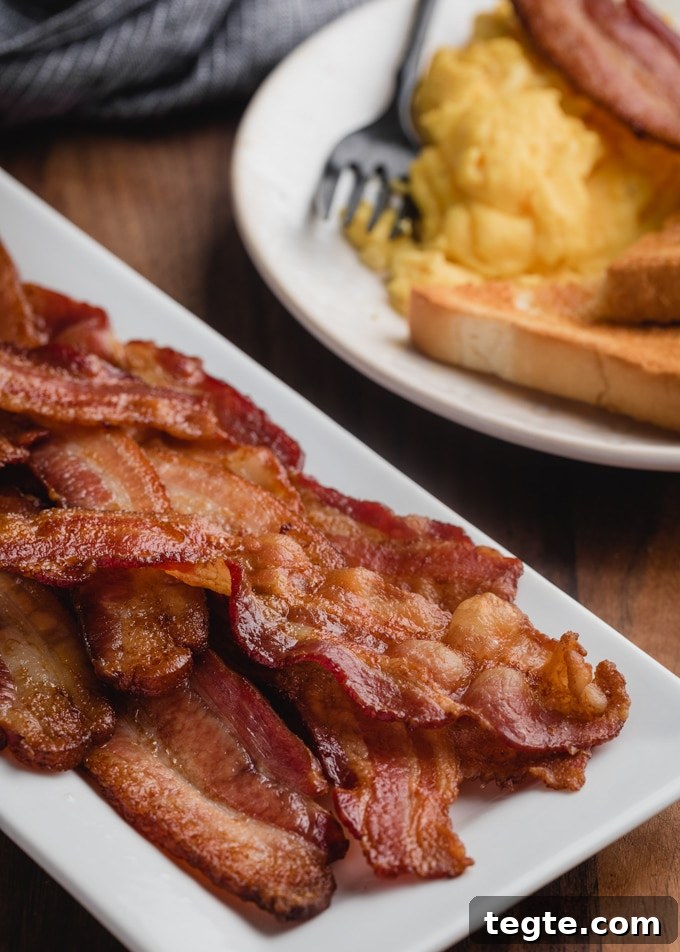
Say goodbye to stovetop bacon splatter. This clear, step-by-step guide shows how to bake bacon in the oven for consistently crisp results and easy cleanup. It also includes ideas for simple flavor variations to elevate your breakfast or brunch.
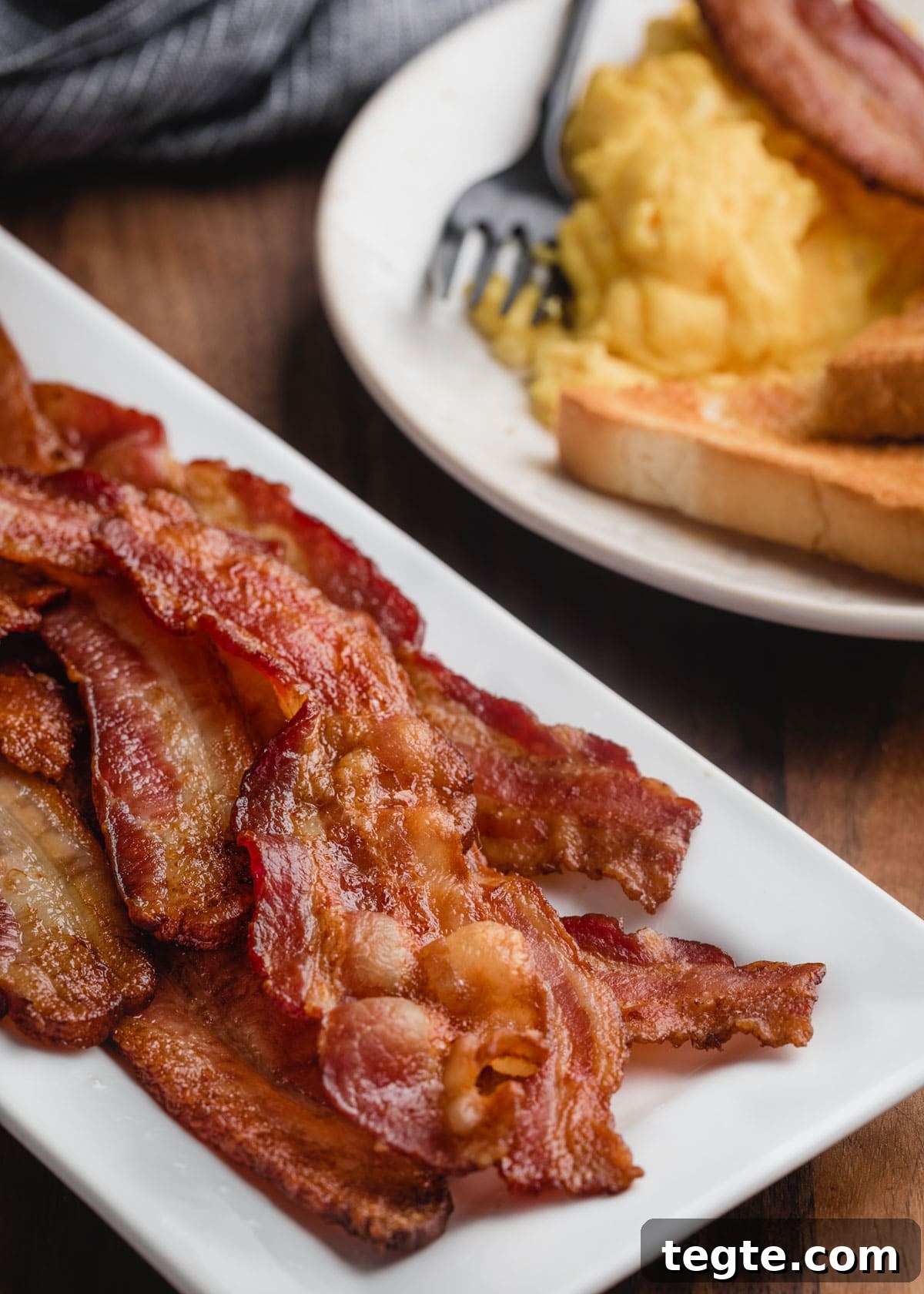
Why Cook Bacon in the Oven?
Cooking bacon in the oven is an easy alternative to pan-frying. Three advantages consistently bring me back to my baking sheets:
1. Convenience
Oven-baked bacon doesn’t require constant attention the way bacon in a skillet does. With the oven handling the work, you can prepare other parts of the meal—eggs, sides, or toppings—without hovering over the stove. If you’re serving a crowd or overnight guests, the oven lets you cook much larger batches by using multiple sheets at once.
2. Consistency and Quality
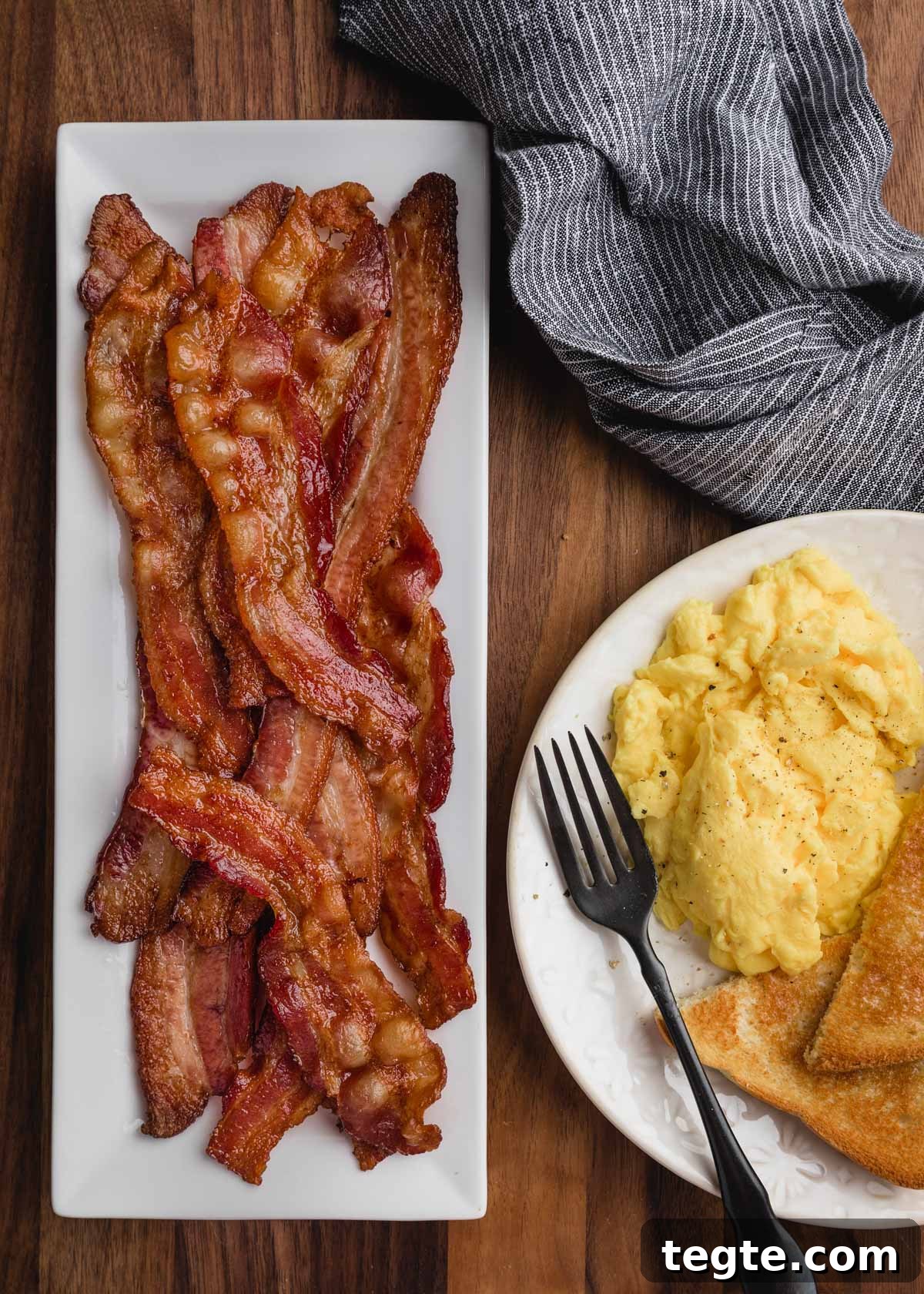
The oven’s gentle, even heat produces bacon that crisps uniformly from end to end and curls less than pan-fried strips. If you prefer straighter, picture-perfect slices with consistent texture, baking is an excellent method.
3. Easier Cleanup
Bacon releases a lot of fat while cooking, and stovetop splatter can coat stove grates and nearby surfaces. When you bake bacon on a lined rimmed sheet pan, most of the grease is contained on the liner. After the pan cools you can simply fold up and discard foil or parchment or strain and save the grease for other uses, then wipe the oven if needed.
Ingredients and Equipment You’ll Need
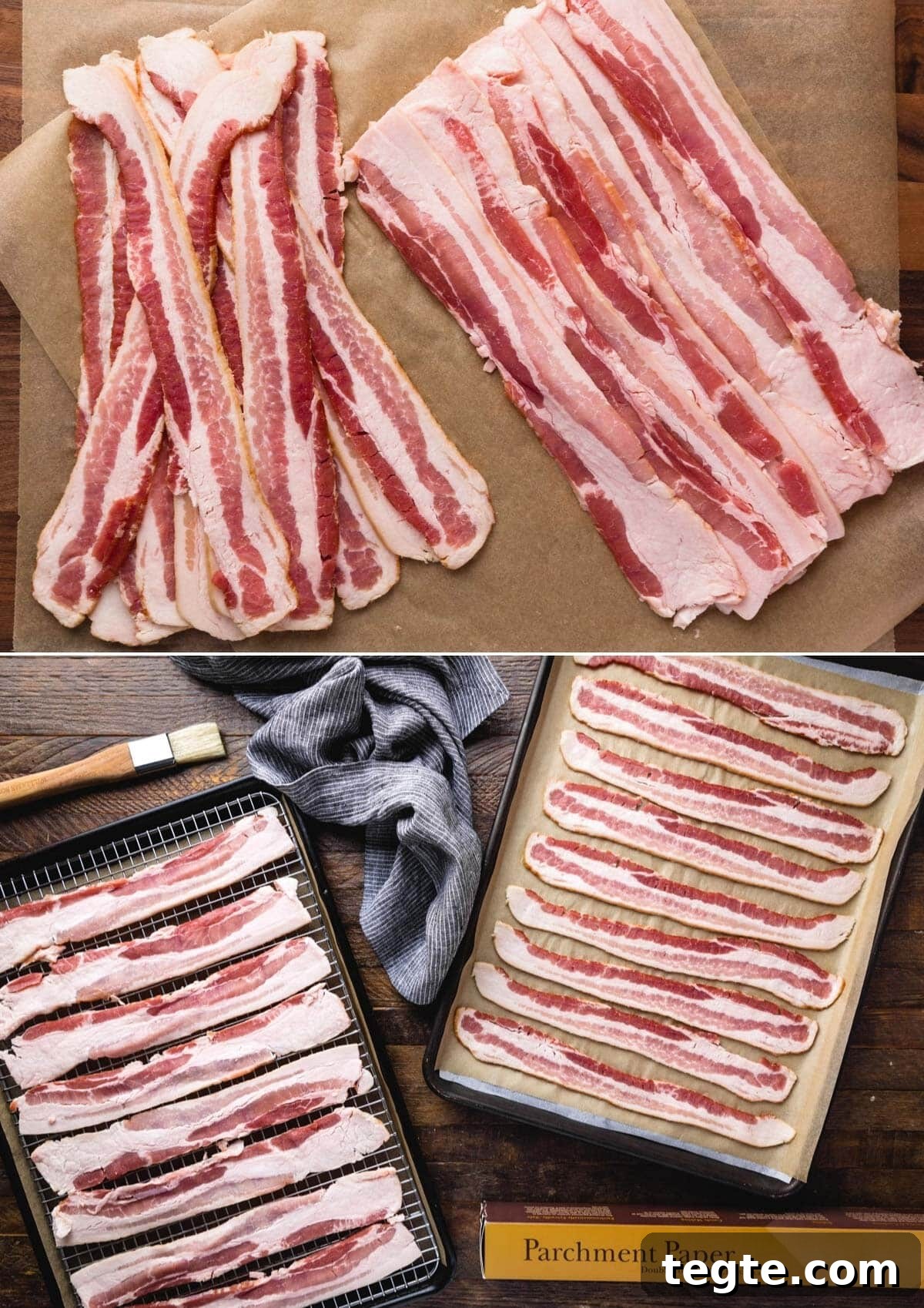
- Bacon (regular or thick-cut)
- Rimmed sheet pan(s)
- Aluminum foil or parchment paper
- Wire rack (optional)
- Paper towels
What Kind of Bacon Is Best?
Choose the cut based on texture you prefer. Regular bacon (about 1/16-inch slices) crisps easily and is simple to crumble. Thick-cut bacon (about 1/8-inch or thicker) yields meaty strips with crisp edges and a chewier center. Turkey bacon is a leaner option; it renders less fat and can become dry if overcooked, so watch it closely.
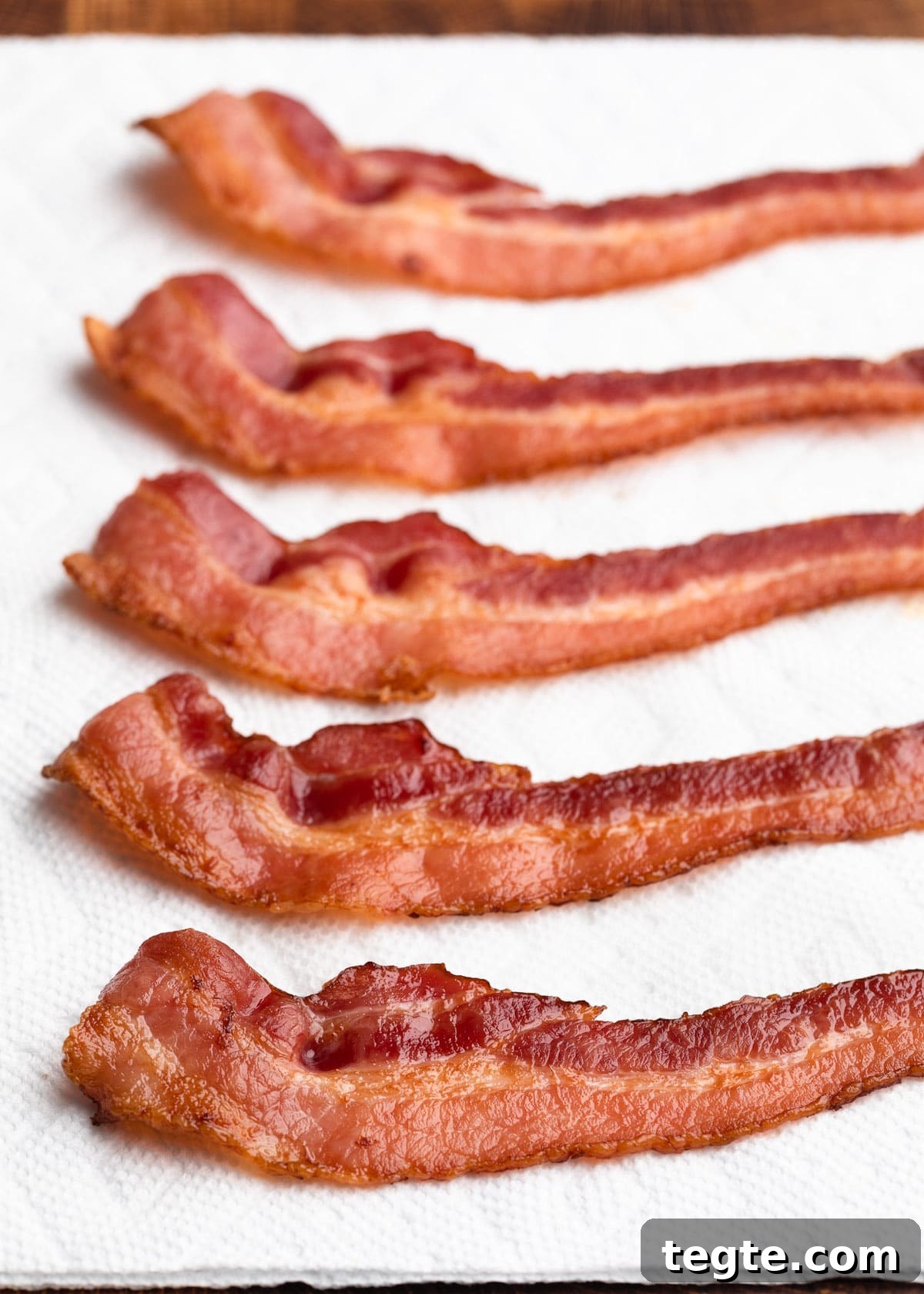
How to Cook Bacon in the Oven
Start by choosing your bacon and placing the oven rack in the center position. Preheat to 400°F for regular bacon or 375°F for thick-cut. Line a rimmed baking sheet with foil or a double layer of parchment for easy cleanup.
For thick-cut bacon you may prefer to use an oven-safe wire rack set on the sheet to allow fat to drip away and promote even cooking. For regular bacon, cooking directly on the lined pan helps the slices crisp in their own rendered fat. If you use a rack with regular bacon, the center will remain slightly chewier—ideal if you like less crispness.
Bake regular bacon for 10–20 minutes, rotating the pan halfway through and checking for your preferred level of crispness. For thick-cut bacon, bake 10 minutes, flip the strips, then continue baking 10–15 minutes until edges are crisp and centers reach your desired doneness. Keep in mind bacon continues to crisp as it cools. Transfer cooked strips to a double layer of paper towels to drain immediately before serving.
If you bake multiple sheets at once, place them on the upper and lower thirds of the oven and rotate their positions halfway through the cooking time for even results.
Save the Bacon Grease
Strain any pooled fat from the baking sheet through a fine mesh sieve into an airtight container. Stored in the refrigerator it keeps about 3 months; in the freezer it will keep longer. Bacon fat is flavorful for frying eggs, roasting potatoes or vegetables, greasing a cast-iron skillet for cornbread, popping stovetop popcorn, or adding to warm vinaigrettes.
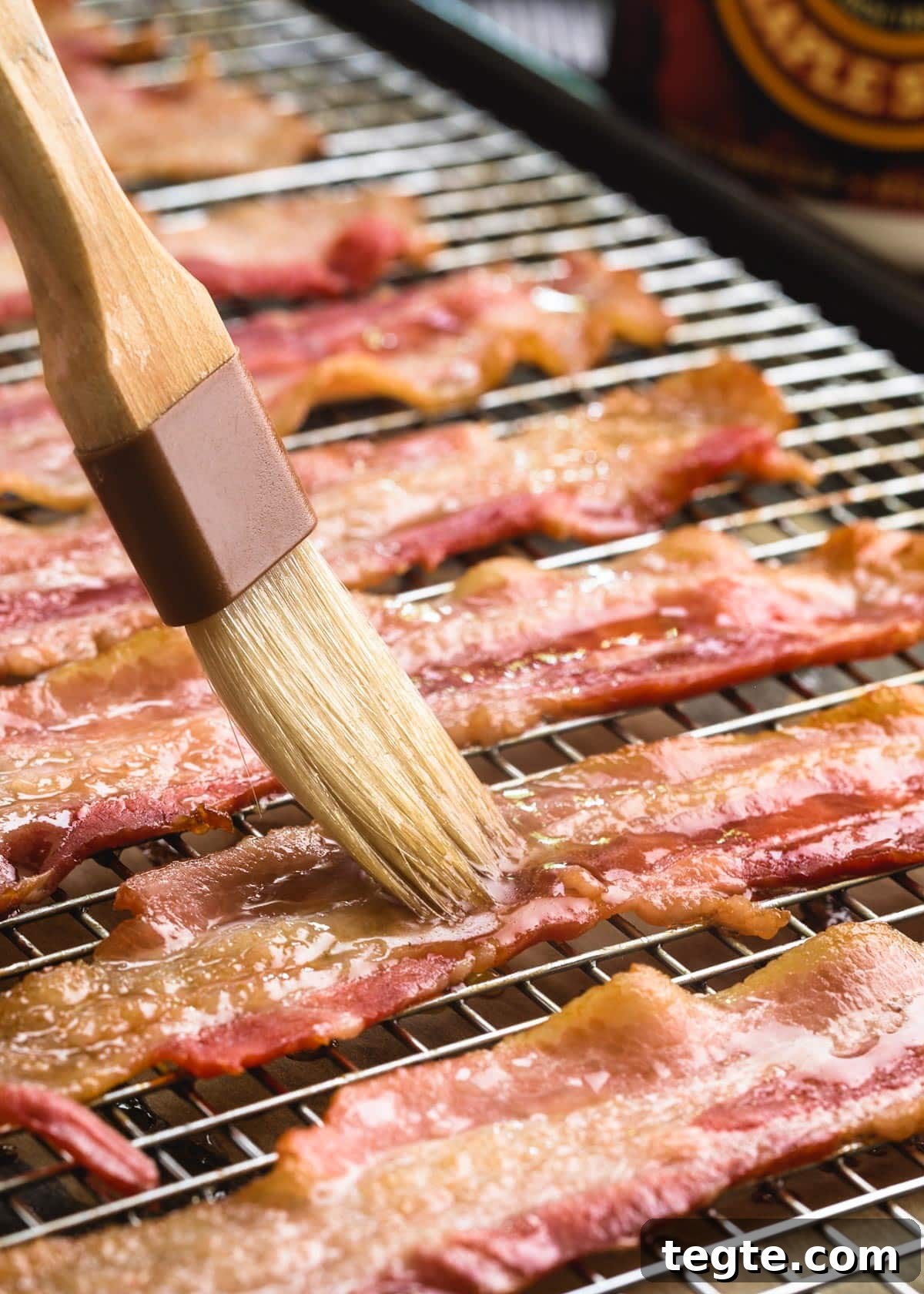
Baked Bacon Variations
- Peppered: Sprinkle freshly cracked black pepper on the slices before baking.
- Brown Sugar: Lightly sprinkle brown sugar over bacon before baking for a sweet glaze.
- Maple or Honey: Brush on maple syrup or warmed honey during the last 5 minutes of cooking for a sticky finish.
- Maple-Black Pepper: Brush with maple syrup and finish with cracked black pepper.
- Maple-Chipotle: Stir 1 teaspoon ground chipotle (adjust to taste) into 1/4 cup maple syrup and brush on near the end of cooking.
- Hot Honey: Mix 1–2 tablespoons hot sauce with 1/4 cup warmed honey and brush on during the final minutes.
- Brown Sugar Bourbon Glaze: Combine 1/2 cup brown sugar with 2 tablespoons bourbon (or substitute honey/maple) and brush onto bacon in the last 5 minutes. Optional: add cracked pepper or smoked paprika to the glaze.
Tip: For sticky glazes, drain bacon on parchment or a wire rack set over paper towels; hot sugars can stick to plain paper towels.
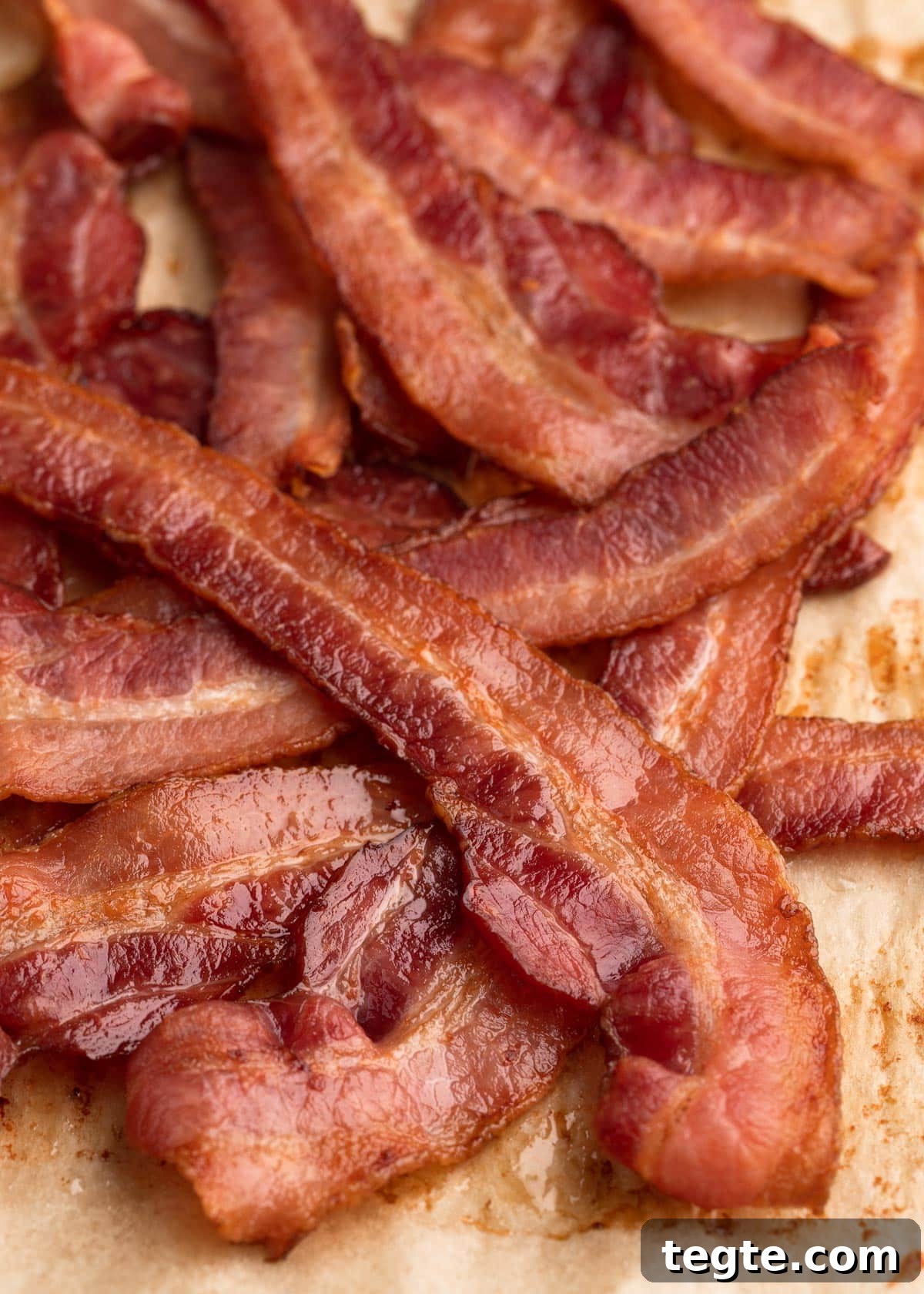
Meal Prep: Baking Bacon Ahead
Bake a large batch on the weekend and store leftovers in foil or an airtight container in the refrigerator for 4–5 days. To reheat a few slices, microwave them on a paper towel-lined plate for 15–20 seconds (confirm your paper towels are microwave-safe). For larger batches, reheat on a parchment- or foil-lined baking sheet in a 350°F oven for 10–15 minutes until warmed and crisp.
Recipes To Make With Baked Bacon
- Bacon deviled eggs with horseradish
- Popovers with bacon and goat cheese
- Maple bacon sweet potato biscuits
- Bacon cheddar potato salad
- Harvest Cobb salad
Craving more? Subscribe to newsletters and social channels for more recipes and updates.
How to Cook Bacon in the Oven
Ingredients
- 12 slices bacon (regular or thick cut)
Instructions
Regular Cut Bacon (1/16-inch thick)
-
Preheat oven to 400°F with the rack in the middle position. Line a rimmed baking sheet with foil or a double layer of parchment.
-
Lay bacon in a single layer on the baking sheet without overlapping. Bake 10–20 minutes, rotating the pan halfway through, until golden brown and crisp. Cooking time varies by brand and preference; bacon will continue to crisp as it cools.
-
Immediately drain on a double layer of paper towels and serve.
Thick-Cut Bacon (1/8-inch thick)
-
Preheat oven to 375°F. Line a rimmed baking sheet with foil or parchment and place an oven-safe wire rack on the pan.
-
Place strips in a single layer on the rack without overlapping. Bake 10 minutes, flip the bacon, rotate the pan, and continue baking 10–15 minutes until edges are crisp and centers reach desired doneness. Adjust for thicker cuts as needed.
-
Drain on a double layer of paper towels before serving. Bacon will continue to crisp as it cools.
Notes
*If using extra-thin “Restaurant Cut” bacon (about 1/32-inch), follow the Regular Cut instructions and begin checking for doneness around 8 minutes.
For flavor ideas, see the “Variations” section above.
Nutrition Estimate
| Calories: 92 kcal
| Carbohydrates: 1 g
| Protein: 3 g
| Fat: 9 g
Nutrition information is automatically calculated and should be used as an approximation.
Our recipes use US customary measurements and have not been tested for high-altitude cooking.
Like this? Rate and comment below!