“I love sushi and eat it a few times a week. How healthy is it?” My clients ask about sushi often, unsure whether it’s a light choice or a higher-calorie option. That makes sense — sushi ranges from simple slices of fish to elaborate rolls that require several bites. If you’re eating sushi a few times a week, you’re likely meeting the Dietary Guidelines for Americans recommendation of about 8 ounces of seafood per week. But is your typical sushi order aligned with a healthy diet?
International Sushi Day is June 18th, but you don’t need to wait to enjoy this delicious food. Sushi can be a nutritious, satisfying meal you eat regularly — as long as you know what to choose.
Disclosure: this post is a collaboration. All opinions are my own.
Tips to order healthier sushi
Focus on fish
Fish provides high-quality protein and, depending on the type, healthy fats. Salmon, tuna and mackerel are rich in the long-chain omega-3s EPA and DHA, which support healthy cell membranes and play important roles in eye, heart and brain health.
DHA is a key structural fat in the retina and helps support vision throughout life. Omega-3s also contribute to cardiovascular health by supporting healthy blood pressure and triglyceride levels when combined with an overall healthy lifestyle. DHA is important for brain development and function at all ages.
Many people don’t get enough EPA and DHA. Eating two servings of fatty fish per week — a serving about 3 ounces, roughly the size of a deck of cards — is a simple way to increase intake. Sushi is a tasty way to include more oily fish in your meals.
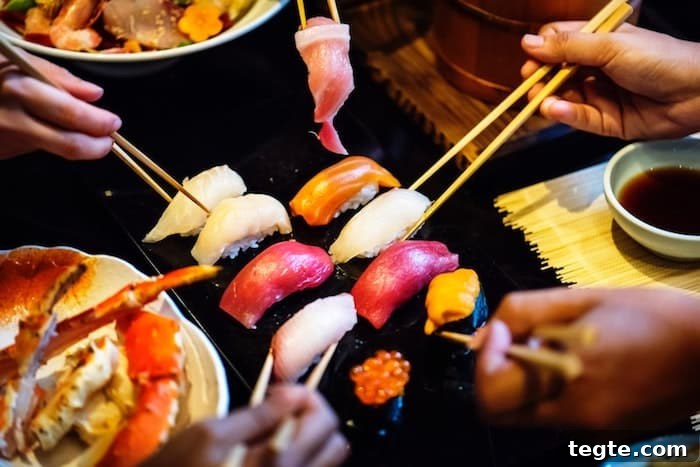
When dining out, choose options with more fish. Some maki rolls have small amounts of fish, especially when the seaweed is on the inside and rice on the outside. Nigiri — a slice of fish over a small ball of rice — typically contains more fish per piece. I often order a roll plus sashimi to boost protein and omega-3s. Darker fish like salmon and tuna are higher in omega-3s and also provide vitamin D.
Step up the sashimi
Portion sizes can be hard to judge with sushi. A typical roll often contains about 1 cup of rice, equivalent to two servings of grains or about two slices of bread. Depending on your needs, that may be more carbohydrates than you intended.
Mix rolls with sashimi (slices of fish without rice) to increase protein and omega-3s while reducing calories and carbs. This balance makes for a satisfying, nutrient-dense meal.
Try brown or black rice
While white rice is standard, many restaurants now offer brown or black rice. Opt for whole-grain rice when available — it contains more fiber, has a lower glycemic index, and supplies additional nutrients like folate, selenium, magnesium and manganese compared to white rice. If your sushi spot doesn’t offer whole-grain rice yet, request it; customer demand can prompt change.
Celebrate seaweed
Seaweed is nutrient-dense and a central component of sushi. It provides antioxidants, vitamins A and C, calcium, magnesium and zinc. Seaweed is also an excellent source of iodine, a nutrient essential for thyroid function, which influences energy, metabolism, weight and mood.
Forget fried
Avoid rolls labeled “crispy,” “crunchy,” “fried,” or descriptions that mention tempura — these usually involve deep-fried ingredients and add unhealthy fats and extra calories. Tempura items are breaded and deep-fried, even if they seem light. Instead, choose options like seaweed salad to increase vegetables without the added fat.
Hold the mayo
Spicy tuna or spicy salmon often include significant amounts of mayonnaise, which increases calories. Some rolls are finished with mayo-based sauces as garnish. Select rolls without mayo or ask for it on the side so you can control the portion.
Go light on soy sauce
Light soy sauce contains roughly 30% less sodium than regular soy sauce, which helps reduce sodium intake but is still salty. Use smaller amounts, dip sparingly, or mix a little wasabi into a small dish of light soy sauce to make less go farther. Adding fresh ginger to bites can also enhance flavor without extra salt.
What’s your favorite order at a sushi restaurant? Share in the comments below!