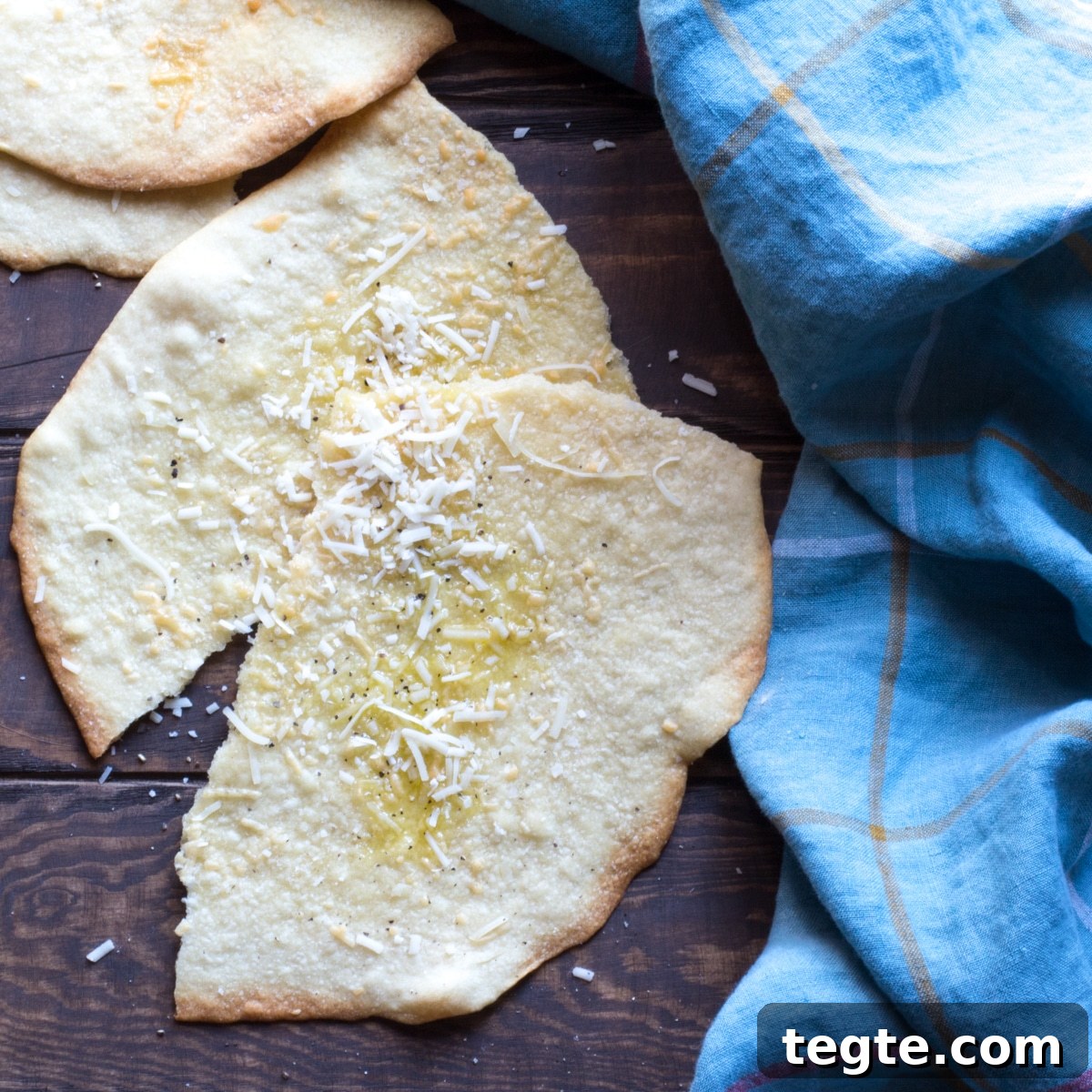
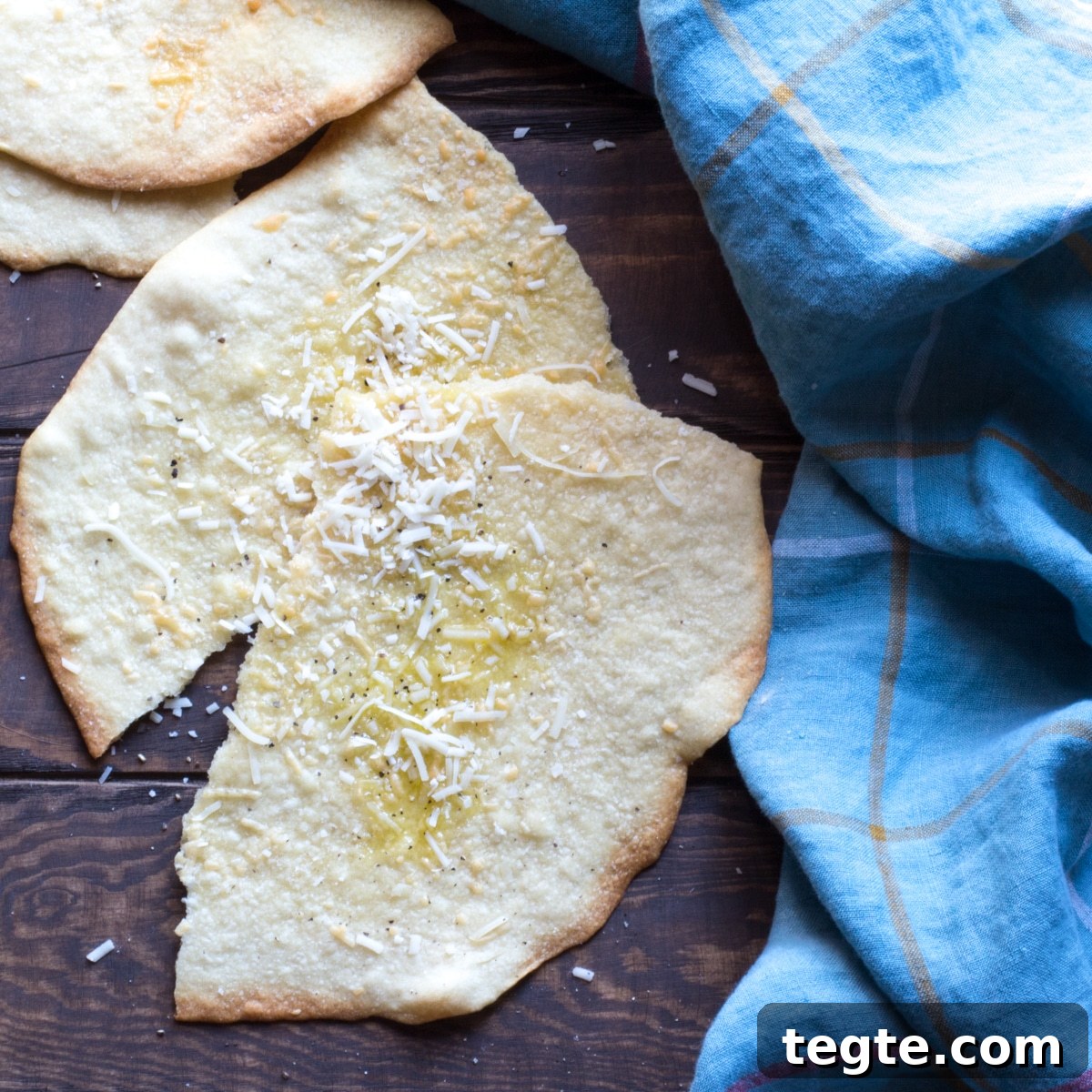
Classic piadine Italian flatbreads, dusted with Parmesan and drizzled with olive oil. Includes instructions for baking at high altitude and at sea level.
Flatbreads are some of the simplest breads to make at home and appear in many cultures—tortillas in Mexico, corn arepas elsewhere. This post focuses on an easy Parmesan piadina adapted for high-altitude baking, with sea-level adjustments below.
We’re living in Tahoe full-time now—one of the most beautiful places to be, and also wildly unpredictable weather-wise. One week you plant flowers, the next two feet of snow blows through and more is on the way. The natural world dominates here: coyotes bark at night, and bears test the lids on trash bins. Friends who loved the bustle of San Francisco ask why we moved to a small mountain town with long winters. I miss some things, yes, but right now the mountains are where I want to be.
Moving here forced a slowdown. I’d spent years on a careless merry-go-round of activities and obligations, always trying to pack more into days than was realistic. The pace became exhausting and unhealthy. Busy-ness, I realized, is an addiction.
During our final days in the Bay Area, I made a round of goodbye lunches at favorite spots. One of those restaurants served soft, warm piadine with salads for an extra few dollars—a generous plate of thin, stretchy flatbreads brushed with olive oil and showered with Parmesan. Now that I’m in a much colder climate, I wanted to recreate that comforting bread at home.
Piadina originates in the Emilia-Romagna region of north-central Italy. Traditionally it’s made with flour, lard or olive oil, water, and salt. Variations can include baking powder or yeast; historically lard was more common than oil. This version is my own take: instead of the super-stretchy restaurant style, it yields a very thin, biscuit-like flatbread. It’s delicious smeared with butter or jam, or sprinkled with more Parmesan.
Note: While I baked these on a pizza stone in the oven, piadine are traditionally cooked on a skillet. Cook them briefly for a flexible bread that folds well for sandwiches, or cook a little longer until crisp for a thin, pizza-like flatbread.
Baking Adjustments for Sea Level:
If you’re at or near sea level, use the following adjustments to the recipe for best results:
- Use the full 16 ounces of bread flour
- Increase the baking powder to 1 ½ tablespoons
- Reduce the olive oil to ¼ cup (4 tablespoons)
- Reduce the water to 1 cup
- Bake for 12 minutes
These tweaks help account for differences in air pressure and moisture at lower elevations so your piadine bake and texture will be closer to the intended result.
Parmesan Piadine (Italian Flatbreads)
Equipment
-
Kitchen scale
-
Stand mixer
-
Rolling pin
-
Parchment paper
-
Pizza stone
Ingredients
- 16 ounces bread flour
- 1 tablespoon kosher salt
- 1 tablespoon baking powder
- 5 tablespoons extra virgin olive oil
- 1 cup + 1 tablespoon warm water
- 1 teaspoon lemon juice
- ¼ cup Parmesan cheese
- Ground black pepper
Instructions
-
Whisk together the flour, salt, and baking powder in the bowl of a stand mixer fitted with a dough hook.
-
Pour in the olive oil, warm water, and lemon juice all at once. Knead at medium-low speed for about 10 minutes until the dough is very smooth. Cover and let rest for one hour—this makes it easier to roll very thin.
-
Preheat the oven to 400°F (200°C) with a pizza stone inside.
-
Divide the dough into four equal balls. Lightly flour your work surface, flatten one ball by hand, and roll it into a very thin circle—about 1/10″ thick if you can. Keep the other balls covered.
-
Place the rolled round on a sheet of parchment, transfer to the back of a baking sheet or cookie sheet, and sprinkle about 1 tablespoon of Parmesan over it. Slide the parchment and dough onto the hot pizza stone. Bake for 14 minutes, or until lightly browned. Remove and repeat with the remaining dough rounds.
Nutrition
| Carbohydrates: 83.4 g
| Protein: 15.8 g
| Fat: 21 g