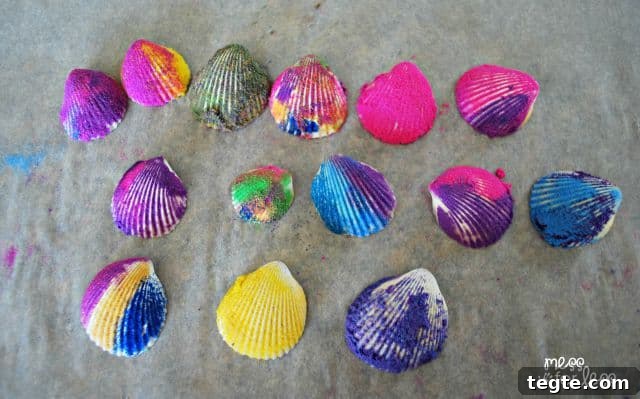
Recently my twins celebrated their 7th birthday with a mermaid-themed party. One of the most popular activities was a sand art table where the kids poured colored sand into bottles. After the party I had a lot of leftover colored sand and wanted to find creative ways to use it. We had previously painted seashells, and this sea shell craft grew out of that idea.
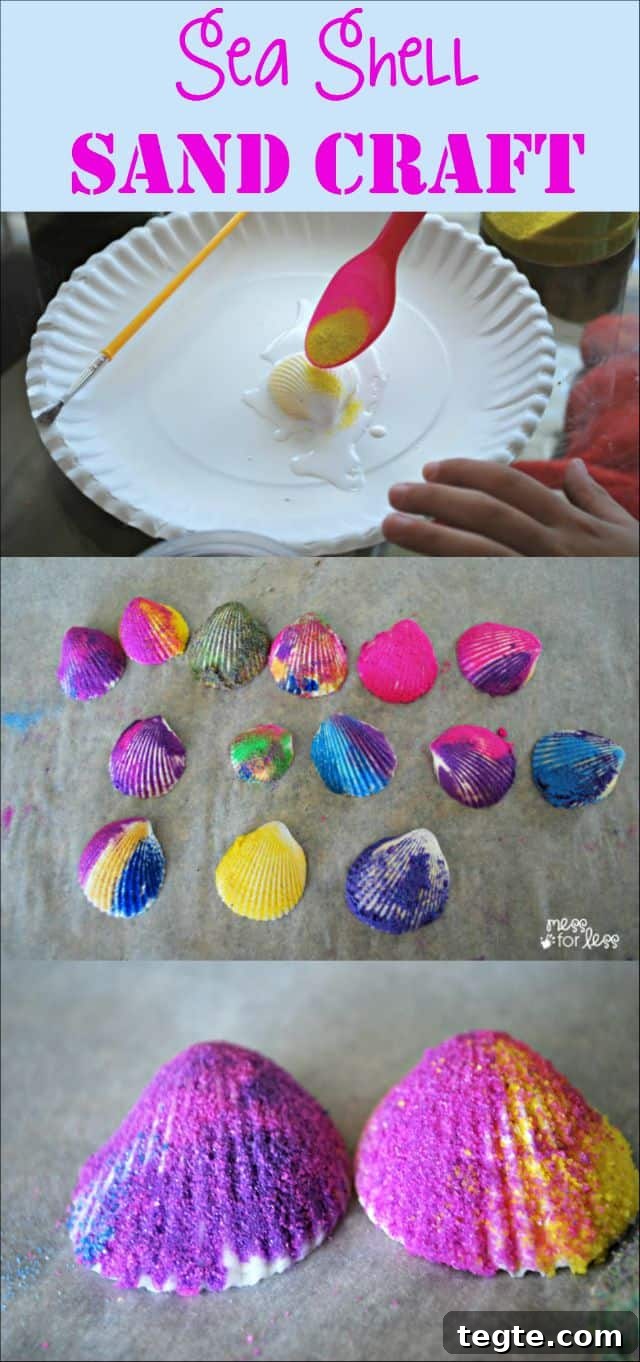
This craft is a wonderful way to use shells you collected on a beach trip and to let kids explore texture and color. It’s simple, inexpensive, and perfect for a rainy afternoon or a party activity. The technique works well with scalloped or fan-shaped shells because their ridged surfaces help the glue and sand adhere. We used paper plates to contain the mess and kept a few tools on hand to make the process easy.
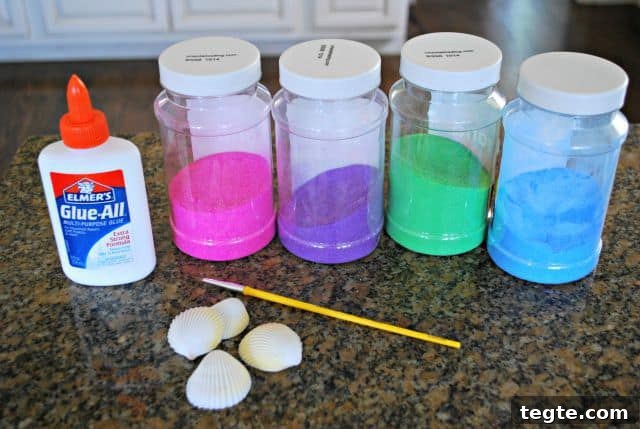
You will need:
- Sea shells (preferably scalloped)
- Colored sand
- White glue
- Plastic cup
- Water
- Paintbrush
- Spoons
- Paper plate
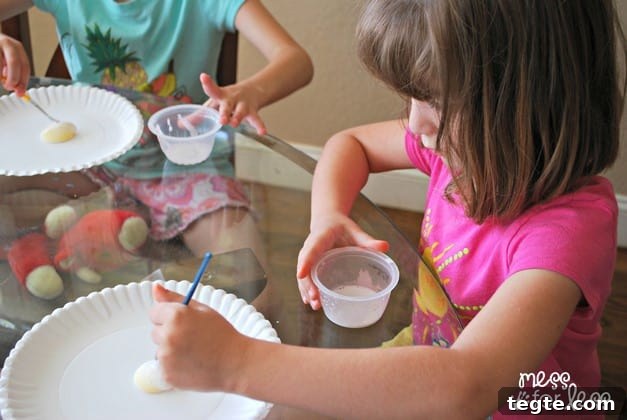
To prepare, squeeze a small amount of white glue into a plastic cup and add about a teaspoon of water to thin it slightly. Stir until the mixture is smooth but still tacky. Give each child a paintbrush and a shell on a paper plate. The kids “paint” the glue mixture onto the shell, covering the areas they want to decorate.
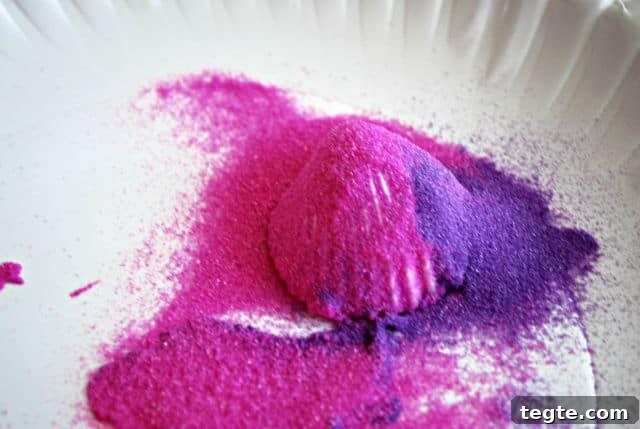
Once the glue is applied, use spoons to sprinkle colored sand over the shell. Encourage children to layer different colors or create patterns by applying glue only to certain sections. The spoons make it easy to control how much sand is added and keep hands cleaner.
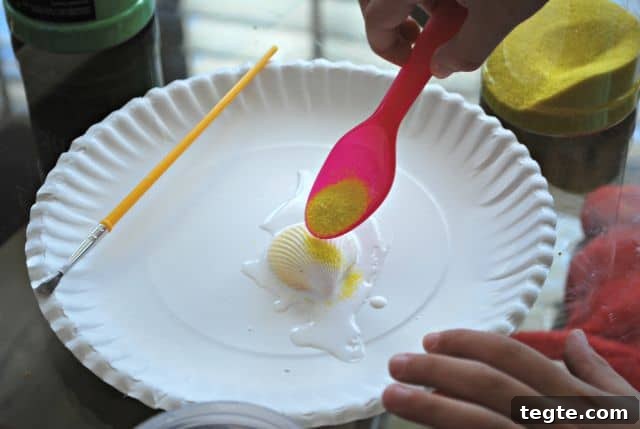
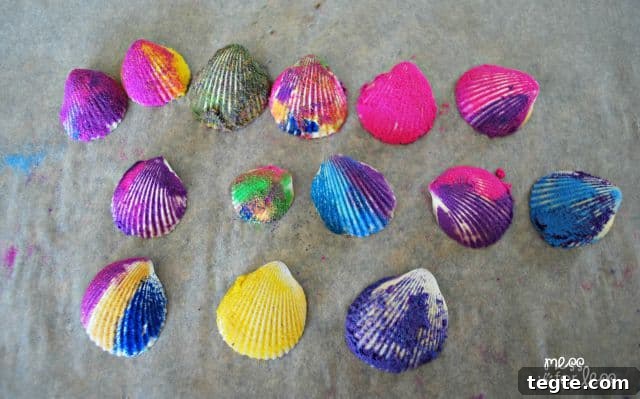
After covering the shells with sand, pick them up gently and tap or shake off the excess onto the paper plate so it can be reused. Place the decorated shells on parchment paper or a protected surface to dry. Drying can take a few hours depending on how much glue was used; make sure they are fully set before handling.
The finished shells are bright, textured, and fun to display. They make charming decorations, inexpensive gifts, or components for other crafts like mobiles, magnets, or shadow boxes. Because the sand creates a gritty surface, these shells have a tactile quality children love.
Troubleshooting tips: if the glue mixes with the sand and becomes muddy, use slightly less water next time. For very small shells, consider applying the glue with a cotton swab to avoid over-applying. If you want a more durable finish, spray a light coat of clear sealer after the shells are completely dry, testing the sealer on one shell first.
This simple sea shell craft is a great way to repurpose beach treasures and leftover sand into colorful keepsakes. It’s easy to adapt for groups of children or for quiet solo crafting. For other glue-based projects and ideas, try watercolor painted seashells and similar activities that use the same basic supplies.