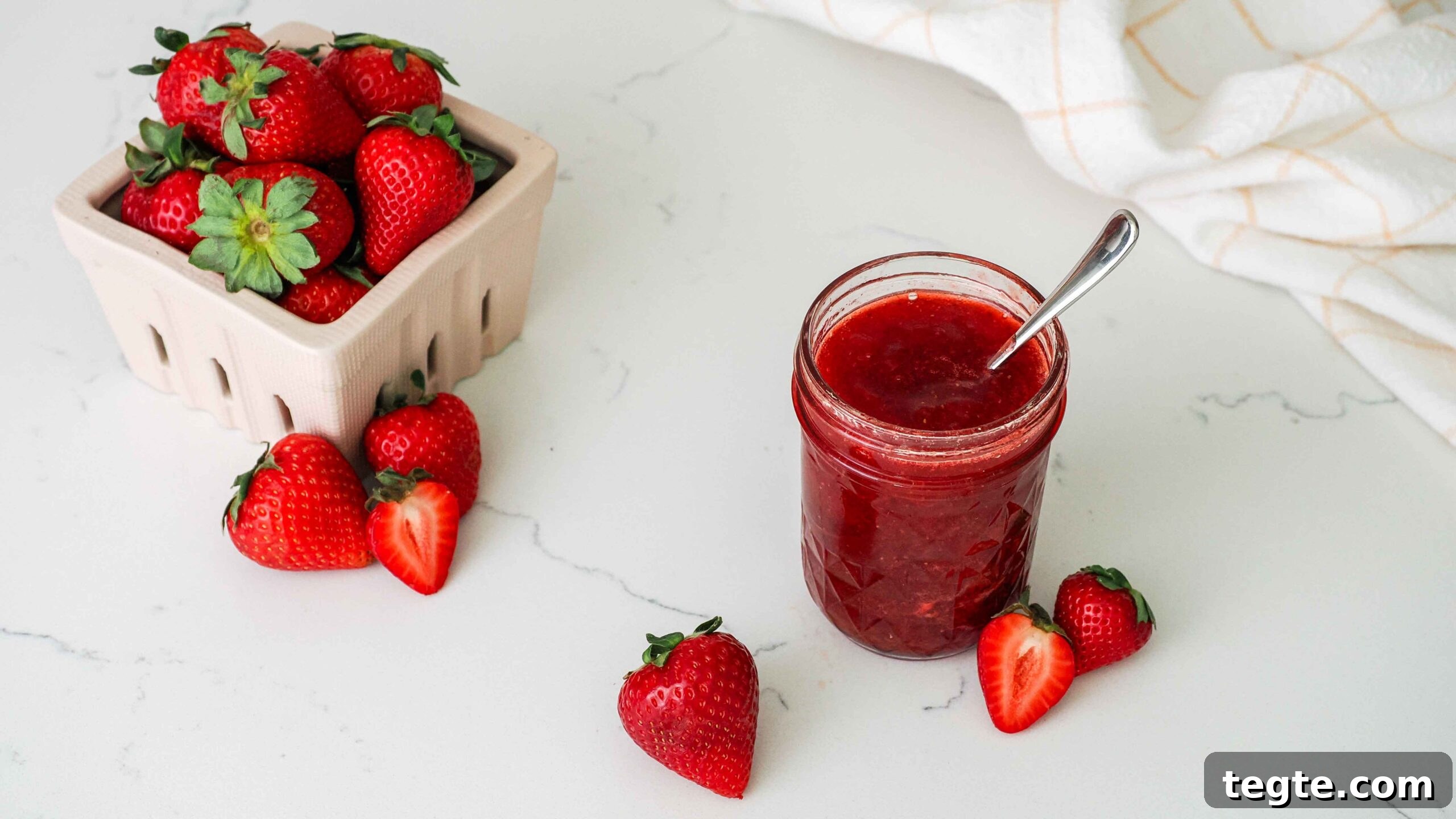
My favorite way to preserve strawberries is to turn them into jam. If you only have a pint of berries (or have already eaten most of them), this small-batch strawberry jam is perfect. It yields the ideal amount from a single pint and is versatile—use it as a macaron filling, a swirl in strawberry ice cream, for mini cheesecakes, or simply spread on toast.
Like my small-batch cherry jam, this strawberry jam sets without added pectin. It’s a straightforward recipe that comes together in about 30 minutes and requires only common kitchen tools and ingredients. Below I explain what each ingredient does and offer tips to help the jam turn out well.
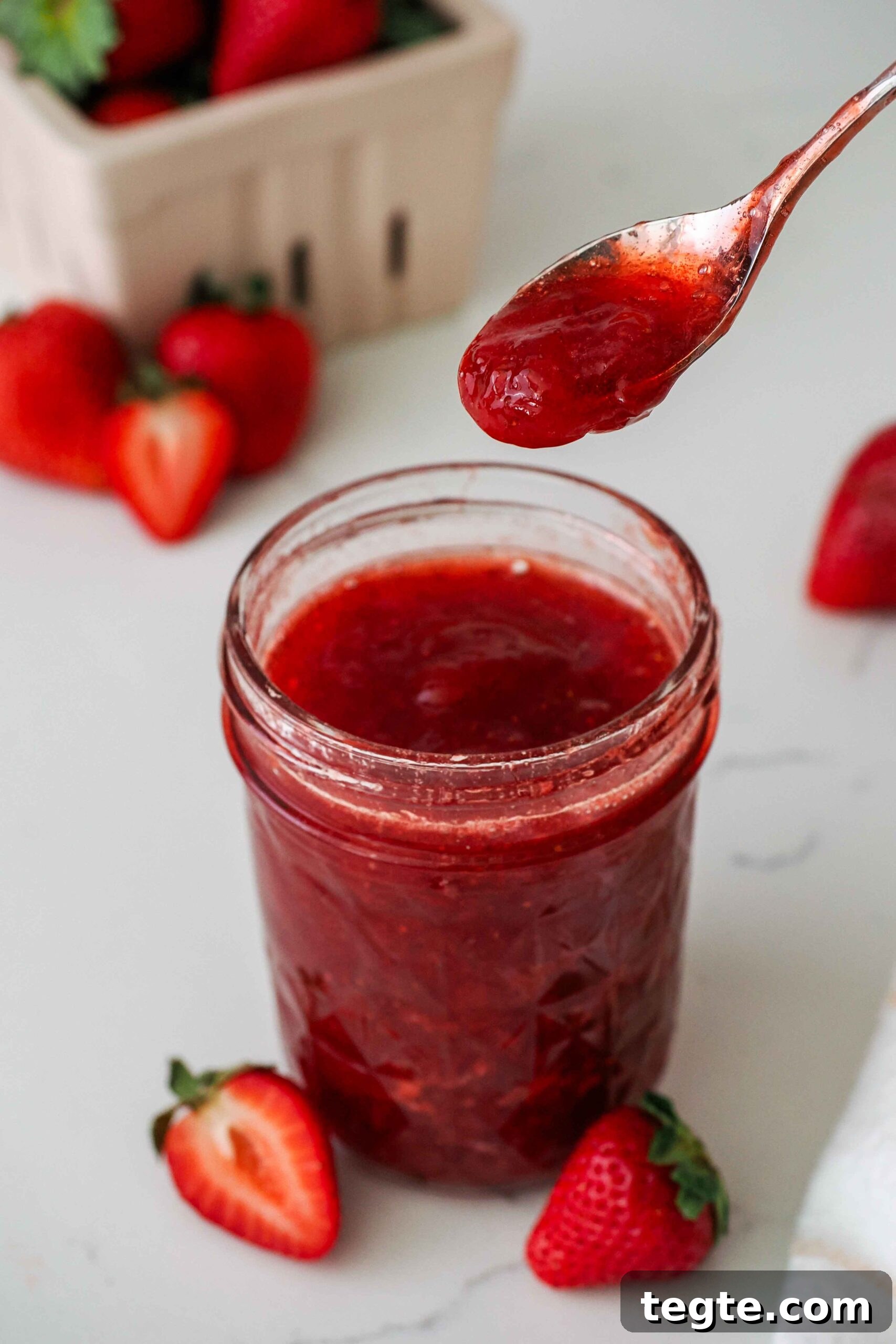
Ingredients for Strawberry Jam
Strawberry jam requires only three ingredients: strawberries, sugar, and lemon juice. Below is why each matters and what you can (and shouldn’t) swap.
- Fresh strawberries. Fresh berries give the best texture and flavor. Frozen strawberries will work if thawed first, but fresh is preferred so you can dice them before cooking.
- Granulated sugar. Sugar not only sweetens the jam but also helps it thicken and preserve. Reducing sugar or swapping to liquid sweeteners or artificial sweeteners can prevent the jam from setting. Stick to granulated (or brown) sugar for reliable results.
- Lemon juice. Lemon brightens the flavor and adds acidity that helps the jam gel. Fresh lemon juice is ideal, but bottled works in a pinch.
Quick Tips for Prepping Strawberry Jam
Making jam is beginner-friendly: prep the fruit, add sugar and lemon juice, then cook until the mixture reaches the gelling point. No special tricks are required.
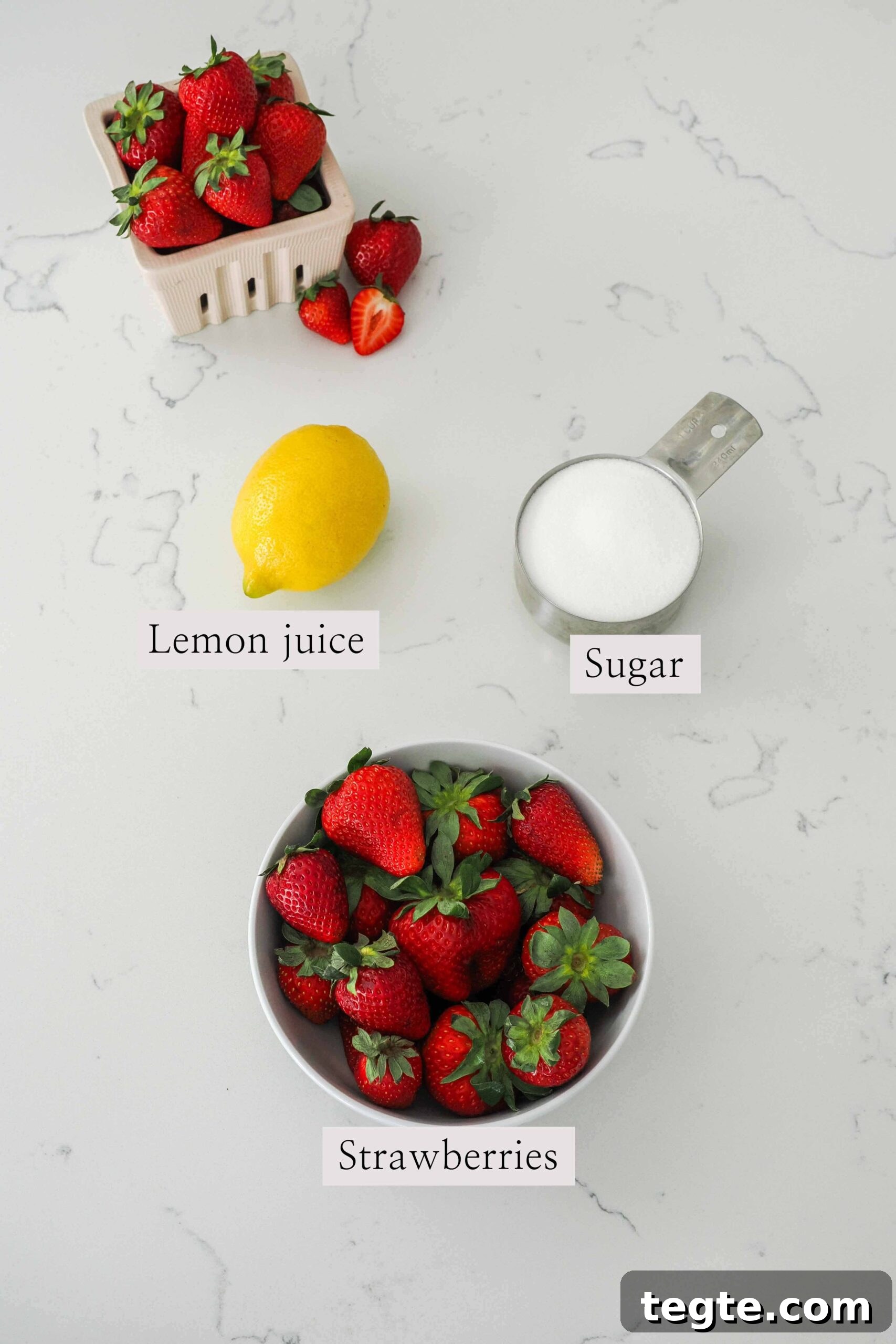
Wash and dry the strawberries, then hull them by removing the leaves. Dice them into roughly 1/4″ (6 mm) pieces so they cook evenly and the jam develops a good texture. Place the diced strawberries, sugar, and lemon juice in a medium pot. Use a medium pot because jam foams and can expand several times its original volume when boiling.
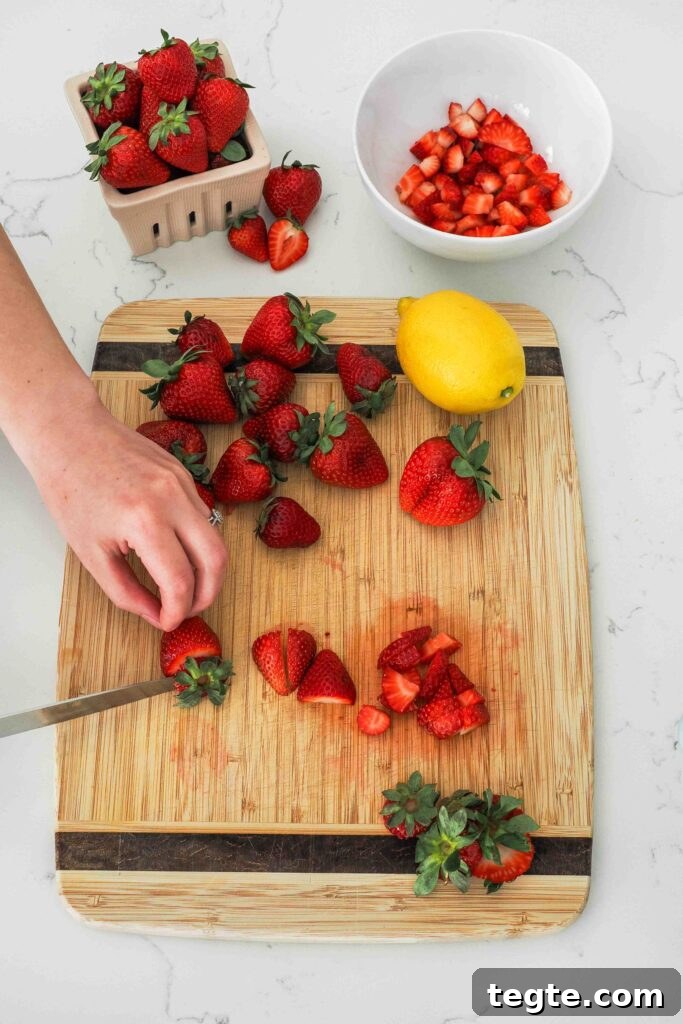
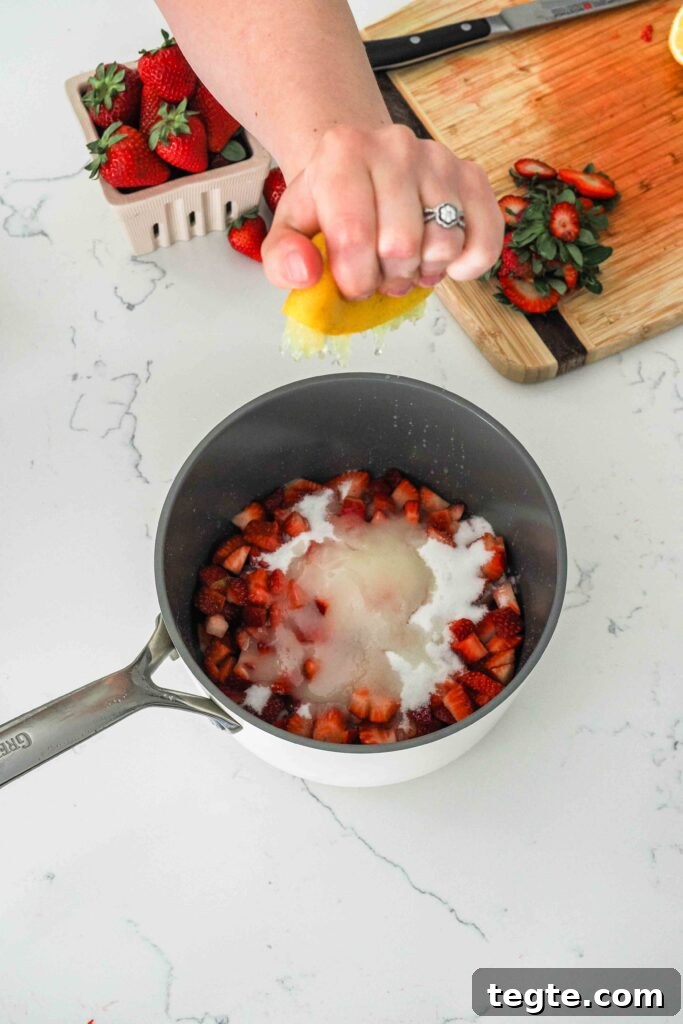
How to Make Small Batch Strawberry Jam
Place the pot over medium heat and stir occasionally for about 10 minutes until the sugar dissolves and the mixture becomes a bright, dark red syrup. Increase heat if needed and bring the jam to a steady rolling boil that doesn’t subside when stirred.
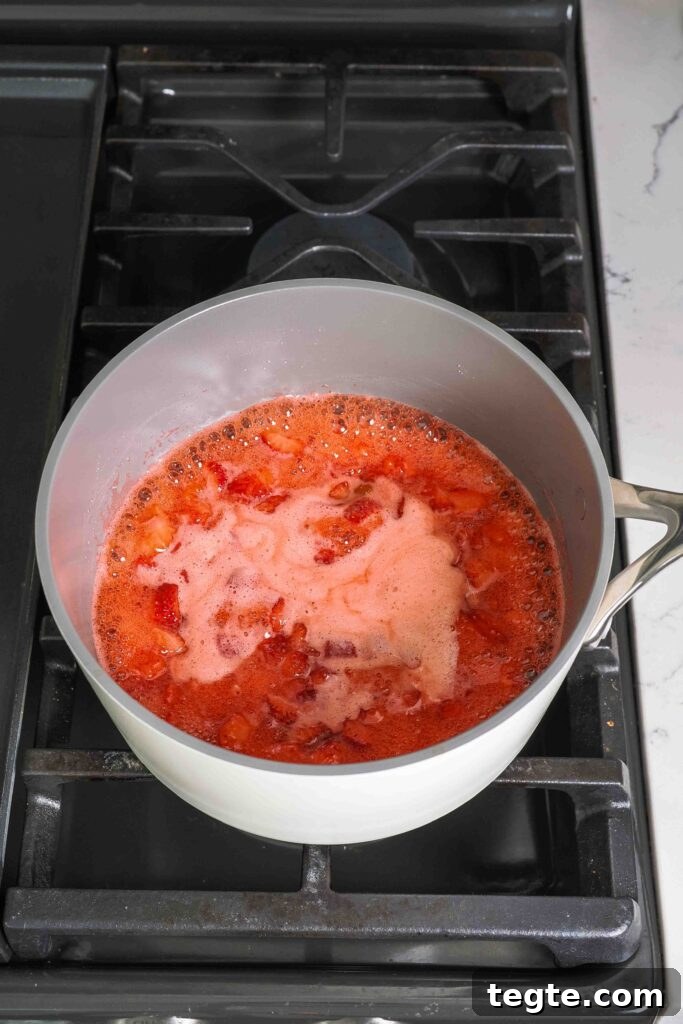
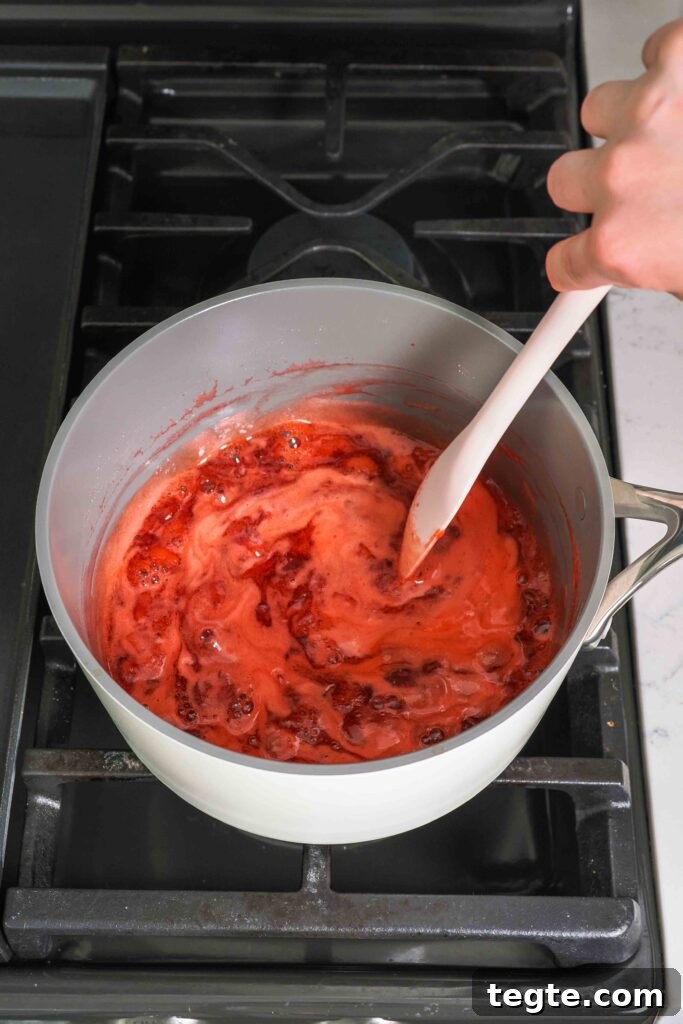
After the jam has boiled steadily for about 5 minutes, test for doneness using a thermometer or the chilled-plate method.
Temperature Check
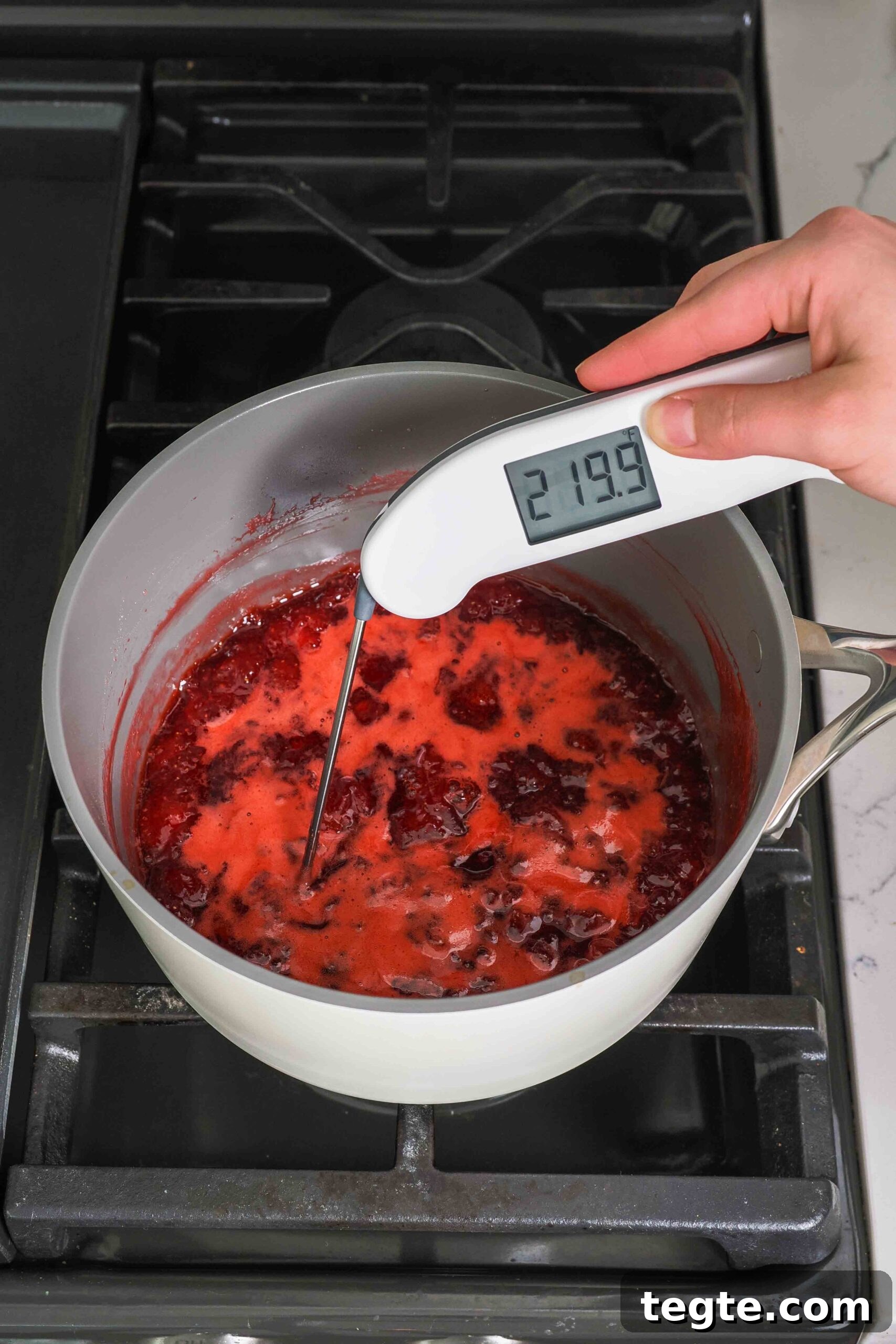
Use a candy or quick-read thermometer to confirm the jam reaches 219–220°F (104–105°C). Sugar and natural pectin form a gel near 220°F; reaching this temperature is the most reliable way to ensure your jam will set. If you pass this point by a lot, the jam can become overly thick and stringy; you can thin it later with small additions of water once cooled.
The Chilled Plate Test
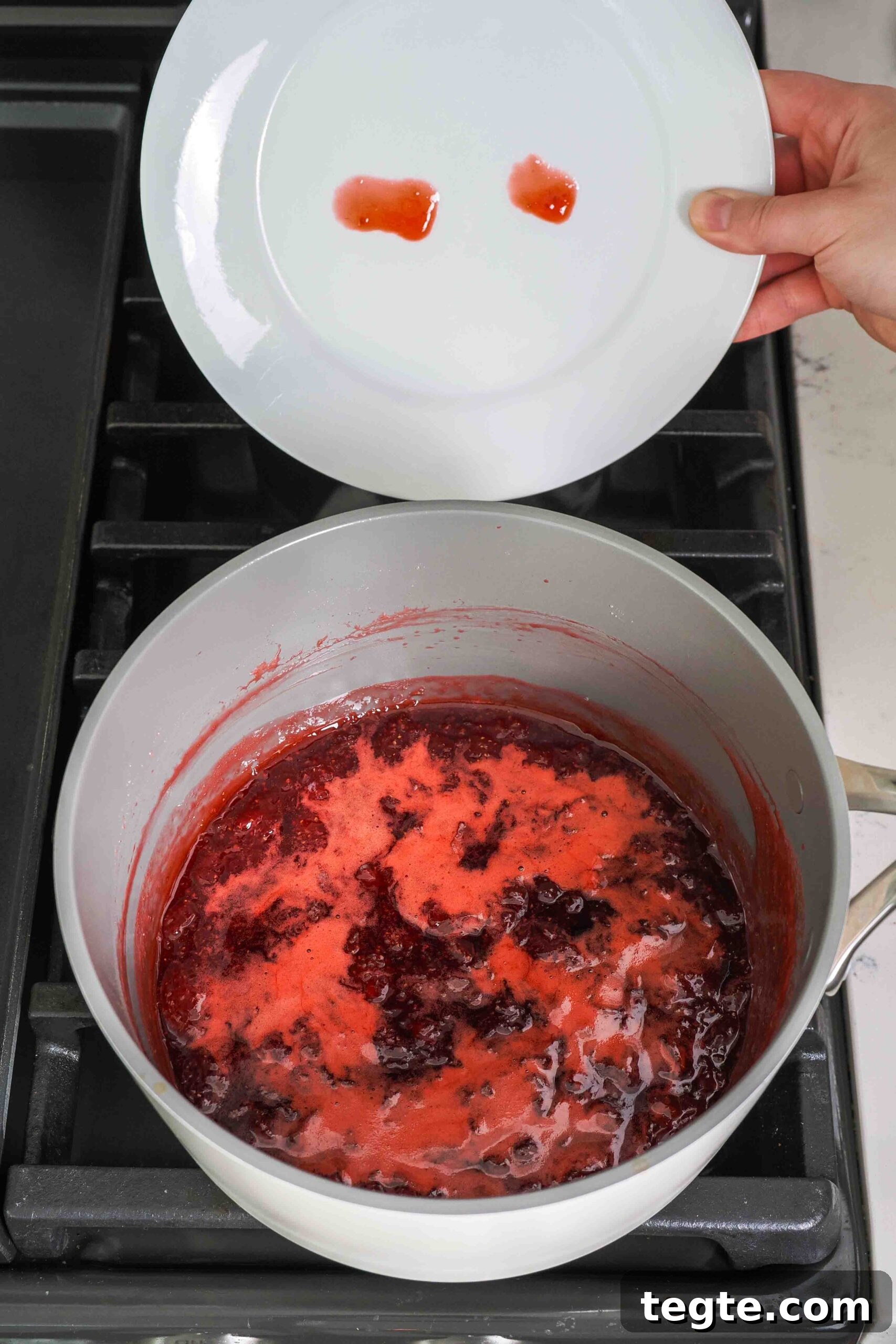
If you don’t have a thermometer, chill a ceramic plate in the freezer before you start. When the jam appears to thicken at the edges, drop a small spoonful on the cold plate, wait 10–15 seconds, then tilt the plate. If the drop runs, cook a little longer and retest. If it holds its shape, remove the jam from the heat.
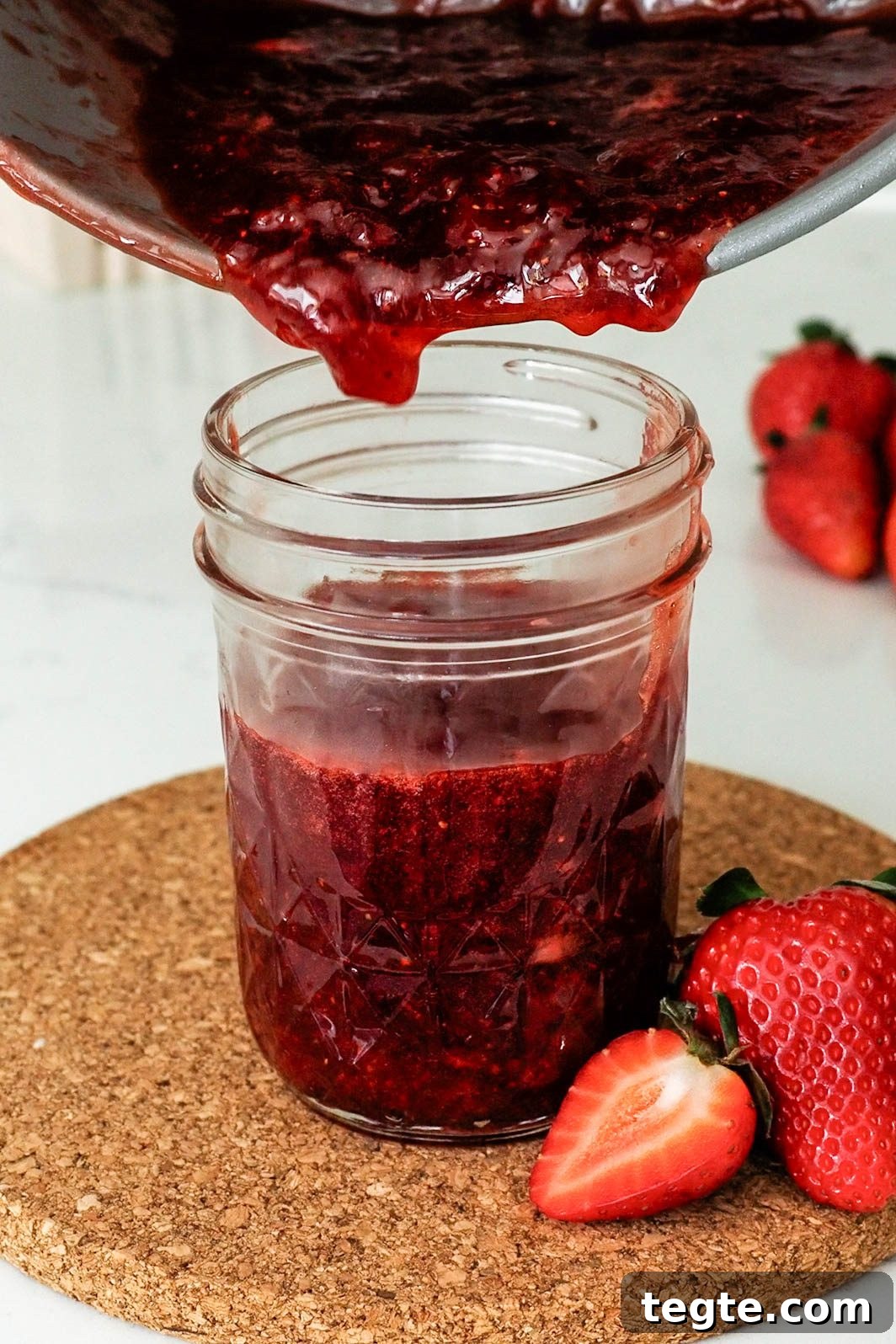
Pour the finished jam into clean jars and seal. I like Ball half-pint jars; this recipe yields about one full half-pint jar plus half of another—roughly 14 ounces (400 ml). Let jars cool at room temperature for a couple of hours before refrigerating or freezing.
Other Recipes You May Enjoy
If you like this jam, try my small-batch cherry jam or the champagne-infused strawberry jam, which is lovely in cupcakes. For more fruit-based recipes, check my cherry almond cupcakes and strawberry ice cream recipes.
Dish Cleanup: Not Too Bad
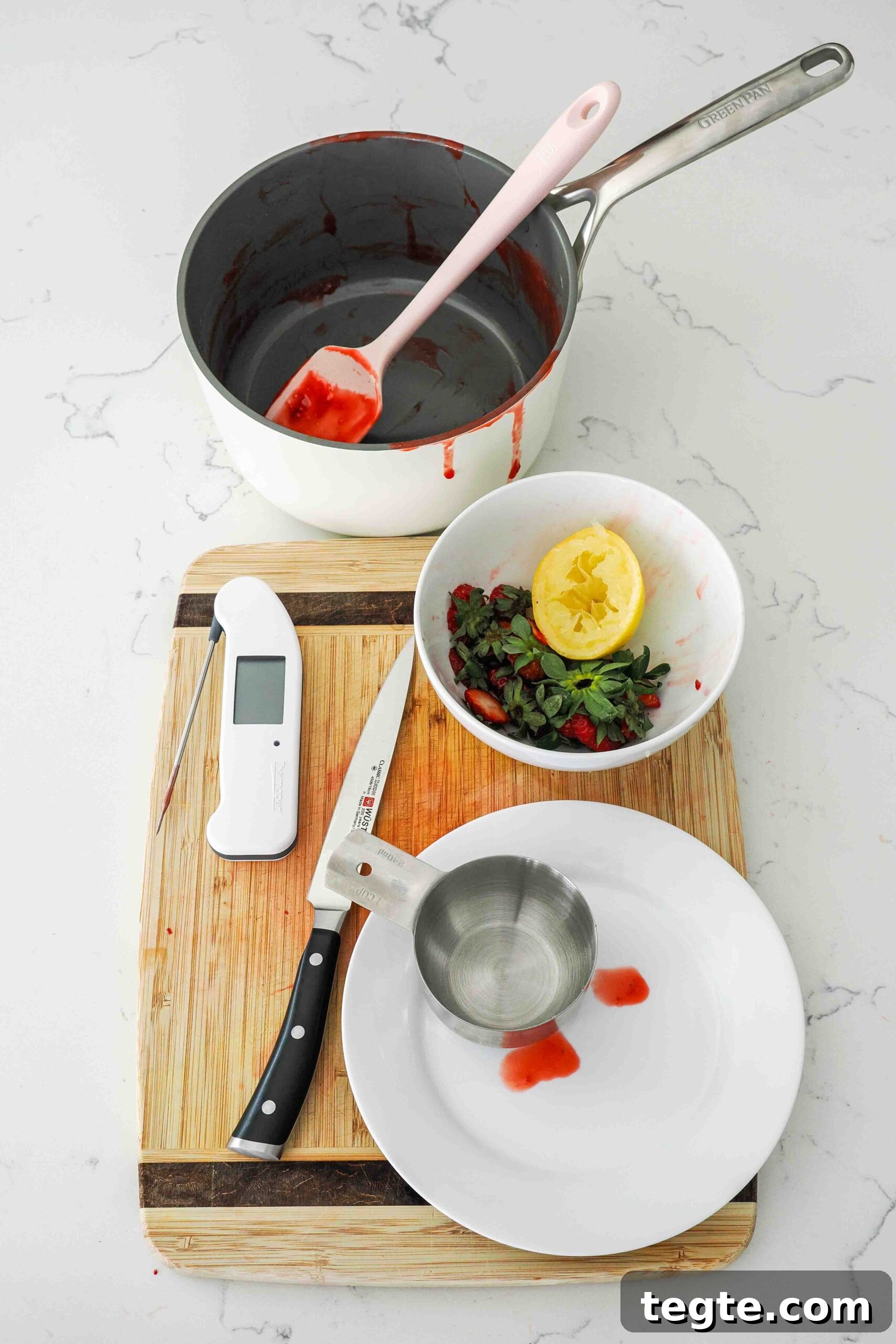
I rate cleanup on a scale of 1 to 5; this recipe is a 2. You’ll need a pot, knife, cutting board, thermometer or plate, and a spatula. Soak the pot with warm water for 10–15 minutes to loosen jam residue, and wash the rest as usual.
Strawberry Jam Recipe—Small Batch
Thanks for stopping by! If you make this small batch of strawberry jam, please leave a review to share how it turned out.
Small Batch Strawberry Jam
Ingredients
- 2 cups (400 g) diced and hulled strawberries — about one 16-oz container
- 1 cup (200 g) granulated sugar
- 2 Tablespoons (30 ml) lemon juice — from about one lemon
Instructions
- Wash and hull the strawberries. Dice them into 1/4″ (6 mm) pieces. Add the diced berries, sugar, and lemon juice to a medium pot.
- Heat over medium, stirring occasionally, until the sugar dissolves and the syrup turns a dark red, about 10 minutes.
- Bring to a rolling boil that cannot be stirred down. Stir occasionally and scrape the bottom of the pot. Cook 10–15 minutes until the jam thickens and reaches 220°F/105°C. If you don’t have a thermometer, use the chilled-plate test: put a drop of jam on a chilled plate, wait 15–20 seconds, then tilt the plate. If it runs, cook a bit longer; if it holds shape, remove from heat.
- Pour the jam into jars, seal, and refrigerate. The jam will thicken as it cools; for best texture let it set overnight.
Notes
Jam can bubble up 3–4 times in volume during boiling, so use a medium pot for room to expand. Dicing the strawberries small helps the jam set without added pectin. Once opened, store in the refrigerator for up to three months; unopened jars can be frozen for up to a year. This recipe can also be processed for long-term canning following safe canning guidelines.
Recommended Supplies
- Half-pint jelly jars (for storing)
- Silicone spatula
- Candy or instant-read thermometer (recommended)
Nutrition
I’d love to see your results—take a photo and tag @floralapronblog on Instagram or use the hashtag #floralapronbakes to share.
FAQs about Homemade Strawberry Jam
Strawberries are low in pectin, so small diced pieces suspend better in jam made without added pectin. Diced fruit also distributes more evenly and gives a better set.
Most likely it didn’t reach 220°F/105°C or the pieces were too large. Reheat to 220°F to thicken, or strain and use as a syrup if preferred.
That indicates overcooking. An inaccurate thermometer or prolonged cooking can cause this. Stir in small amounts of water after cooling to loosen the texture.
Yes. Stir in a teaspoon or two of vanilla extract or vanilla bean paste after removing the jam from heat for added depth.