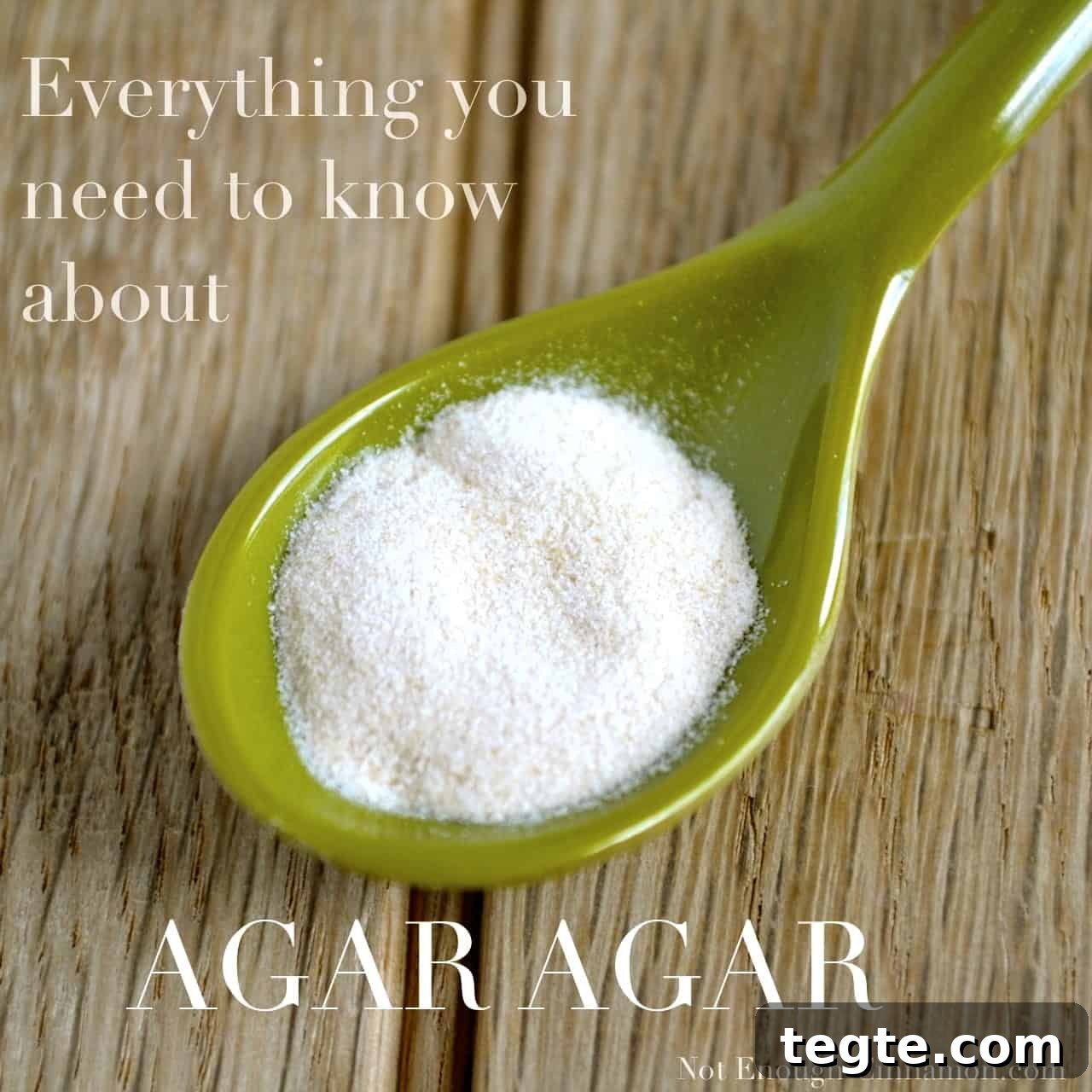
What is agar?
Agar, also known as agar-agar or kanten, is a natural gelling agent derived from certain species of seaweed native to Southeast Asia. It is widely used across industries: in laboratories as a microbiological growth medium, in papermaking and textile sizing, and in brewing as a clarifying agent. In food and culinary applications, agar serves as a vegetarian alternative to gelatin, a thickener for soups and sauces, and a setting agent for preserves, puddings, and frozen desserts. It is also used in some dietary contexts for its high fiber content.
Where can you find agar?
Agar is sold in health food stores, many supermarkets with natural food sections, Asian grocery stores, and through various online retailers. It is commonly available in powder or flake form.
Health benefits
Agar is virtually calorie-free and contains no fat, sugar, or carbohydrates; it is primarily composed of soluble fiber. It is free from common allergens such as gluten, dairy, eggs, soy, corn, and yeast, and does not contain preservatives. Because agar absorbs water and forms a gel, it can help create a feeling of fullness and may aid in digestion by promoting regular bowel movements. In the digestive tract, agar can bind bile acids and help the body eliminate cholesterol more effectively.
A suitable substitute for gelatin
Agar is an excellent plant-based substitute for animal-derived gelatin, making it appropriate for vegetarian and vegan diets as well as other dietary restrictions. It is tasteless, colorless, and odorless, which preserves the intended flavor and appearance of recipes. Agar sets more firmly than gelatin and retains its structure well at warmer temperatures.
However, agar and gelatin produce different textures: gelatin tends to yield a softer, creamier mouthfeel, while agar creates a firmer, more brittle gel. Agar is also much more potent by weight than gelatin; roughly 1 teaspoon of agar powder can replace about 8 teaspoons of gelatin powder, so conversions should be made carefully.
How to use agar
The key rule when using agar is to dissolve it completely in a liquid and bring that mixture to a full boil before cooling to set. Agar will not gel properly if it is merely sprinkled onto a cold mixture. Follow package instructions and specific recipes for best results, but here are practical guidelines you can adapt:
- Typical conversion: 1 tablespoon of agar flakes to thicken 1 cup (240 ml) of liquid, or 1 teaspoon of agar powder to thicken 1 cup (240 ml) of liquid.
- If you cannot boil the target liquid directly, pre-dissolve agar: combine 1 tablespoon agar flakes or 1 teaspoon agar powder with 4 tablespoons of hot water, stirring until dissolved.
- Bring the dissolved agar mixture to a rolling boil.
- Simmer after boiling: 1–5 minutes for powder, 10–15 minutes for flakes, ensuring the agar has fully dissolved.
- Stir the hot agar mixture into the warmed ingredients until well combined.
- Allow the mixture to cool; the agar will set as it cools.
When substituting agar for gelatin in recipes, adjust quantities to account for agar’s stronger gelling power and different texture. Test small batches if precise texture is important for the final dish.
Sources:
– How to use Agar Agar – wikiHow
– Agar Diet – eHow.com
– Agar Diet – Livestrong.com
– Gelatin and Agar Agar – About.com
– Agar Agar – Wikipedia