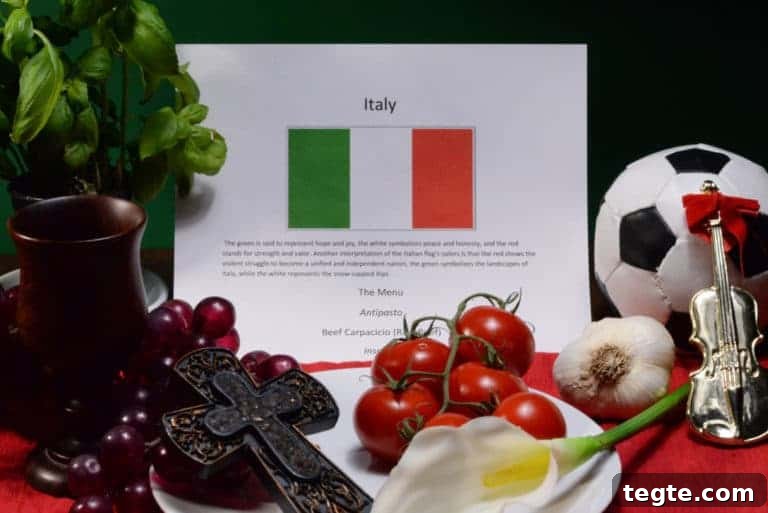
Italy, known to its people as Italia, carries a name with ancient roots. One theory traces it to the Latin vitulus, meaning “calf,” reflecting the region’s historical wealth in cattle. Another legend from Greek mythology credits a bull called Italos that swam to the peninsula, lending its name to the land that became Italy.
Positioned in the heart of the Mediterranean, Italy is a boot-shaped peninsula whose “ball” is the island of Sicily. The country includes many islands, with Sicily and Sardinia the largest. Italy shares land borders with France, Switzerland, Austria and Slovenia, and encloses two independent microstates: Vatican City and San Marino. With an extensive coastline stretching roughly 4,700 miles, Italy’s geography is diverse and striking.
About four-fifths of Italy is mountainous or hilly, dominated by the Alps in the north and the Apennines through the spine of the peninsula. The fertile Po Valley sits along the country’s longest river. Italy’s highest peak is Mont Blanc in the Alps. The country also features active volcanoes—Etna, Stromboli and Vesuvius—which have shaped both landscape and history.
The population is predominantly Italian, with minorities including German, French, Slovene, Albanian and Greek communities. Italian, a Romance language, is the national tongue. Roman Catholicism remains the major religion and the Church has had a profound influence on Italian culture; the presence of the Vatican in Rome underscores this connection.
Italy’s political geography historically favored many independent city-states and kingdoms. National unification occurred in 1861 under Victor Emmanuel II. The modern Republic was established after World War II; Italians mark June 2 as Festa della Repubblica to celebrate that transition.
Italy’s historical importance is immense. It was the cradle and center of the Roman Empire, which dominated much of Europe, North Africa and parts of Asia for centuries. Roman innovations—roads, aqueducts, apartment-like insulae, public baths and sanitation systems, and advances in law and governance—left a lasting legacy. The Julian calendar, reformed by Julius Caesar, influenced the modern Western calendar. Roman contributions to architecture, engineering, medicine and military organization continue to shape the world.
Italy also boasts the highest concentration of artistic masterpieces anywhere on Earth and holds more UNESCO World Heritage sites than any other country. Tourism is a cornerstone of the economy, attracting millions of visitors to Italy’s museums, monuments, historic centers and landscapes every year.
Rome, the “Eternal City” and Italy’s capital, contains innumerable treasures: St. Peter’s Basilica and the Sistine Chapel in Vatican City, the Colosseum, the Trevi Fountain—where visitors toss coins that are collected for charity—and extensive ancient aqueducts and catacombs. Florence, widely regarded as the birthplace of the Renaissance, houses works by Michelangelo, Botticelli and Leonardo da Vinci. The Duomo of Florence, with its remarkable dome and ornate marble façade, is a UNESCO highlight and a marvel of engineering and artistry.
Tuscany, with its rolling hills, vineyards and medieval hill towns, embodies the pastoral landscape many associate with Italy. Pisa’s leaning tower and the Chianti wine region are among its famed attractions. Venice, built on 118 islands and connected by canals and bridges, is celebrated for its unique urban fabric, St. Mark’s Basilica, Carnival masks and film festival. Despite challenges from flooding and subsidence, Venice remains an unparalleled cultural destination.
Milan, Italy’s commercial and industrial hub, is also a global center for fashion and design, hosting major fashion houses and catwalk shows. It preserves important cultural assets too, such as Leonardo da Vinci’s Last Supper. Football (soccer) is a national passion—Italy has won the World Cup multiple times—and Milan has hosted major international events including world fairs and sporting tournaments.
Italian cuisine is regional, vibrant and central to daily life. Each region has distinct specialties shaped by local ingredients and traditions. Emilia-Romagna, often called Italy’s food basket, is home to Parmigiano-Reggiano, prosciutto di Parma, traditional balsamic vinegar and rich pasta and meat traditions. Italians prize fresh, seasonal ingredients and simple preparations that let flavors shine. Meals are social events enjoyed slowly with family and friends, often accompanied by wine.
Pasta offers astonishing variety—hundreds of shapes and regional names—and appears in many forms: simply dressed with sauces, served in broths as soups, or baked al forno in layered dishes like lasagna. Italian cheeses number in the hundreds, made from cow, sheep, goat and water buffalo milk; staples include mozzarella, ricotta, burrata, mascarpone and Parmigiano-Reggiano, along with gorgonzola, pecorino and fontina.
Pizza has deep Italian roots as well, with the modern Margherita famously created in Naples in 1889 to honor Queen Margherita with toppings that mirror the national colors: tomato, mozzarella and basil. Authentic pizza is traditionally cooked in a wood-fired oven and remains a beloved staple across Italy.
During a recent Italian-themed meal, we set a festive table in the colors of the flag, enjoyed Prosecco for an aperitif and listened to Luciano Pavarotti as background for the evening. We began with antipasto—beef carpaccio topped with arugula, pomegranate seeds and shaved Parmigiano-Reggiano, finished with olive oil and lemon. A Caprese salad of fresh buffalo mozzarella, ripe tomatoes, basil and a balsamic reduction followed; its simplicity depends on the freshest ingredients.
For the main course we served Veal Estensi—thin veal scaloppine in a cream sauce with porcini mushrooms, Madeira and a hint of orange—resting on fettuccine Alfredo prepared in the classic Italian style of butter and cheese. Dessert was tiramisu, a light layered coffee-flavored dolce that remains a favorite finale.
Additional highlights included homemade Pizza Margherita and a simple Insalata di Tonno e Cannellini—tuna mixed with white beans, celery and parsley, finished with extra virgin olive oil, salt and pepper—a perfect example of Italian culinary economy and flavor.
To close, a few memorable Italian food quotes: “Everything you see I owe to pasta.” — Sophia Loren. “Life is too short, and I’m Italian. I’d much rather eat pasta and drink wine than be a size 0.” — Sophia Bush. “It all ends with biscuits and wine.” — Unknown.
Until next time,
Arrivederci and ciao,
Darlene Longacre