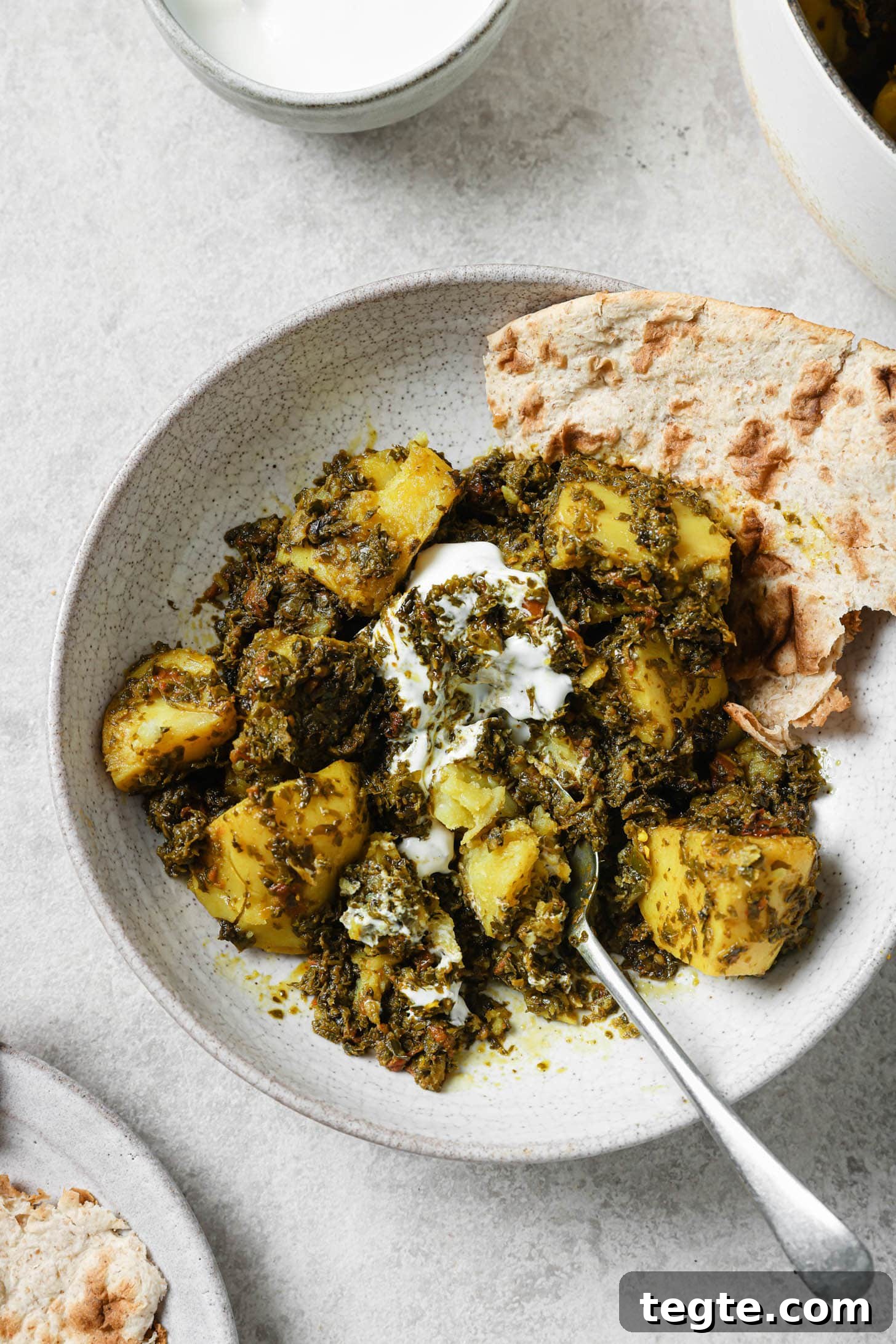
A simple and satisfying Punjabi-style dry Aloo Methi (potatoes cooked with fresh fenugreek leaves) that’s far greater than the sum of its parts. This version is my mother-in-law’s straightforward dump-and-go recipe made with eight core ingredients. Includes practical tips for preventing bitterness and using frozen methi.
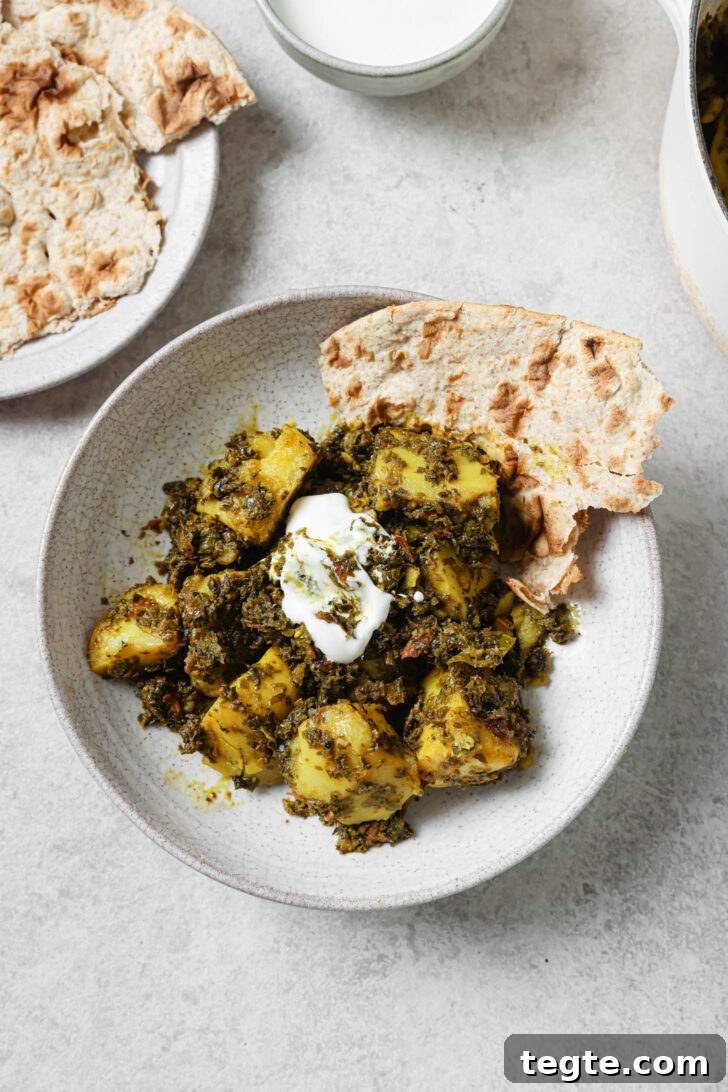
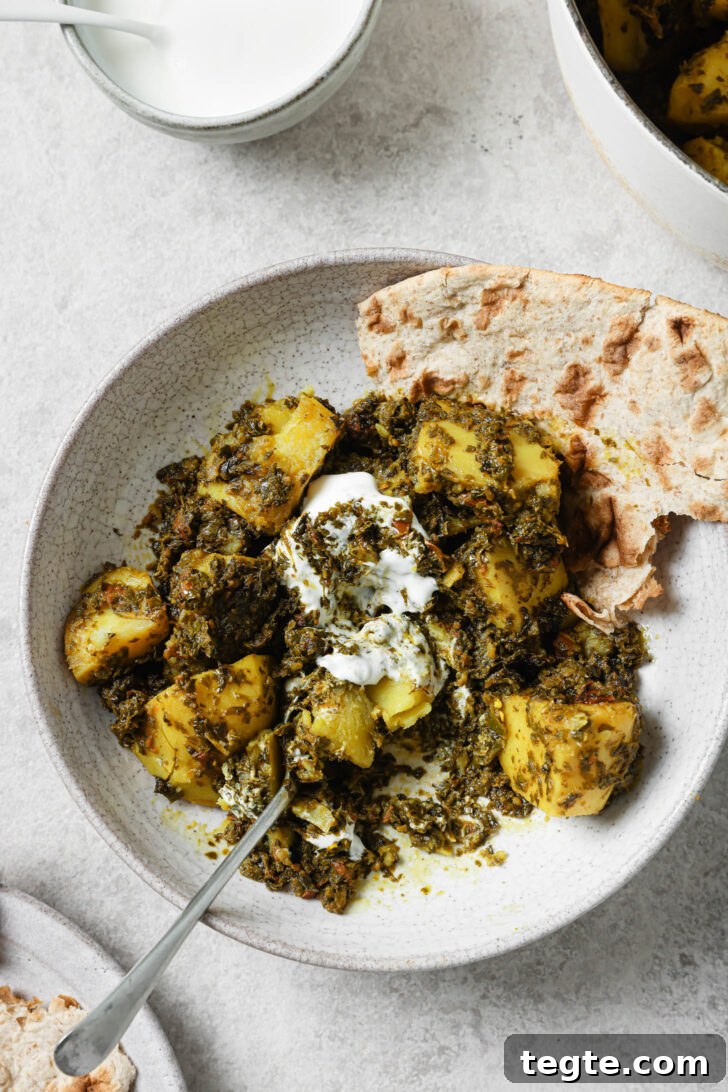
Aloo Methi
Methi, or fenugreek, is often underrated in many American kitchens. While it may be unfamiliar to some, fresh methi brings a tender, herbaceous quality that pairs perfectly with potatoes. Dried methi adds depth to classic gravies, but when cooked fresh, the leaves become soft and melt into a dish that’s both comforting and bright.
I pick up fresh methi at my local market when it’s in season (late fall through early spring). My in-laws love light, home-style food—vegetables and dal—and Aloo Methi is a staple that even my kids enjoy. I learned this recipe from my mother-in-law because it’s simple, dependable, and full of flavor.
Ingredient Notes
This recipe uses a short list of ingredients so the flavors of potatoes and methi can stand out. Each ingredient contributes meaningfully to the final dish:
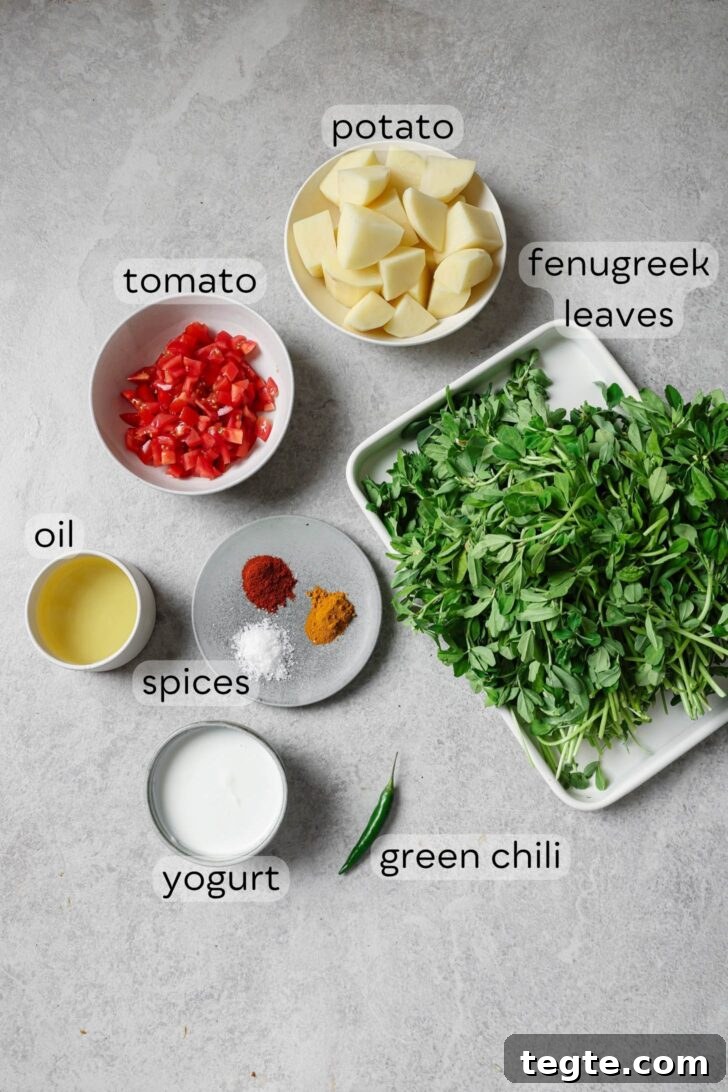
- Fresh Methi: Aromatic, slightly bitter, and very tender when cooked. In season, find it at Indo-Pak grocery stores. Preparing the leaves takes time, so consider prepping ahead or using frozen methi when needed.
- Russet Potatoes: Use sturdy potatoes like Russets or red potatoes. Cut into 1½” cubes so they hold their shape through steaming and sautéing. Smaller pieces will break down and yield a mushier texture.
- Roma Tomatoes: Firm, meaty tomatoes like Roma give a balanced sweetness and acidity without excess seeds.
- Green Chilies: Indian finger chilies or Serranos work well. One chili gives a mild heat; increase or decrease to taste. Slice or roughly chop depending on your preference.
- Dried Spices: Simple red chili powder and turmeric are used here to complement methi without overpowering it. Adjust the red chili to match your spice tolerance.
How to make Aloo Methi
Prepare the Methi
Prepping methi is the most time-consuming part, usually 20–30 minutes depending on experience. Removing stems and washing the leaves properly prevents grit and reduces bitterness.
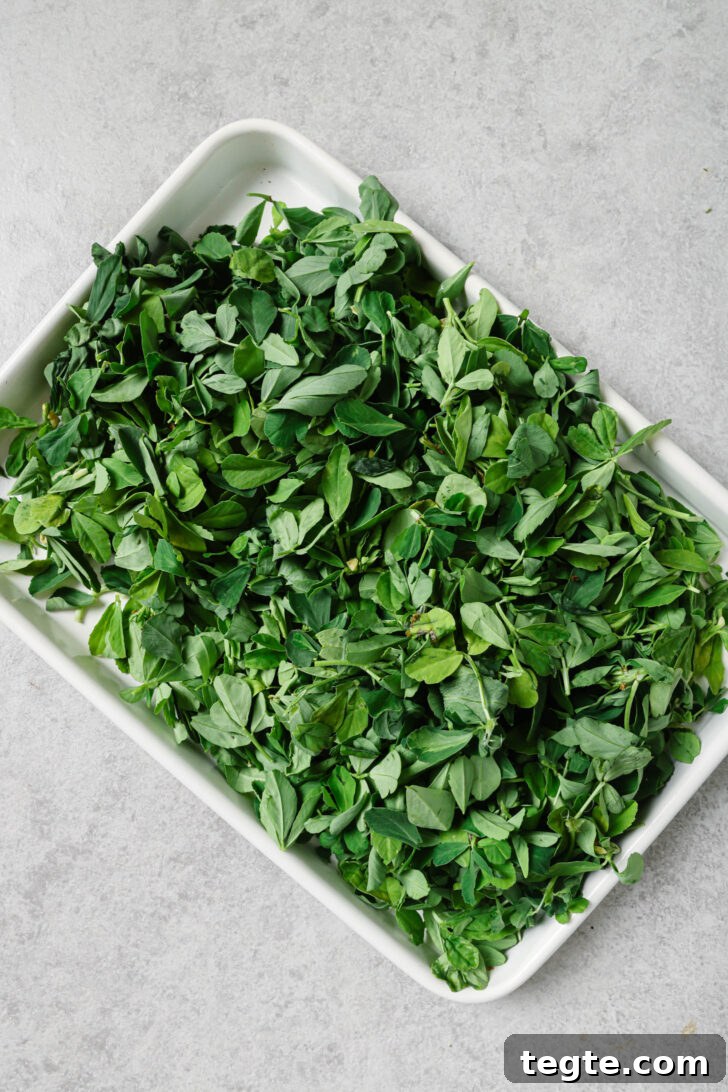
How to clean and prep fresh methi:
- Stem the methi before washing—wet leaves are harder to pick. Hold the stem and pull off the leaves like you would with mint.
- Remove thick stems, leaving only tender stems. Stems are where bitterness concentrates.
- Rinse the loose leaves in a large bowl of water: submerge, swirl to loosen dirt, lift leaves out or drain in a colander, and repeat until no grit remains in the bowl. Finish with a quick drain to remove excess water.
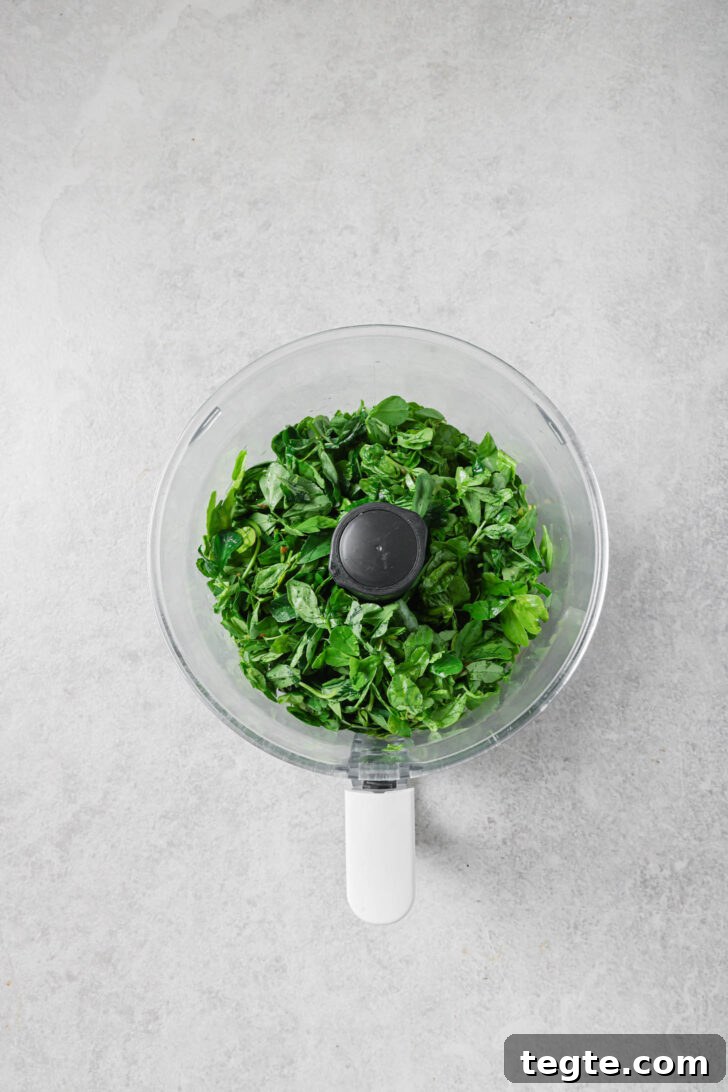
- Finely chop the methi by hand or pulse briefly in a food processor. You want chopped leaves, not a puree.
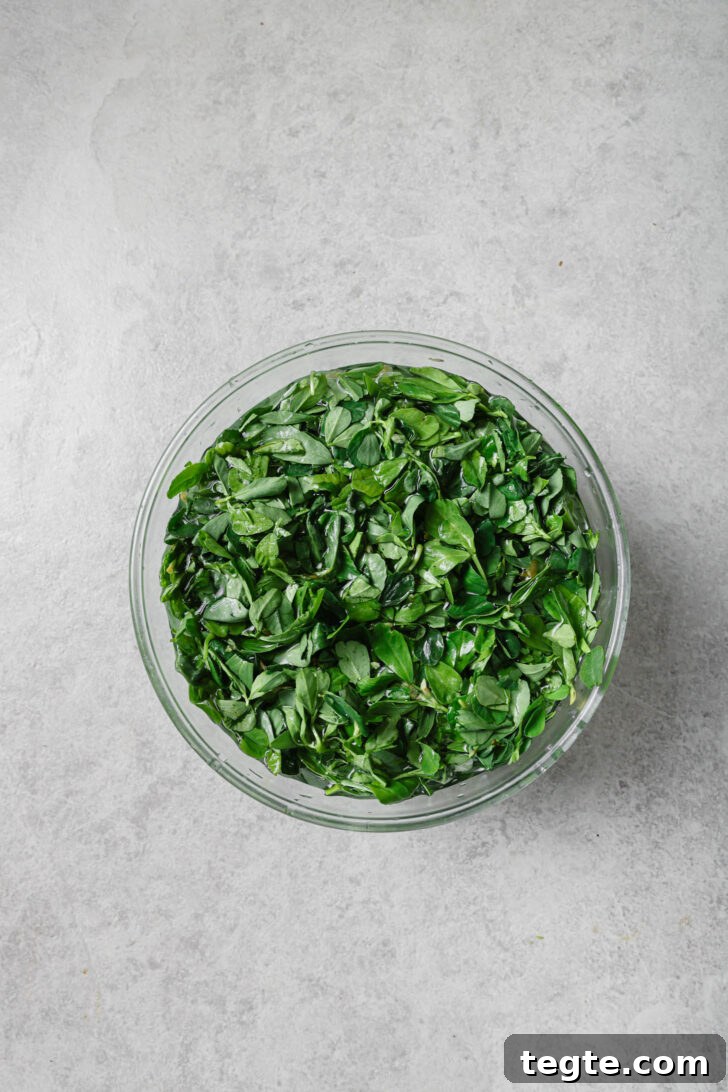
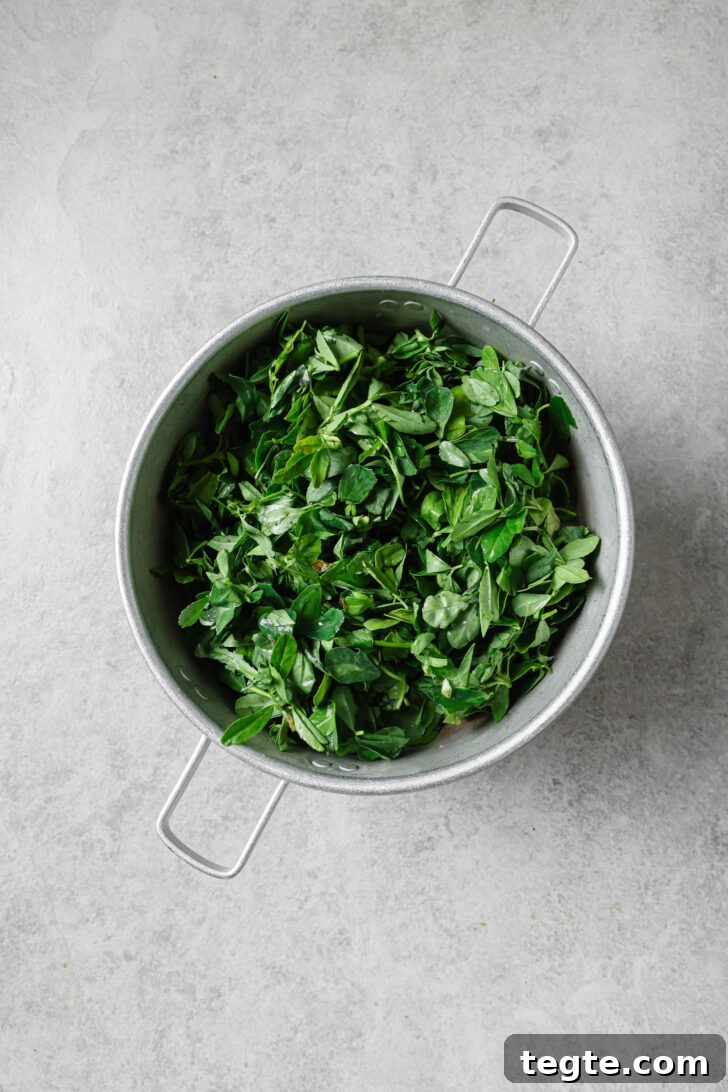
- Chop the cleaned methi finely and set aside until ready to cook.
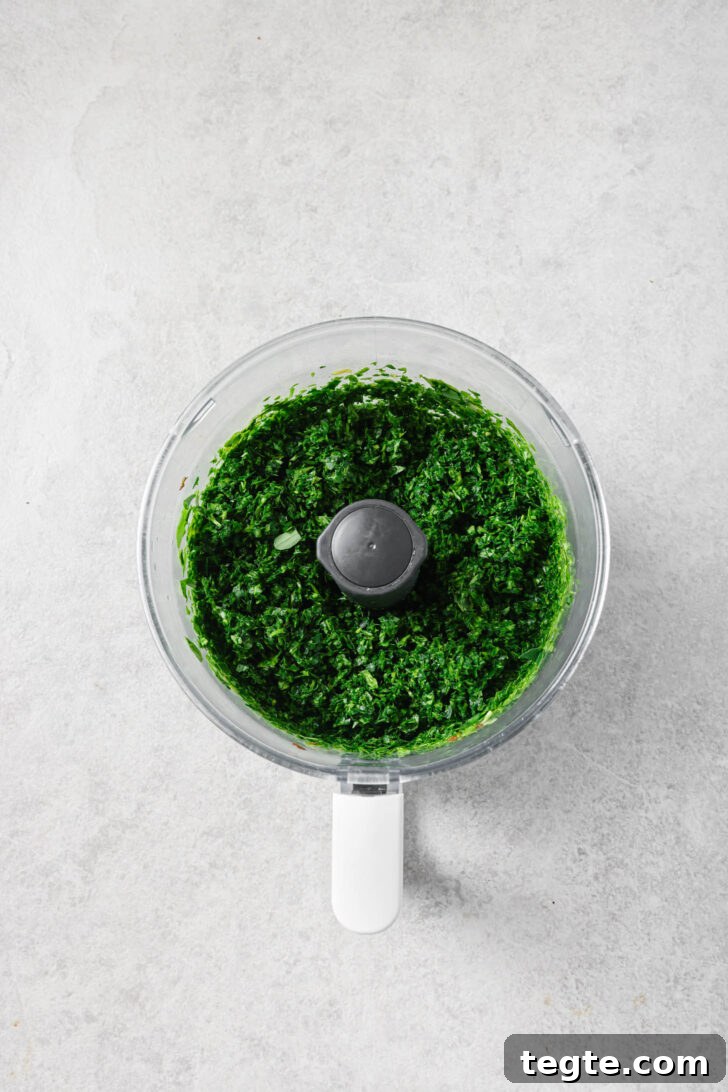
Layer and steam the methi and other ingredients
- Place the chopped methi in a nonstick Dutch oven or heavy-bottomed pot. Do not heat or add water yet. Methi and the tomatoes/potatoes will release enough moisture during cooking.
- Layer the cubed potatoes, chopped tomatoes, and green chilies on top of the methi. Sprinkle salt, red chili powder, and turmeric over everything. No stirring required.
- Cover and turn the heat to medium-high. Let steam build for 6–7 minutes to soften the methi and start releasing its moisture. You’ll see liquid collect and begin to simmer at the bottom of the pot.
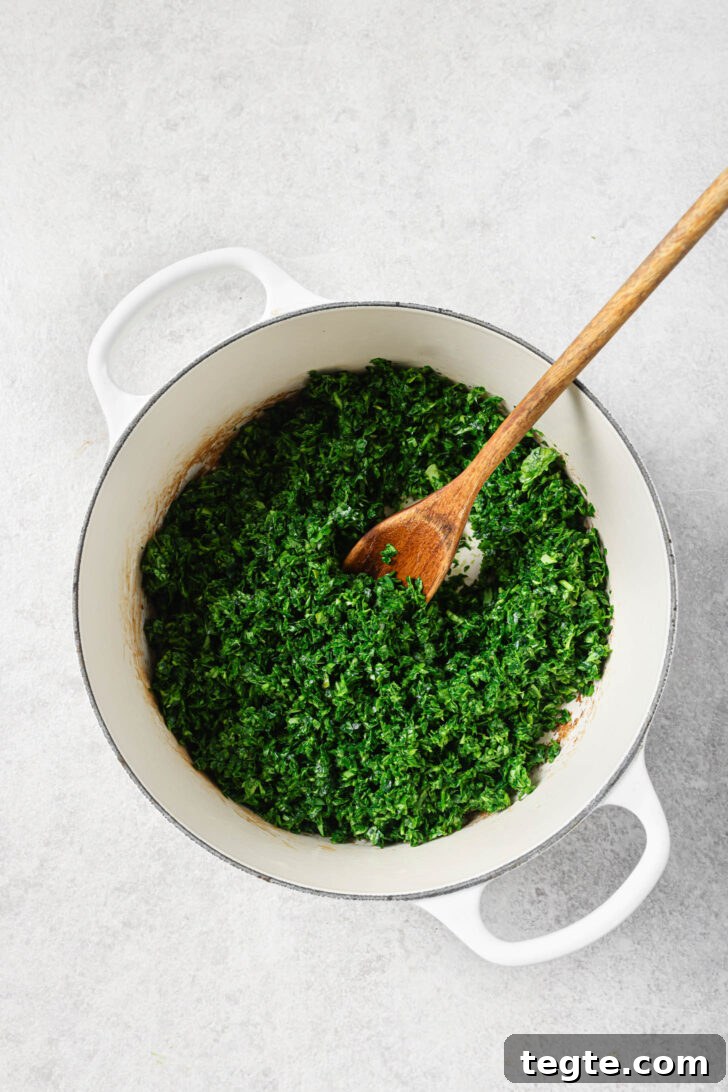

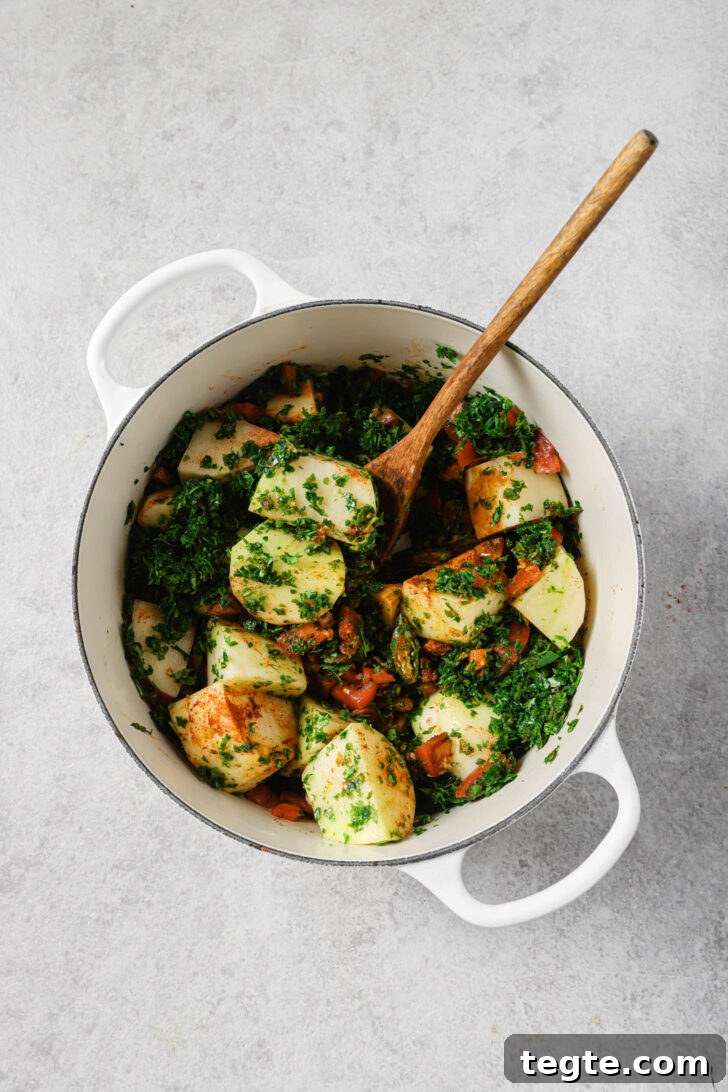
Cook until the potatoes are tender
- Uncover and stir gently to combine, coating the potatoes with spices. The mixture will simmer as the vegetables release more liquid.
- Pour in the oil and stir to distribute. Bring the pot back to a simmer.
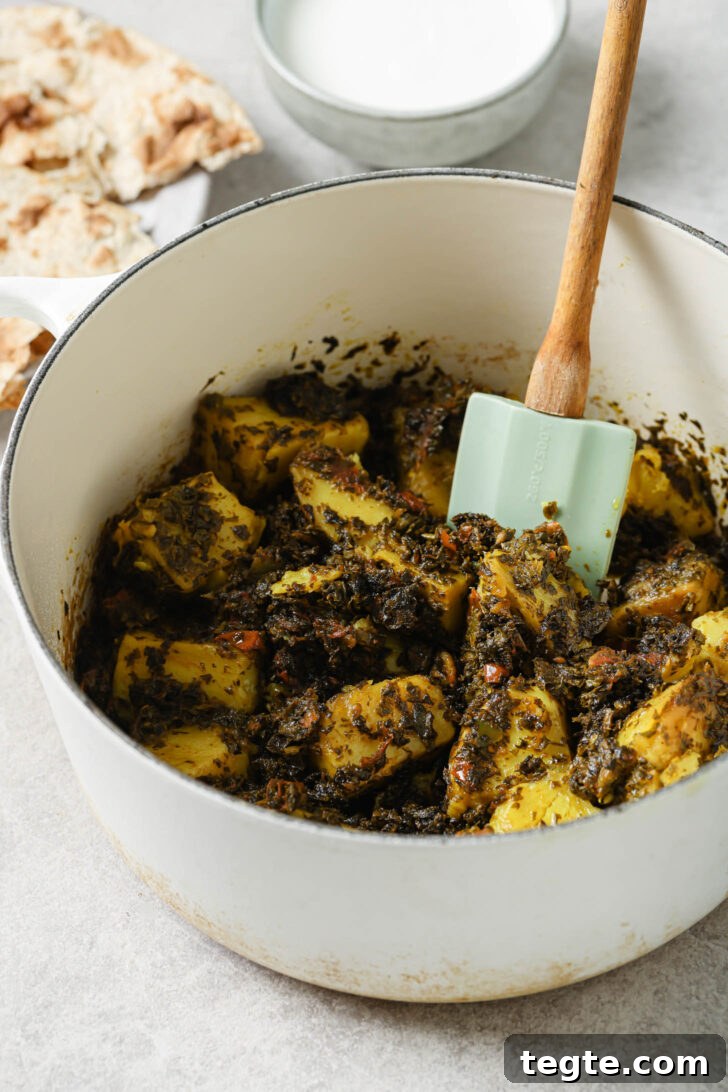
- Lower the heat, cover, and cook for about 24 minutes, stirring once halfway through. The potatoes should be tender and yield to a fork. At this point the methi will darken and some moisture will remain. A mild bitterness at this point is normal and will mellow in the final step.
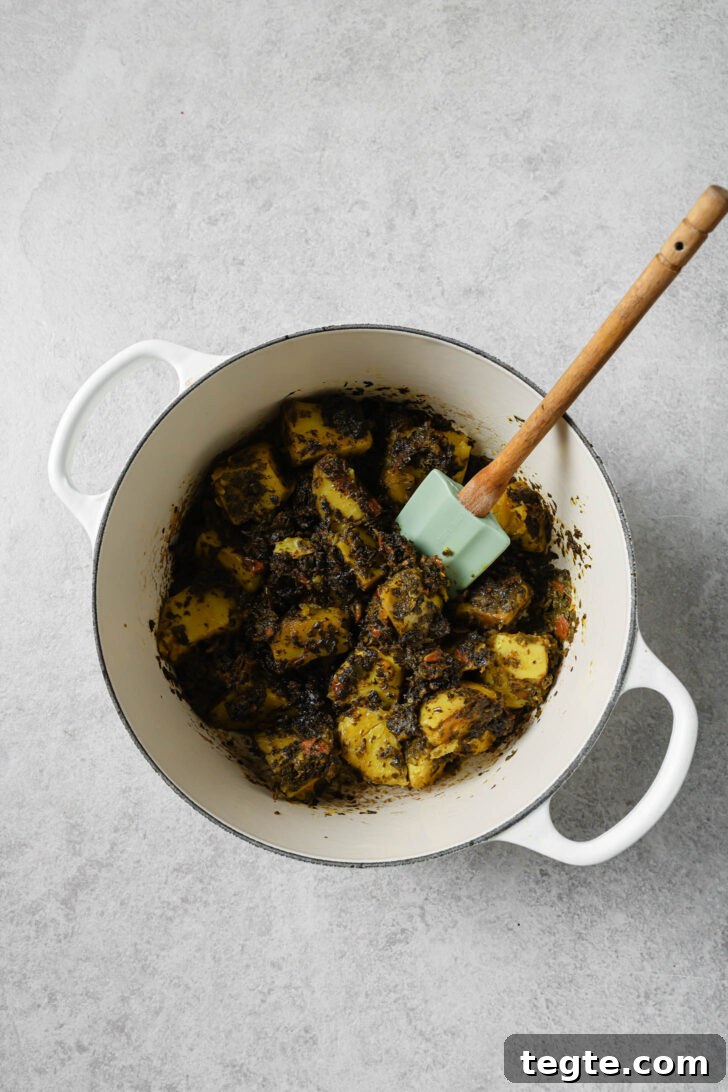
Sauté to Finish
- Remove the lid, increase heat to medium-high, and sauté for 10–11 minutes, stirring occasionally and gently to avoid breaking the potatoes. Cook until all excess moisture evaporates and the methi begins to fry in the oil. If the pan looks dry with no oil visible, add 1–2 tablespoons more oil to achieve a light frying finish. This step reduces remaining bitterness and concentrates flavor. When there is no water left—only oil—turn off the heat, cover briefly, then serve.
How to Serve
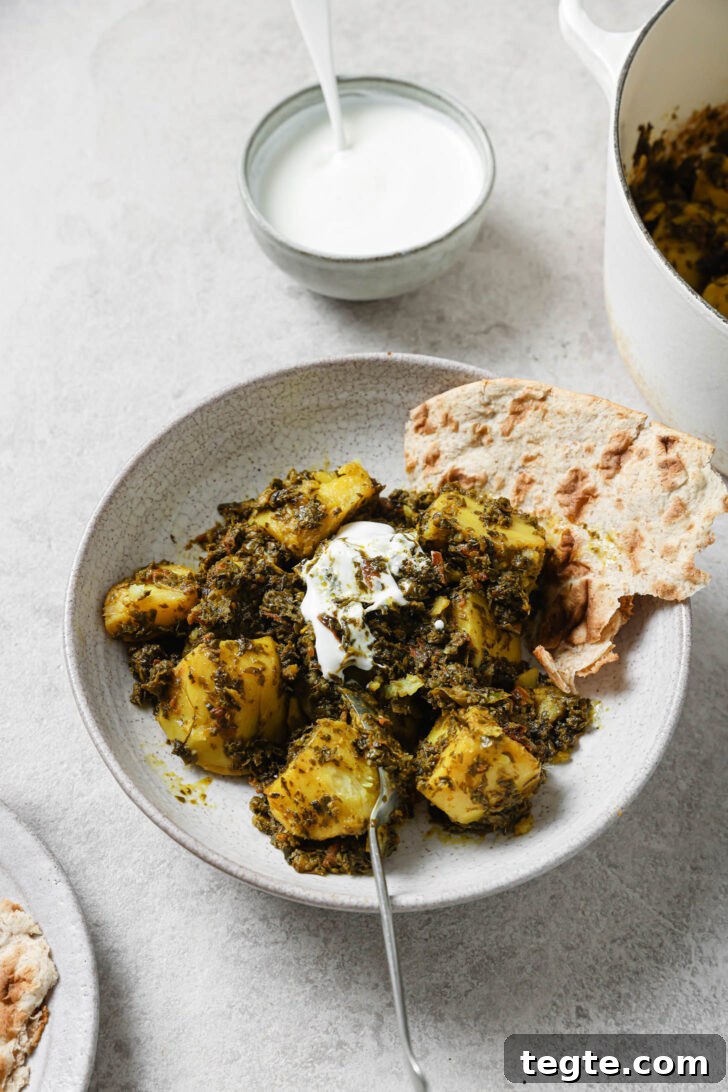
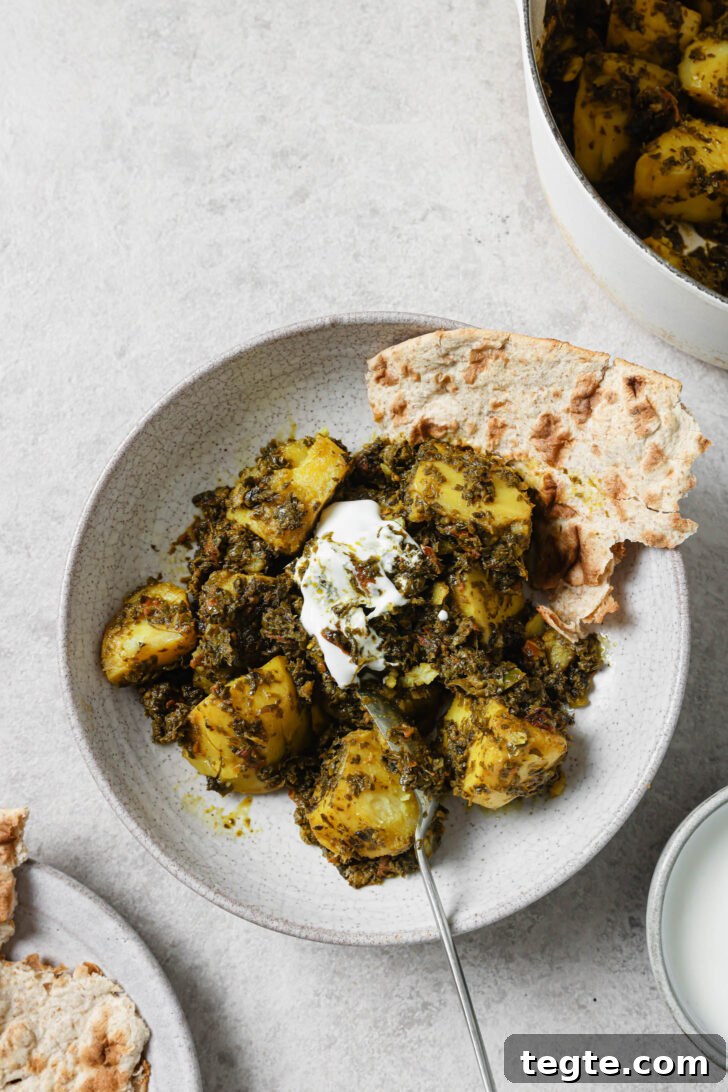
Serve Aloo Methi hot with plain yogurt and breads like roti, paratha, or naan. Because this is a relatively dry curry, it pairs especially well with a creamier dal, but any dal or a side salad works nicely to complete the meal.
Tried this recipe? If you make it, please consider leaving a comment describing how it turned out or sharing a photo in the comments. I love seeing your versions and hearing your feedback.
Mom-in-Law’s Aloo Methi (Potatoes and Fenugreek Leaves)
Ingredients
- 3 bunches (~700 g /1.5 lb) fresh fenugreek leaves (methi), measured whole unwashed bunches with stem, will be ~350-400g once stems removed (Note 1 for using frozen methi)
- 2 medium (~455 g) Russet potatoes (preferably organic), peeled and cubed into 1 ½ ” cubes.
- 2-3 small (200 g) Roma tomatoes, chopped
- 1 small Serrano or large Indian green chili pepper, chopped
- 1 1/2 tsp kosher salt
- 3/4 tsp red chili pepper, ½ tsp for less spicy
- 3/4 tsp turmeric powder
- 1/2 cup neutral oil, plus more if needed
- plain, whole-milk yogurt, optional, for serving
Instructions
Prep the Methi (Fenugreek Leaves)
-
Without washing, pull the methi leaves off the stems. Tender stems are fine; avoid thick stems to reduce bitterness.
-
Transfer leaves to a large bowl, fill with water, and swish to remove dirt. Lift the leaves out or drain in a colander and repeat until the bowl is clean. Drain very well. You can do this step in advance and refrigerate the leaves.
-
Pulse the methi in a food processor in batches until chopped but not puréed, or finely chop with a knife.
Cook Aloo Methi
-
Place chopped methi in a nonstick Dutch oven or heavy-bottomed pot. Do not turn on the heat.
-
Scatter potatoes, tomatoes, and green chilies over the methi, then sprinkle salt, red chili powder, and turmeric. No need to stir or add water.
-
Cover and cook over medium-high heat for 6–7 minutes to generate steam and release moisture from the methi and vegetables.
-
Uncover, stir gently to combine, and pour in the oil. Bring to a simmer.
-
Reduce heat to low, cover, and cook for about 24 minutes, stirring once. Potatoes should be tender and methi will have darkened. A slight bitterness now will be resolved in the next step.
-
Increase heat to medium-high and sauté for 10 minutes, stirring gently, until all excess moisture evaporates and the methi fries lightly in oil. Add 1–2 tablespoons oil if needed. Turn off the heat, cover briefly, then serve hot with yogurt and flatbreads.
Notes
Note 1: Substitute fresh methi with frozen: Frozen methi (commonly sold in 310g/11 oz bags at Indo-Pak stores) works well. The main difference is water content: frozen methi requires adding some water during cooking. Most people won’t notice the difference in taste.
- Thaw frozen methi at room temperature for 1–2 hours or use a microwave defrost setting until the chunks soften slightly. They may still be in loose chunks.
- After the initial steaming step, break up the thawed methi with a wooden spoon, add 1/2 cup water, then pour in the oil. Continue the recipe as written.