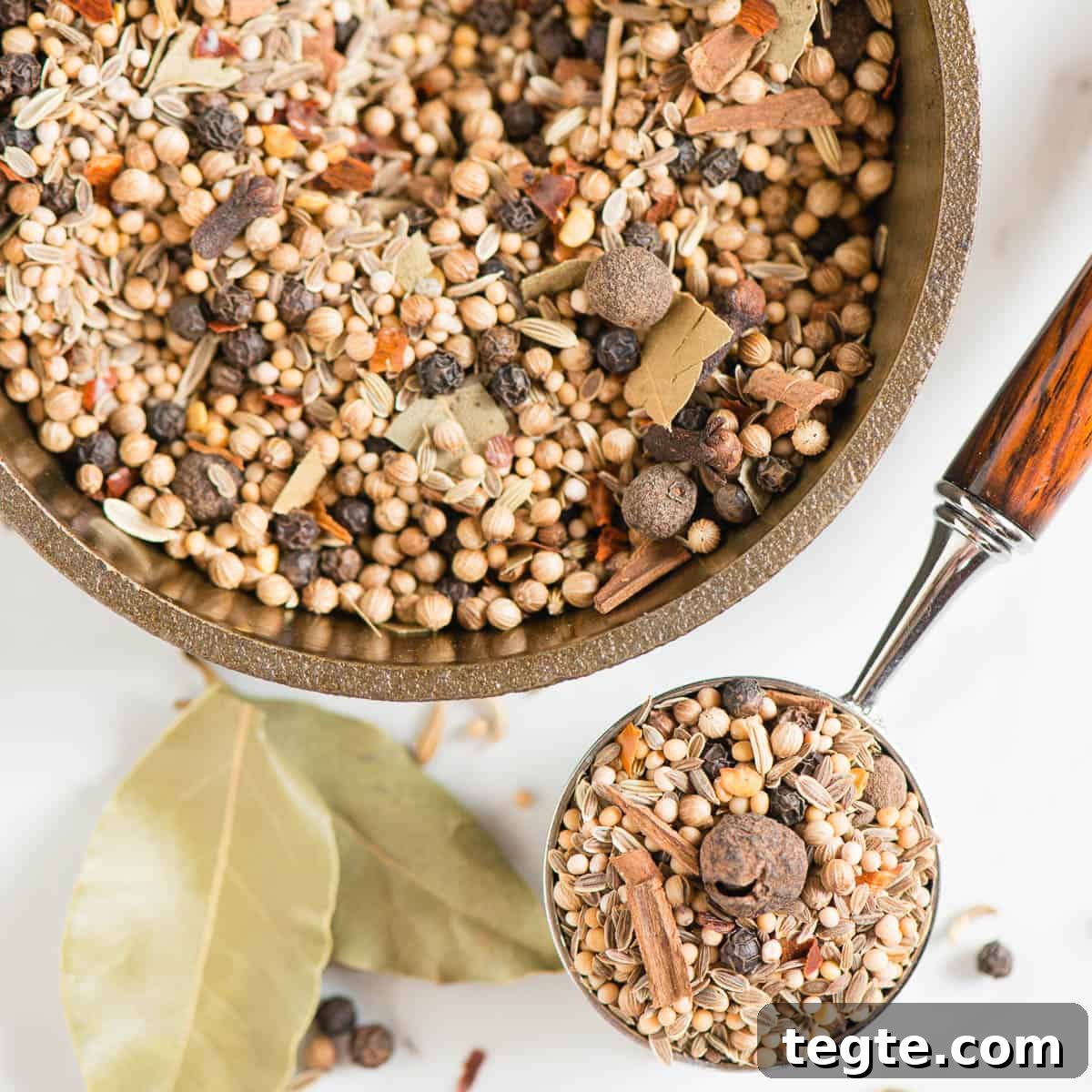
Making your own pickling spice at home is simple and rewarding. This blend uses whole seeds and warm spices you can usually find in the bulk spice section. Mix it once, keep the extra in an airtight jar in the pantry, and use it for quick pickles or canning. Homemade blends let you control the balance of flavors to suit your taste.
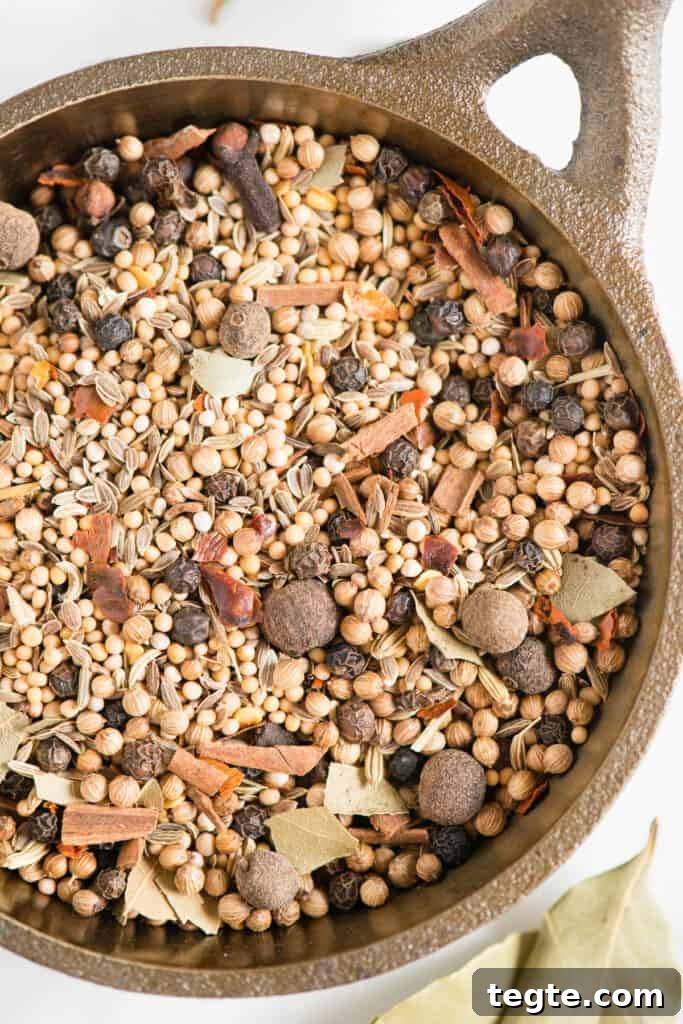
Why this recipe is so great:
- Quick and easy: Measure, combine, and store—no cooking required.
- Versatile: Use this blend for dill pickles, pickled beets, pickled eggs, or any vegetable you want to preserve.
- Fully customizable: Prefer more mustard or less fennel? Adjust the mix to your liking—something you can’t do with most store blends.
Ingredients needed:
Exact amounts appear in the recipe card below. Here’s a summary of what you’ll need:
- Whole mustard seeds
- Whole coriander seeds
- Dill seeds
- Black peppercorns
- Whole allspice berries
- Red pepper flakes
- Fennel seeds
- Bay leaves (crumbled)
- Cinnamon stick (crushed)
- Whole cloves
How to make homemade pickling spice:
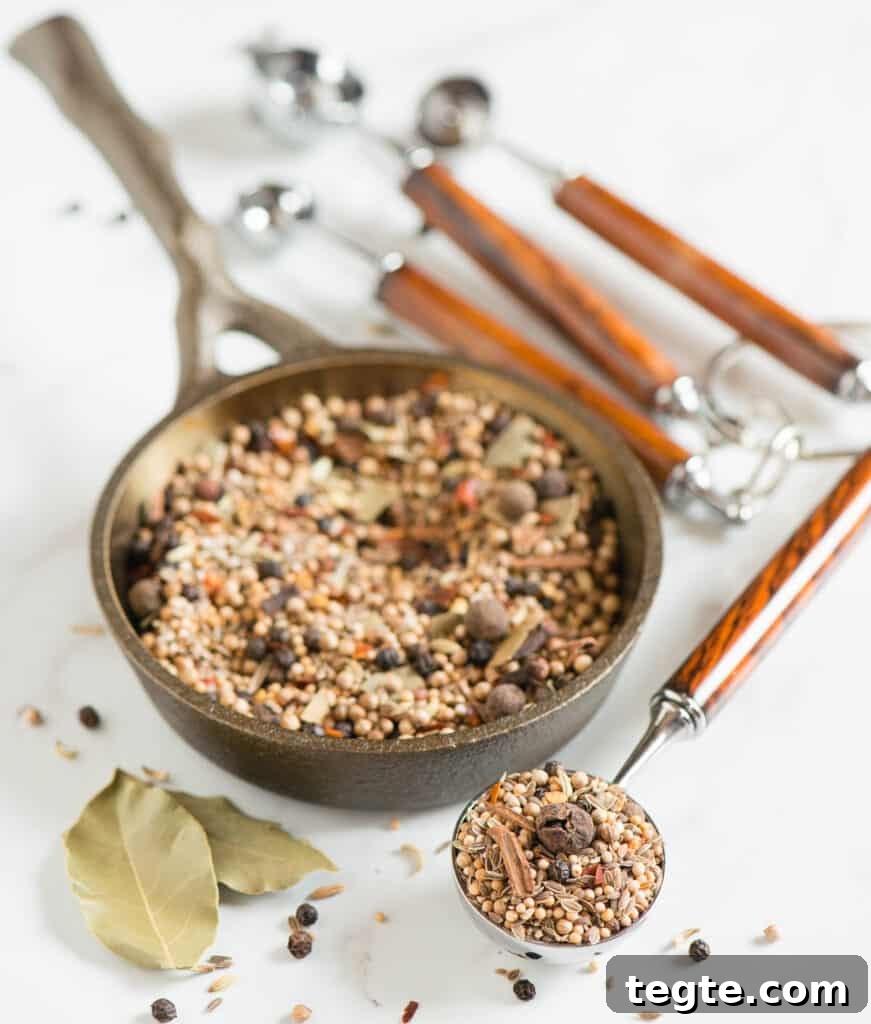
- Measure: Use measuring spoons for accuracy—this recipe only requires teaspoons and tablespoons.
- Mix: Combine all the whole spices in a bowl or jar, shake gently, and store in an airtight container at room temperature.
Recipe tips for perfect results:
- Use whole spices only: Ground spices lose aroma and can cloud brines; whole seeds give the best flavor and texture in pickles.
- Buy from bulk if possible: The bulk spice section lets you buy just what you need and keeps costs low. Bottled spices work too if you prefer.
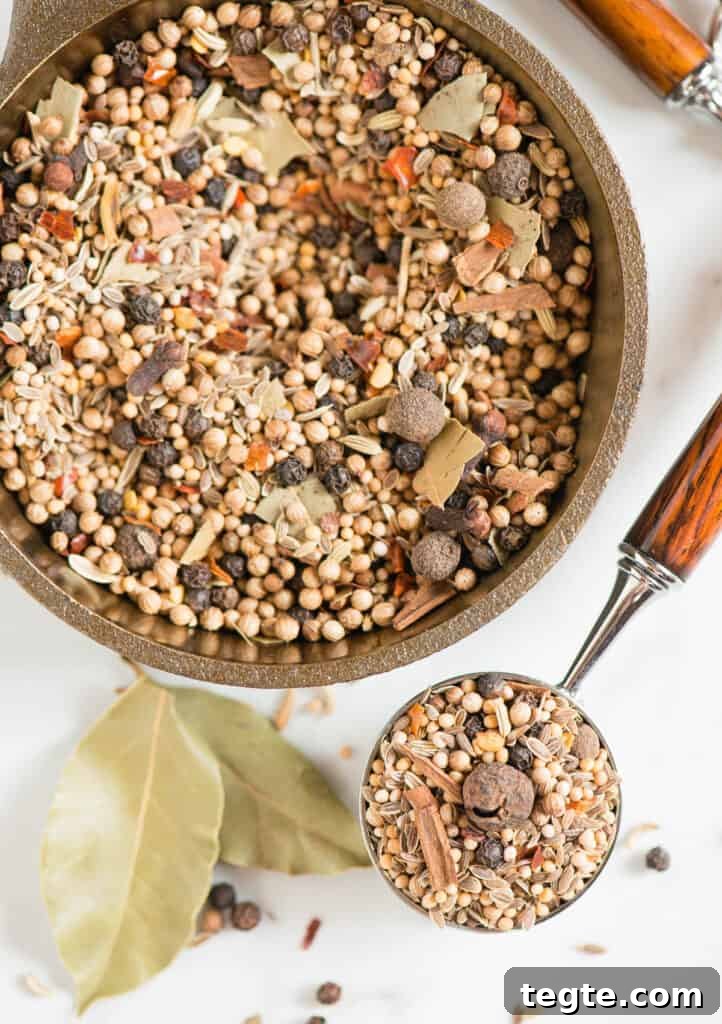
- Storage and yield: This recipe makes about 8 tablespoons of pickling spice. Plan on using about 1 tablespoon per quart of pickles; store leftovers in an airtight jar away from heat and light.
How to make pickles with this blend:
Use this spice mix to make quick refrigerator pickles or in recipes for canning.
- Basic brine: A common starting ratio is 1 cup vinegar to 1 cup water, 2–4 tablespoons kosher or pickling salt, and 1–3 tablespoons pickling spice per batch. Adjust salt and spice to taste.
- Choose your vinegar: White distilled, apple cider, rice, or white wine vinegar all work. Mixing vinegars can balance sweetness and bite.
- Make the brine: Heat vinegar, water, and salt until the salt dissolves and the brine reaches a gentle simmer. Pour the hot brine over prepared vegetables and spices in clean jars. For quick pickles, cool and refrigerate; for long-term storage, process in a water bath according to safe canning guidelines.
- What to pickle: Cucumbers, carrots, asparagus, beets, radishes, zucchini, and hard-boiled eggs all respond well to this blend. Add garlic cloves, sliced onion, or jalapeño for extra flavor.
Other spices you can use:
Feel free to experiment. Add or swap spices to suit different profiles:
- Juniper berries
- Dried ginger
- Celery seeds
- Star anise
- Dried herbs such as dill, rosemary, or thyme
If you try this recipe, please leave a comment to share how it turned out—I love hearing from readers!
Follow along on social platforms to see more recipes and ideas from the author.
Pickling Spice
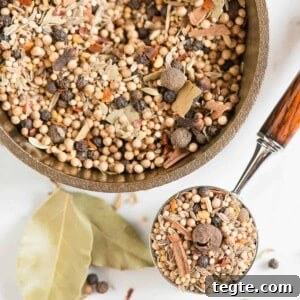
Ingredients
- 2 tablespoons whole mustard seeds
- 2 tablespoons whole coriander seeds
- 2 tablespoons dill seeds
- 1 tablespoon black peppercorns
- 1 teaspoon whole allspice berries
- 1 teaspoon red pepper flakes
- 1 teaspoon fennel seeds
- 2 bay leaves, crumbled
- 1 cinnamon stick, crushed
- 8 whole cloves
Instructions
- Combine all ingredients in a bowl or jar and mix well.
- Store the blend in an airtight container at room temperature. Use about 1 tablespoon per quart of pickles, adjusting to taste.
Notes
Makes about 8 tablespoons of pickling spice.
Nutrition
Nutrition estimates (per serving): Calories: 33 kcal, Carbohydrates: 5 g, Protein: 1 g, Fat: 2 g. Use as an approximation.