
This easy dill pickle soup is an unexpected comfort: a creamy, tangy broth brimming with ham, potatoes, and fresh dill. It’s hearty, satisfying, and quick to make.

Why you’ll love it
Dill pickle soup might sound unusual if you haven’t tried it before. If you enjoy pickles, though, this soup is a delightful twist on traditional savory soups. The tang of pickle juice balances the creamy base, and the potatoes and ham make it filling enough for a main course. This version draws from Eastern European zupa ogórkowa traditions and is perfect for cozy winter meals.
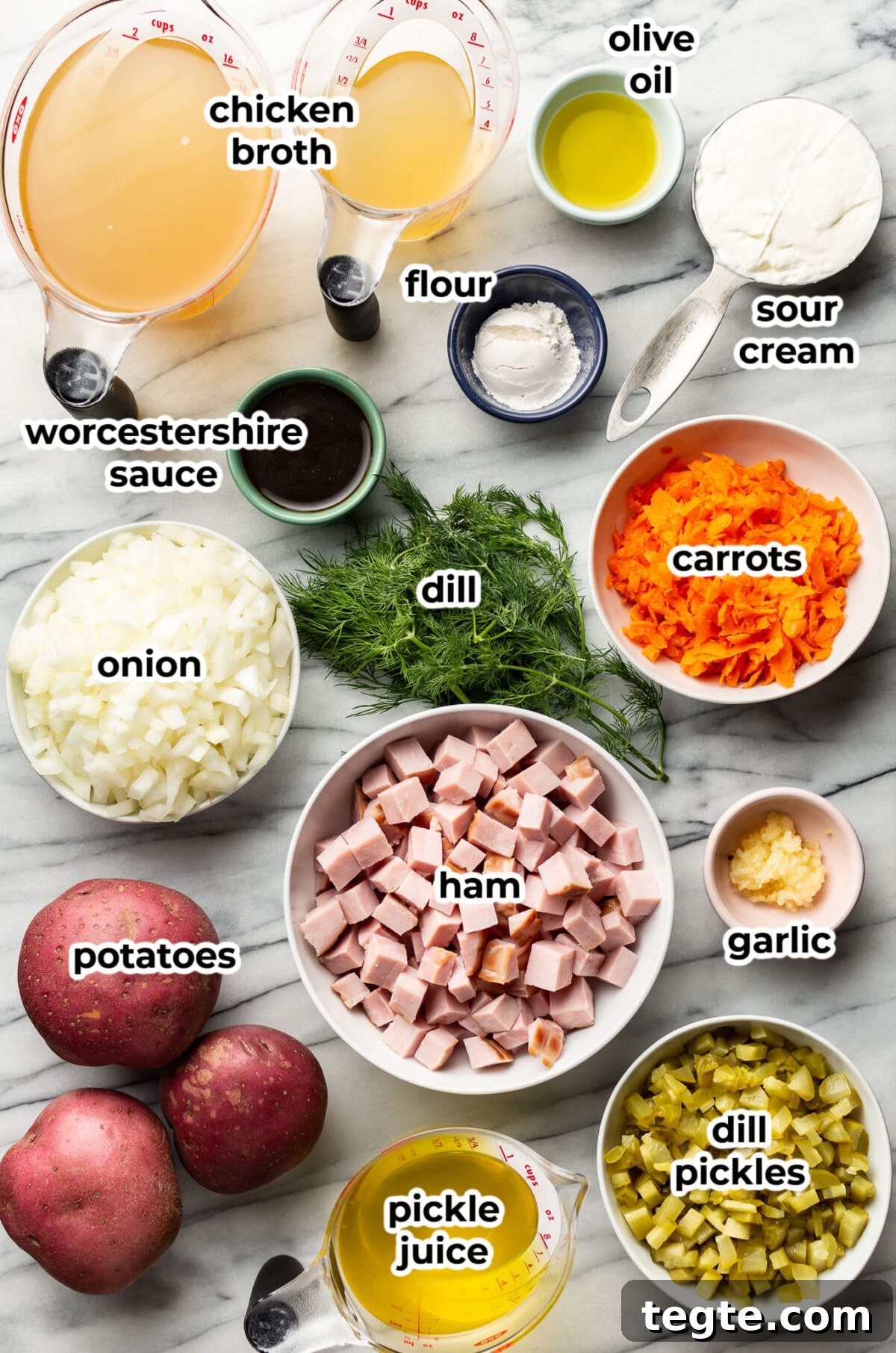
What you’ll need
- Olive oil – for sautéing
- Onion and garlic – aromatic base
- Dill pickles and pickle juice – the flavor foundation
- Carrot and red potatoes – texture and body
- Chicken broth – for a savory broth
- Worcestershire sauce – optional flavor boost
- Fresh dill – bright finishing herb
- Ham – adds smoky, meaty richness
- Sour cream – for creaminess
- Flour – to thicken the soup
Tools for this recipe
Use a sturdy soup pot or Dutch oven and a good chef’s knife for prep. A ladle is helpful for serving.
How to make dill pickle soup
This overview summarizes the steps; full ingredient amounts and instructions follow in the recipe card.

Sauté chopped onion and grated carrot in olive oil until softened. Add chopped pickles, diced red potatoes, chicken broth, pickle juice, Worcestershire sauce, minced garlic, chopped fresh dill, and diced ham. Bring to a boil, then lower the heat and simmer until potatoes are tender.

Whisk flour into the sour cream until smooth, then stir it into the soup and cook a few more minutes to thicken. Taste and adjust with salt, pepper, and extra dill as desired.
Substitutions and variations
- Swap ham for crumbled bacon or smoked sausage for a different smoky note.
- Make a vegetarian version by omitting ham and Worcestershire sauce; add 1 tsp smoked paprika for that smoky flavor and use vegetable broth.
- If you don’t have fresh dill, use about 1 tsp dried dill and add more to taste.
What to serve with dill pickle soup
- Serve with a slice of crusty bread or a dinner roll.
- A simple mixed green salad pairs nicely; a garlicky or creamy dressing complements the soup’s tang.
Leftovers and storage
- The soup improves after a day as flavors meld. Refrigerate in a sealed container for 3–4 days.
- Reheat gently over low heat, adding a splash of broth if it thickens too much.
- Freeze portions for up to 3 months; thaw overnight in the fridge before reheating.
More easy soup recipes
- Ultimate Beer Cheese Soup
- Sausage and Sweet Potato Soup
- Kielbasa Soup
- Simple Bratwurst Soup
- Easy Ham and Bean Soup
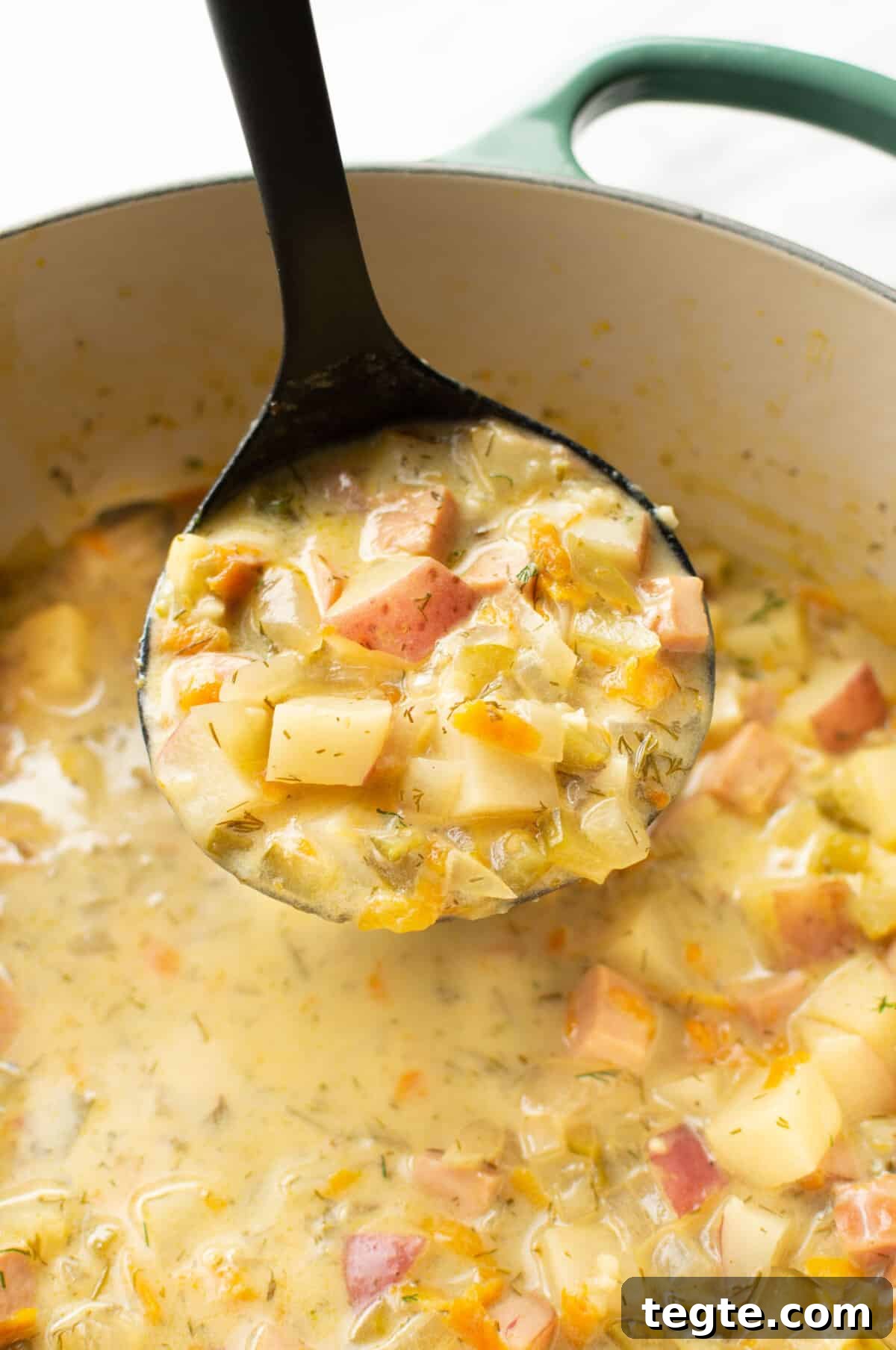
If you make this creamy dill pickle soup, please leave a rating and review. Tag your photos if you share them—it’s always wonderful to see variations and tweaks.

Dill Pickle Soup
Ingredients
- 1 tablespoon olive oil
- 1 medium onion, chopped
- 1 medium carrot, peeled & grated
- 1 cup finely chopped dill pickles
- 3 large red potatoes (skins on), diced
- 2.5 cups chicken broth
- 1 cup pickle juice
- 1 tablespoon Worcestershire sauce
- 3 cloves garlic, minced
- 1 handful fresh dill, chopped
- 3/4 pound ham, diced
- 1/2 cup sour cream
- 1 tablespoon flour
- Salt & pepper to taste
Instructions
- Heat olive oil in a soup pot. Add the onion and carrot and sauté over medium-high heat about 5 minutes until softened.
- Add the chopped pickles, diced potatoes, chicken broth, pickle juice, Worcestershire sauce, garlic, dill, and ham. Bring to a boil, then reduce heat to medium-low and simmer 15–20 minutes, or until potatoes are tender.
- Whisk the flour into the sour cream until smooth. Stir this mixture into the soup and cook another 5 minutes to thicken. Season with salt and pepper to taste and garnish with extra fresh dill if desired.
Notes
- The soup can be salty depending on the pickle brine and ham—use low-sodium broth if concerned about salt.
- If using dried dill, start with 1 teaspoon and adjust to taste.
- Serves 4–6.
Nutrition
Approximate per serving: Calories: 366 kcal; Carbohydrates: 39 g; Protein: 17 g; Fat: 16 g; Sodium: varies.
This recipe was originally published on January 9, 2017. It has been updated with new photos and clearer instructions but remains the same comforting recipe.