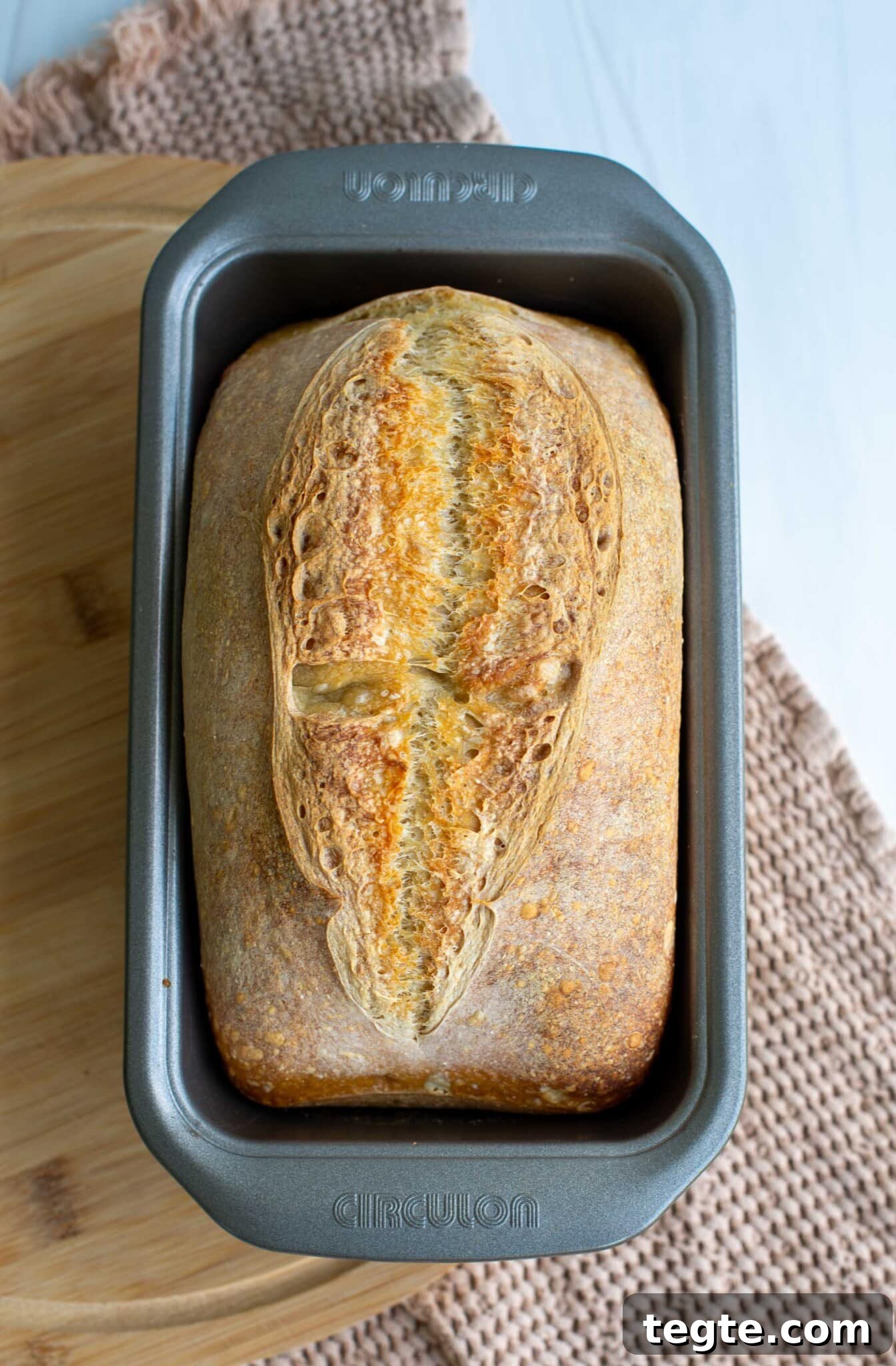
I love a classic sourdough artisan loaf—whether made by traditional hand shaping or in a stand mixer—then proofed and baked in a covered pot. But sometimes a dutch oven isn’t practical, or you want a loaf that’s easier to slice, or you simply want to try something different. Enter: sourdough baked in a loaf pan.
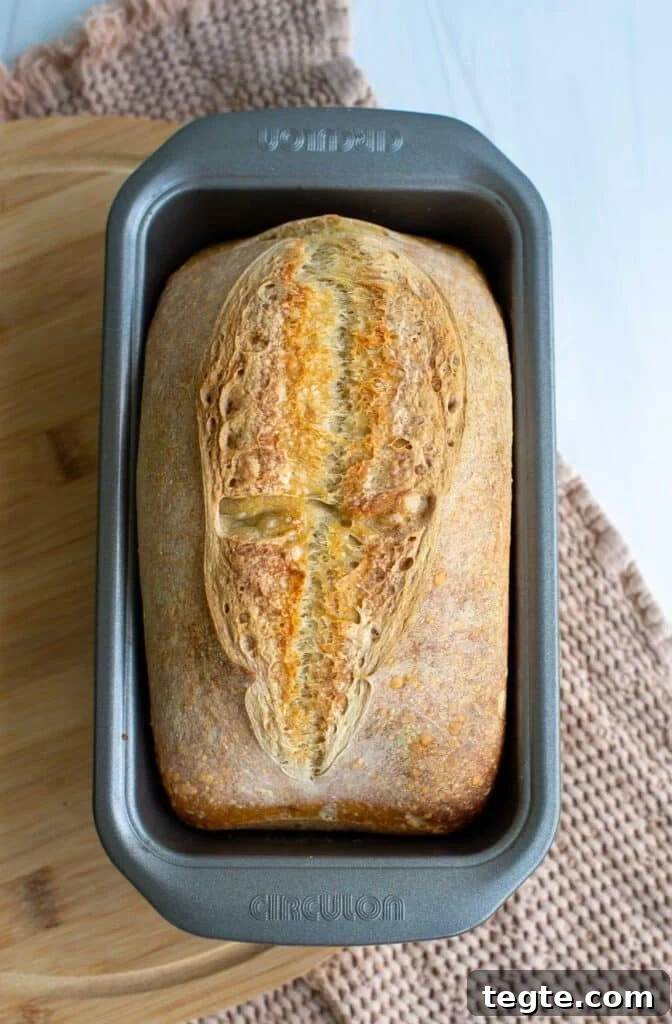
How to Bake Sourdough Bread in a Loaf Pan
Start with a reliable sourdough recipe
I often use a beginner-friendly lower-hydration loaf or my higher-hydration artisan loaf; both translate well to a loaf pan. Mix, fold gently as directed by your chosen recipe, and continue until the dough is ready to shape.
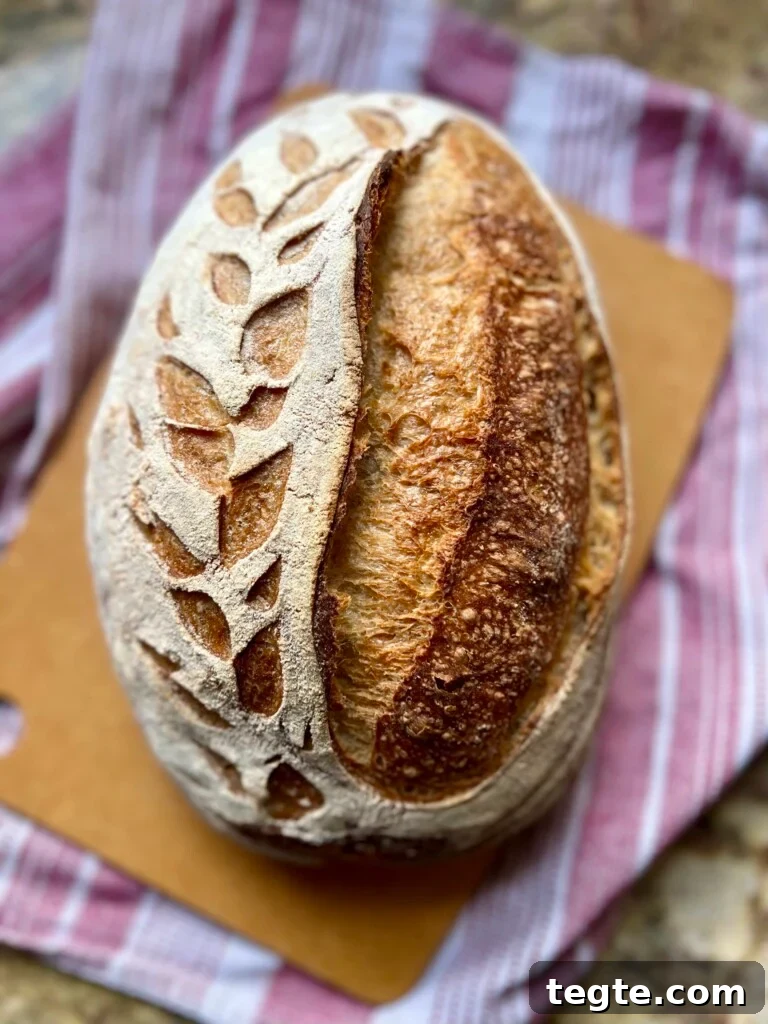
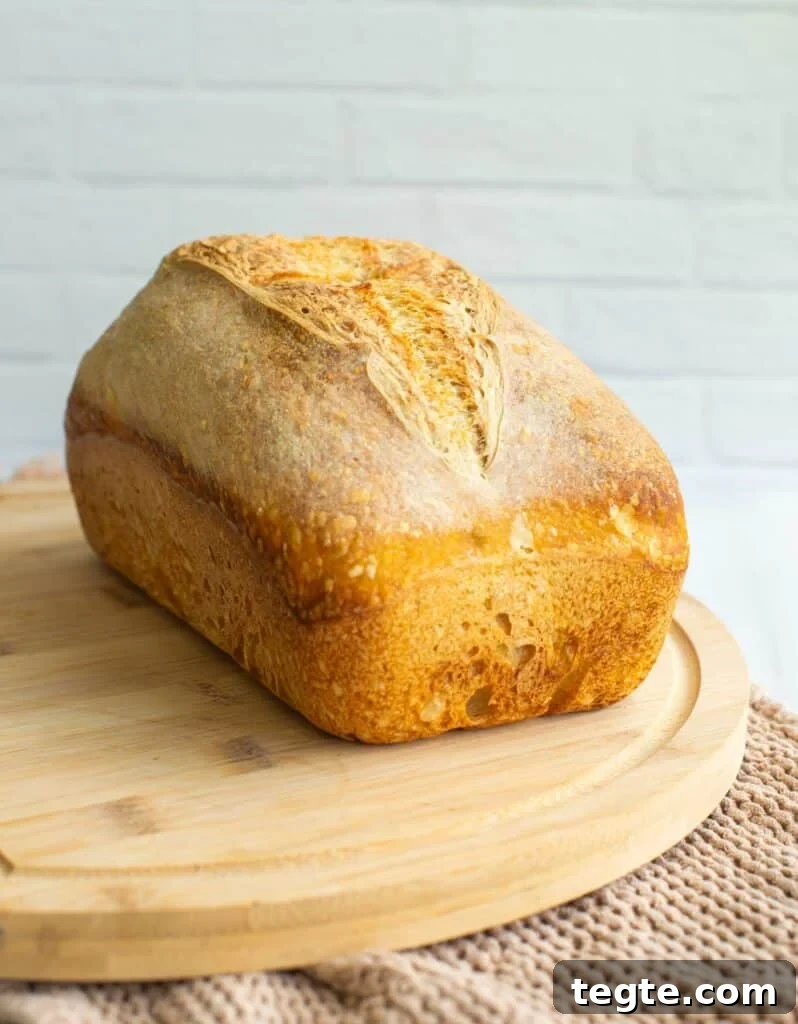
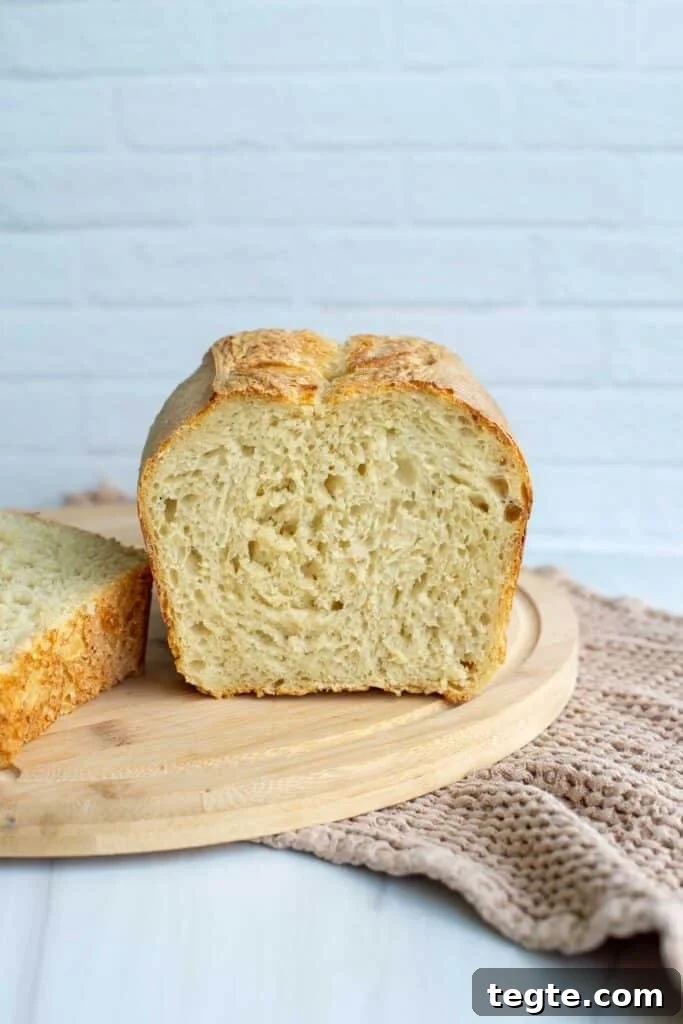
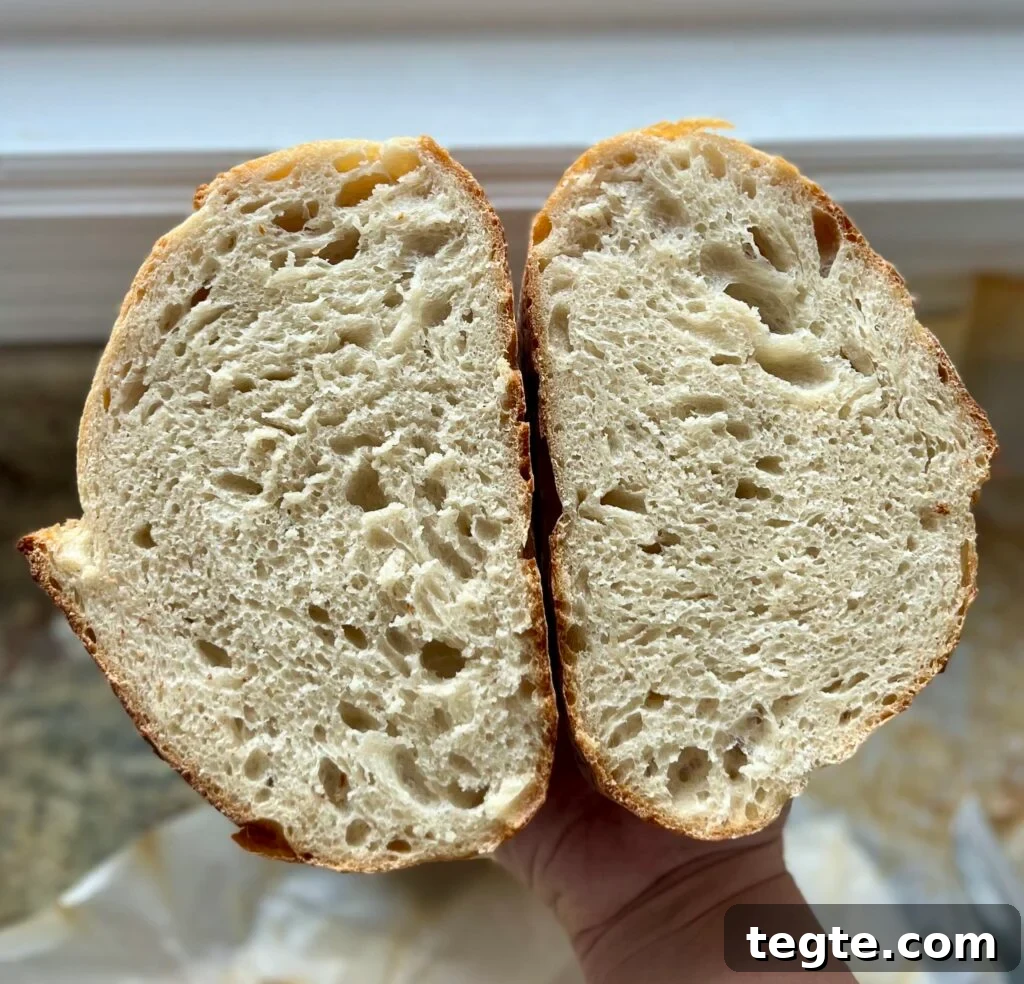
The photos below show the same dough baked two ways: one in a dutch oven and the other in a loaf pan, so you can see the difference in shape and crumb.
Shape the bread for the pan
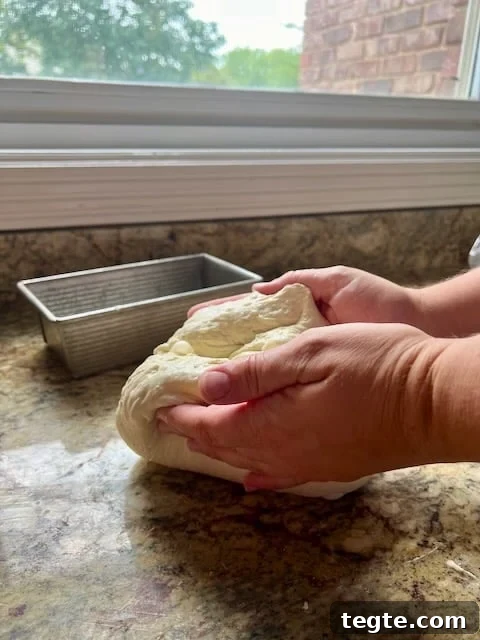
When the dough is ready to shape, prepare a loaf pan. Lightly butter the corners or line with parchment to prevent sticking. If your pan is slightly larger, it allows the dough room to expand. Shape the dough as you would for an oval loaf before placing it into the pan.
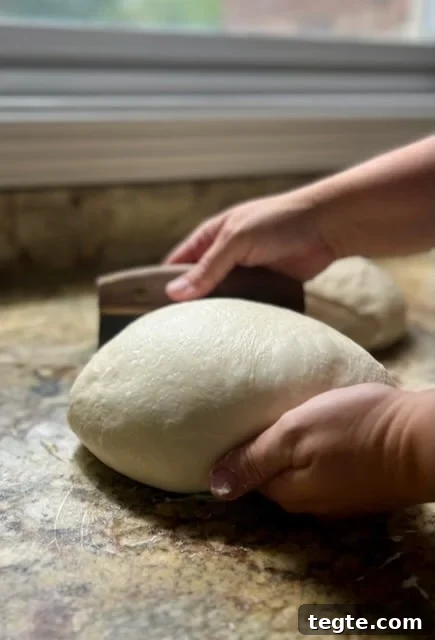
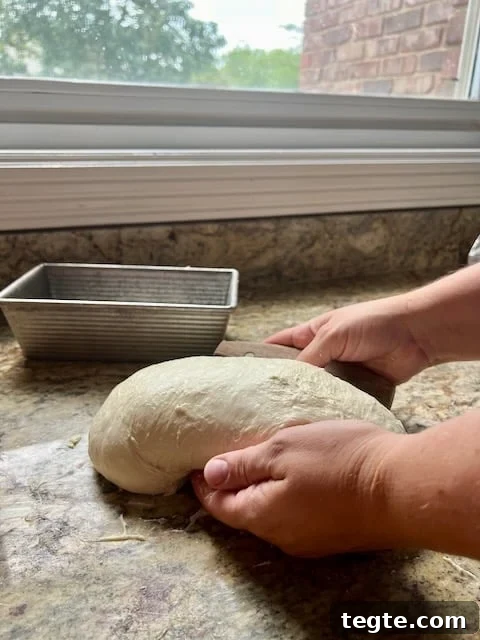
Shaping steps: Dust the top lightly with flour if desired. Using a bench scraper, lift the dough and flip it onto the work surface so the floured side faces down. This keeps most of the flour on the exterior. Starting from the side closest to you fold the dough toward the center, then repeat with the right and left sides, stretching gently before bringing them to the middle. Fold the far side up and tuck it like a package, then roll the dough into an oval. Place the shaped dough seam-side down in the prepared loaf pan.
Proofing options for loaf-pan sourdough
After placing the shaped dough in the pan you have two main proofing choices:
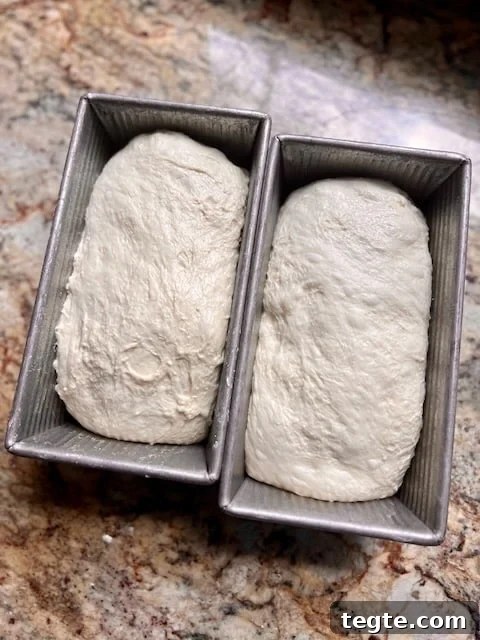
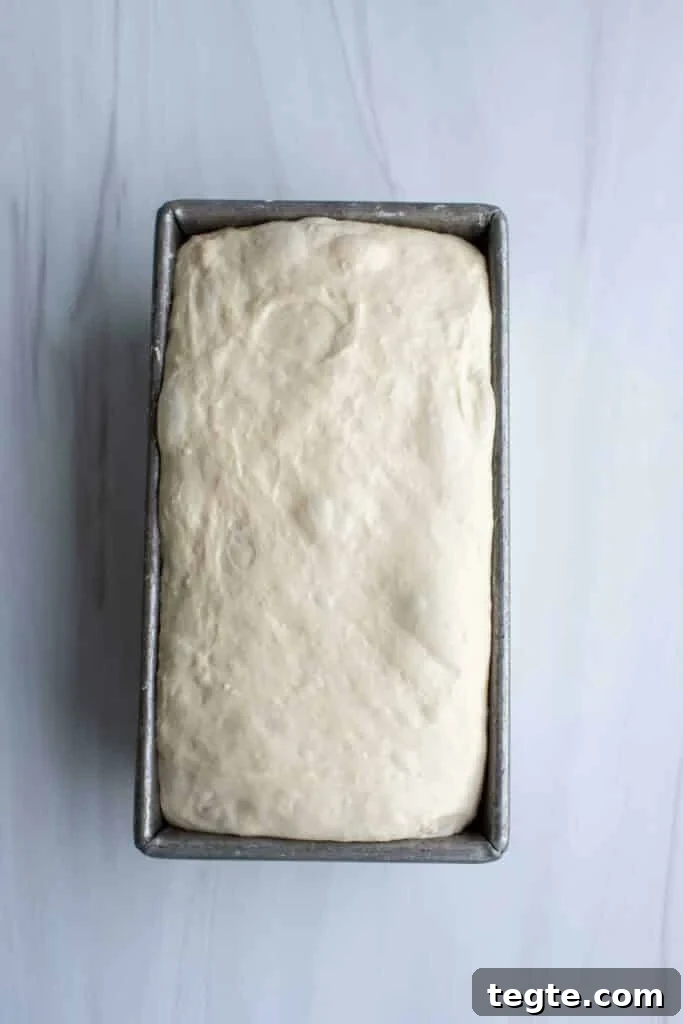
Same-day bake: Leave the dough at room temperature in the pan for a couple of hours until it is puffed, jiggly and noticeably risen. Timing depends on your starter amount and ambient temperature.
Cold fermentation: Cover the pan and refrigerate overnight for a slower, more flavorful proof. Bring the dough back to room temperature a little before baking if desired.
Baking sourdough in a loaf pan
The main challenge when baking sourdough in a home oven is creating and retaining steam during the initial bake so the loaf can expand and develop a crisp crust. Home ovens vent steam, so use one of these methods to increase humidity during the first half of baking.
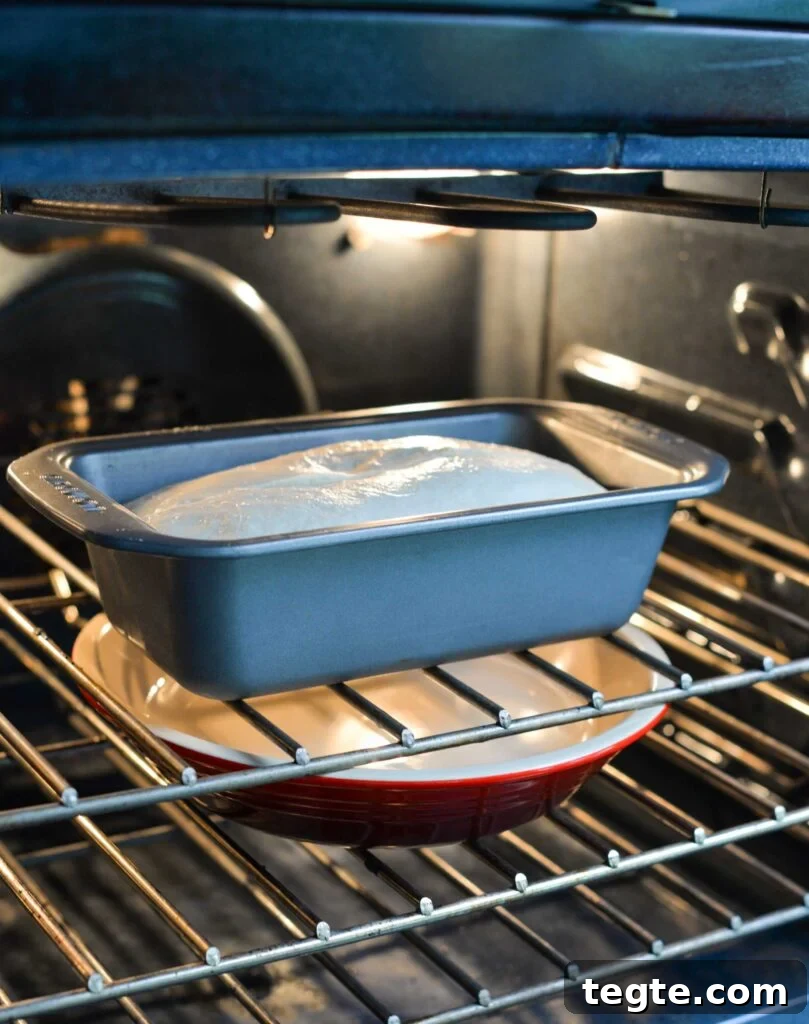
1. Bake with a pan of hot water underneath
- Preheat the oven to 450°F. Place a shallow pan of hot water on the lowest rack to create steam. Bake the loaf on the middle rack for about 25 minutes, then remove the water pan and continue baking for another 15–20 minutes until the crust is deeply browned and crisp.
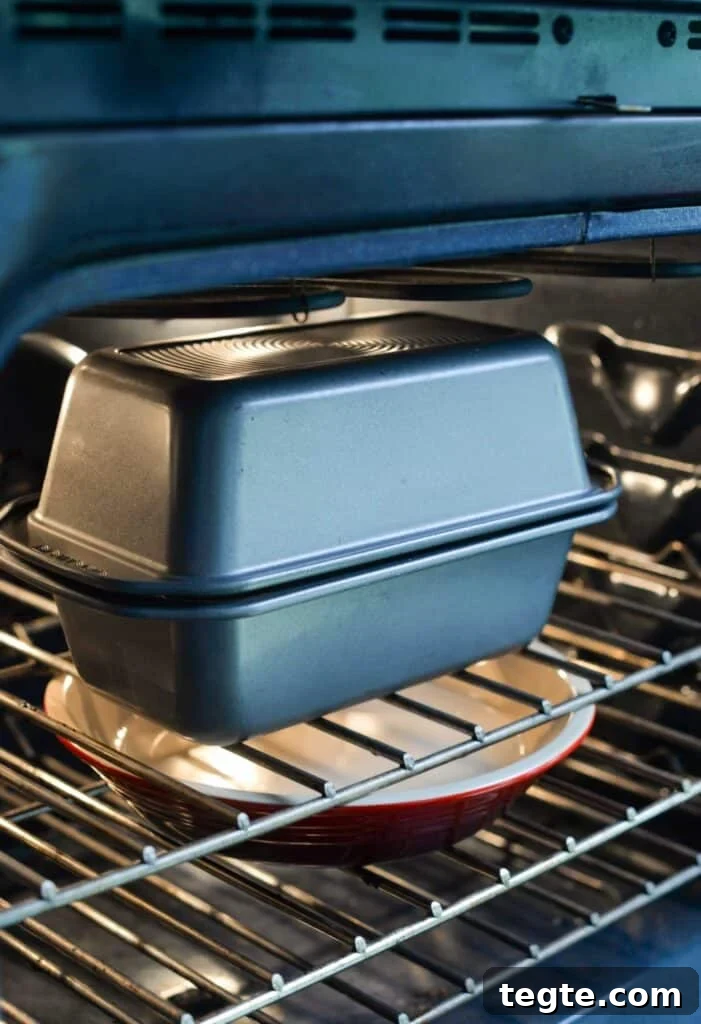
2. Create a mini dutch-oven with a second pan
- Place a second loaf pan upside down over the filled loaf pan to trap steam and mimic a dutch oven. Bake at 450°F with the top pan on for 25–30 minutes, then remove the top pan and bake uncovered for an additional 15–20 minutes. No water pan is needed for this method.
3. Proof fully in the pan and bake at a lower temperature
- Let the dough rise until nearly doubled, light and jiggly. If you prefer, add a pan of water beneath to introduce steam, but it’s optional with this method. Bake at a slightly lower temperature—around 400–425°F—for 40–45 minutes until the loaf is cooked through and nicely colored.
If you liked this, you’ll also like…
- How to Bake Sourdough Bread on the Grill
- How to Bake Sourdough Bread
- Sourdough Bread Recipe
- Beginner Sourdough Recipe
Frequently Asked Questions
If the dough doesn’t rise beyond the pan lip, scoring helps control where the loaf opens; otherwise it can burst unpredictably. If you let the dough rise until doubled, scoring is optional.
Try lowering the oven temperature by 25–50°F. Placing a baking sheet or stone on the rack below the loaf can help diffuse direct heat.
Use good parchment or butter the pan well before adding the dough. A high-quality non-stick pan helps, and waiting 5–10 minutes after baking before removing the loaf makes unmolding easier.
Yes. Turn the proofed dough out gently, fold as needed, place it into a loaf pan, and bake using one of the methods above.
If you try baking Sourdough Bread in a Loaf Pan or any of the recipes above, please leave a star rating and a comment to share how it went. Happy baking!