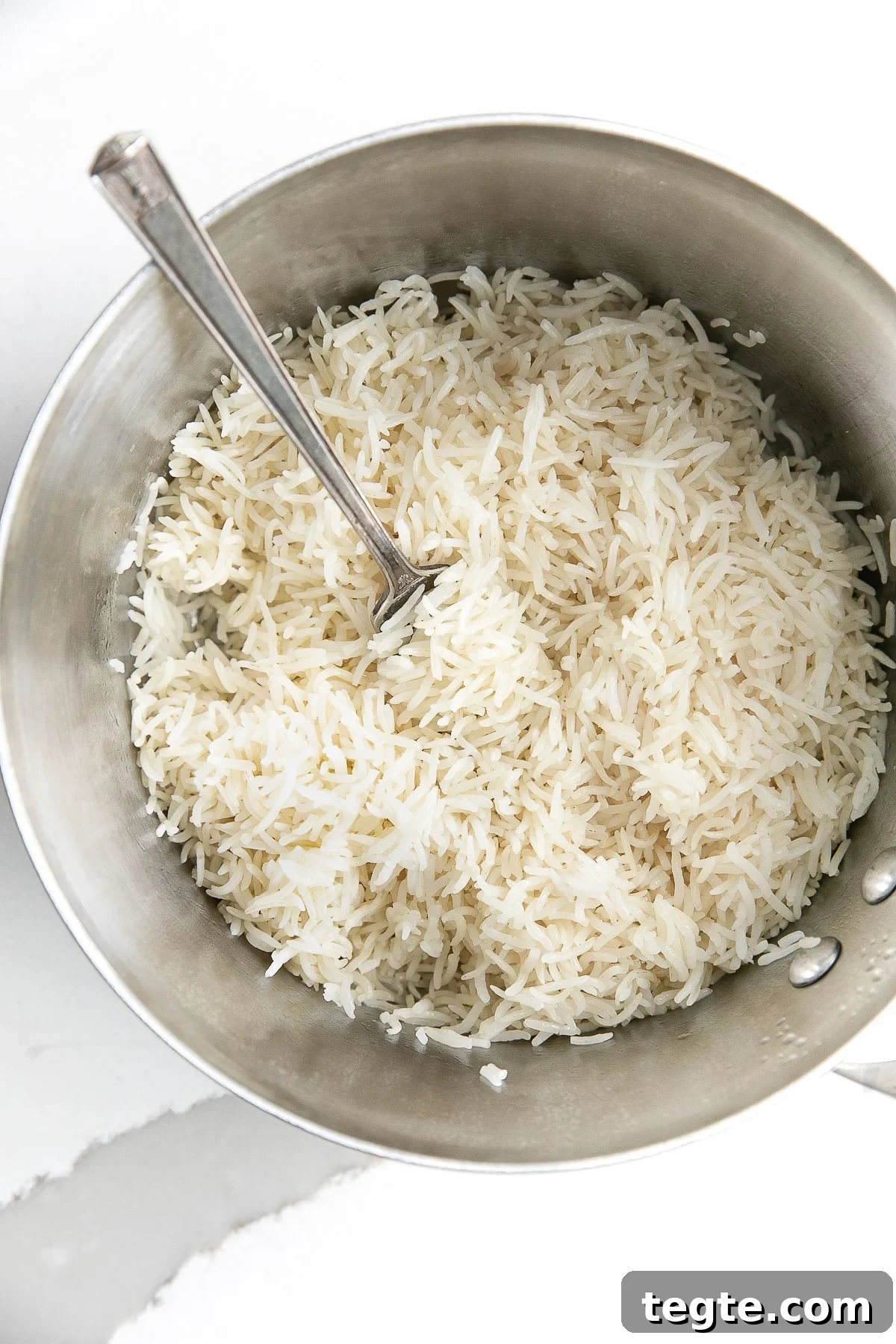
With this simple, reliable method and a few practical tips, you’ll be cooking light, fluffy, and fragrant Basmati Rice on the stovetop in no time — ideal for curries, stir-fries, pilafs, and more.
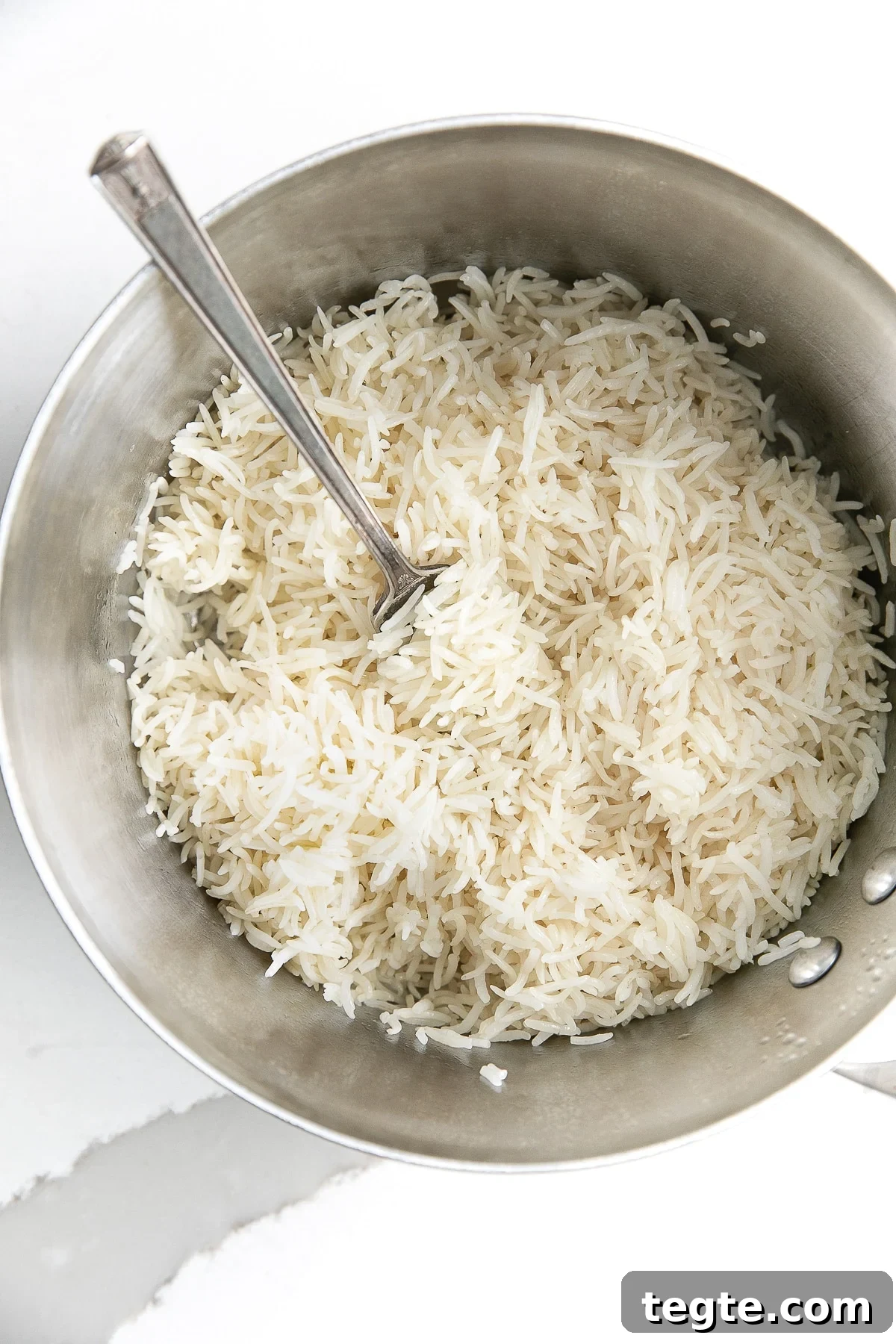
Learning from my mother-in-law, who grew up in India, I’ve adopted a few traditional techniques for restaurant-style basmati rice. Below I share those tips plus a straightforward recipe you can follow every time.
Table of Contents
- Rice to Water Ratio
- How to Cook Basmati Rice
- Serving
- Foolproof Basmati Rice Recipe
- Frequently Asked Questions
- More Delicious Rice Recipes
Rice to Water Ratio
The most common mistake people make with any rice is using too much water. Contrary to the usual 1:2 ratio printed on some packaging, for stovetop basmati rice the correct ratio is 1 cup rice : 1½ cups water. This yields separate, tender grains rather than gummy rice.
How to Cook Basmati Rice
This method is the pilaf-absorption technique: quick, dependable, and flavorful. The steps below accompany the full recipe in the recipe card.
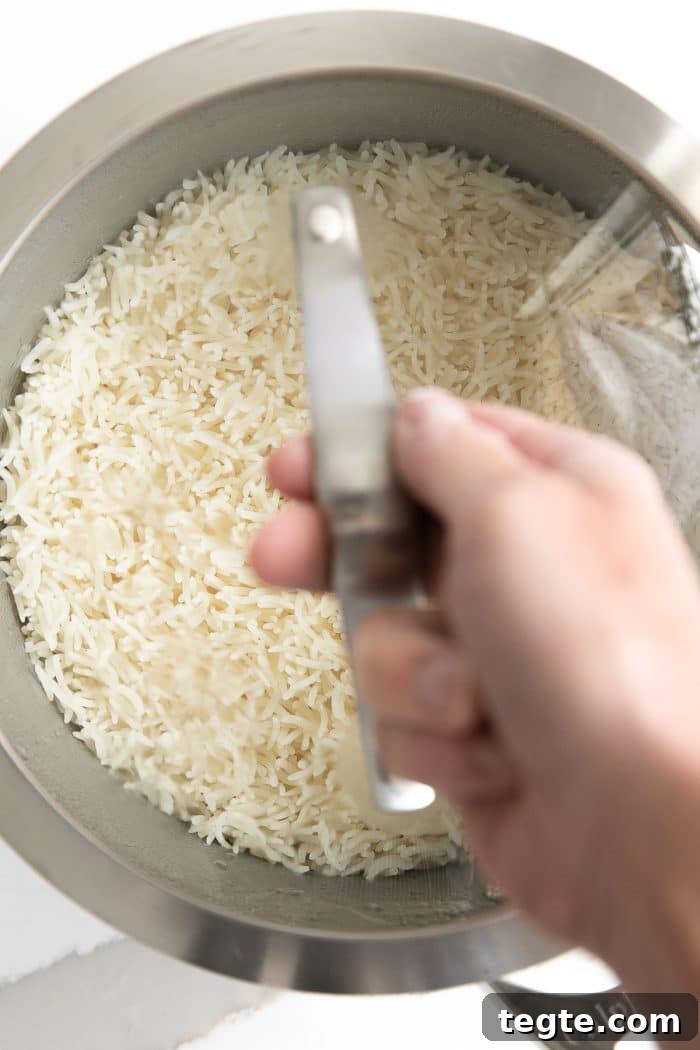
- Rinse the rice. Place basmati in a fine-mesh strainer and rinse under cold running water, swirling the grains by hand. Rinse until the water runs nearly clear to remove excess surface starch, which prevents stickiness.
- Soak (optional) and drain thoroughly. If time allows, soak the rice 15–20 minutes in cold water to improve grain length and texture. Drain well and, if possible, spread on a clean baking sheet for 5–10 minutes to remove lingering moisture.
- Pre-boil the cooking liquid. Bring the measured water or stock almost to a boil separately. Measure 1½ cups of just-boiled water per 1 cup of rice; this ensures the correct ratio after any evaporation.
- Toast the rice for flavor. Heat 1–2 tablespoons oil, butter, or ghee in a medium saucepan over medium heat. Add the rice with a pinch of salt and toast for 1–2 minutes until fragrant. This step adds a nutty depth and is a good time to add whole spices (cumin seeds, cardamom, cloves, or a cinnamon stick) if you like.
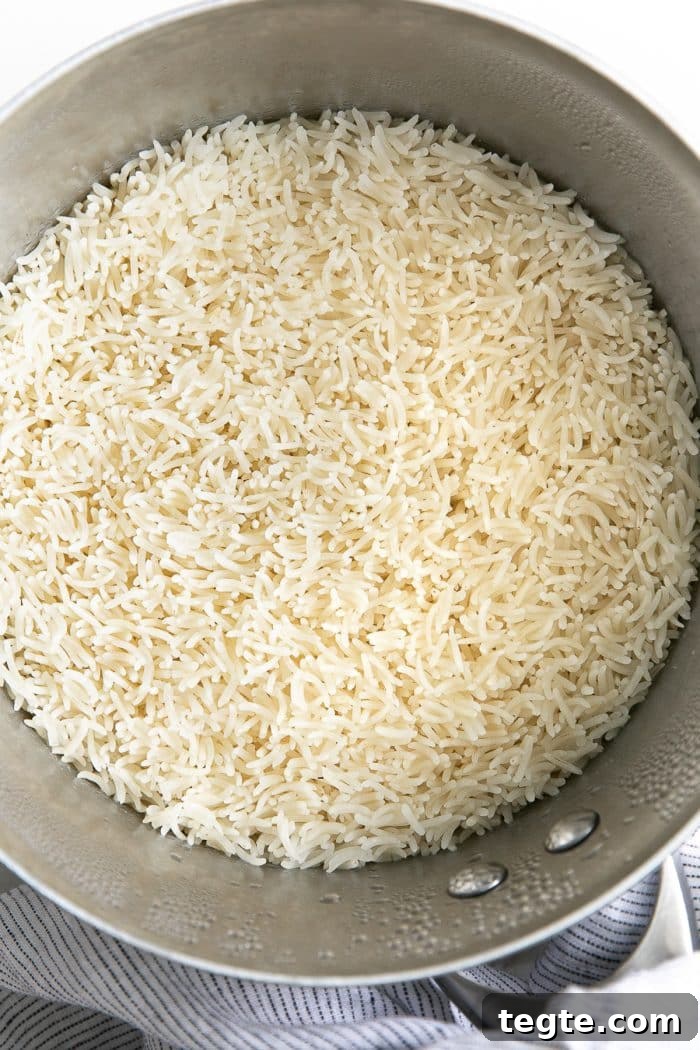
- Add boiling water and cook. Pour 1½ cups of just-boiled water (or stock) into the pan, increase heat to bring it to a rapid boil, then immediately reduce to low and cover with a tight-fitting lid. Cook undisturbed for 10–12 minutes. Avoid lifting the lid; if using a clear lid you can tilt the pan briefly to check for pooling liquid — if water remains, cook another minute or two.
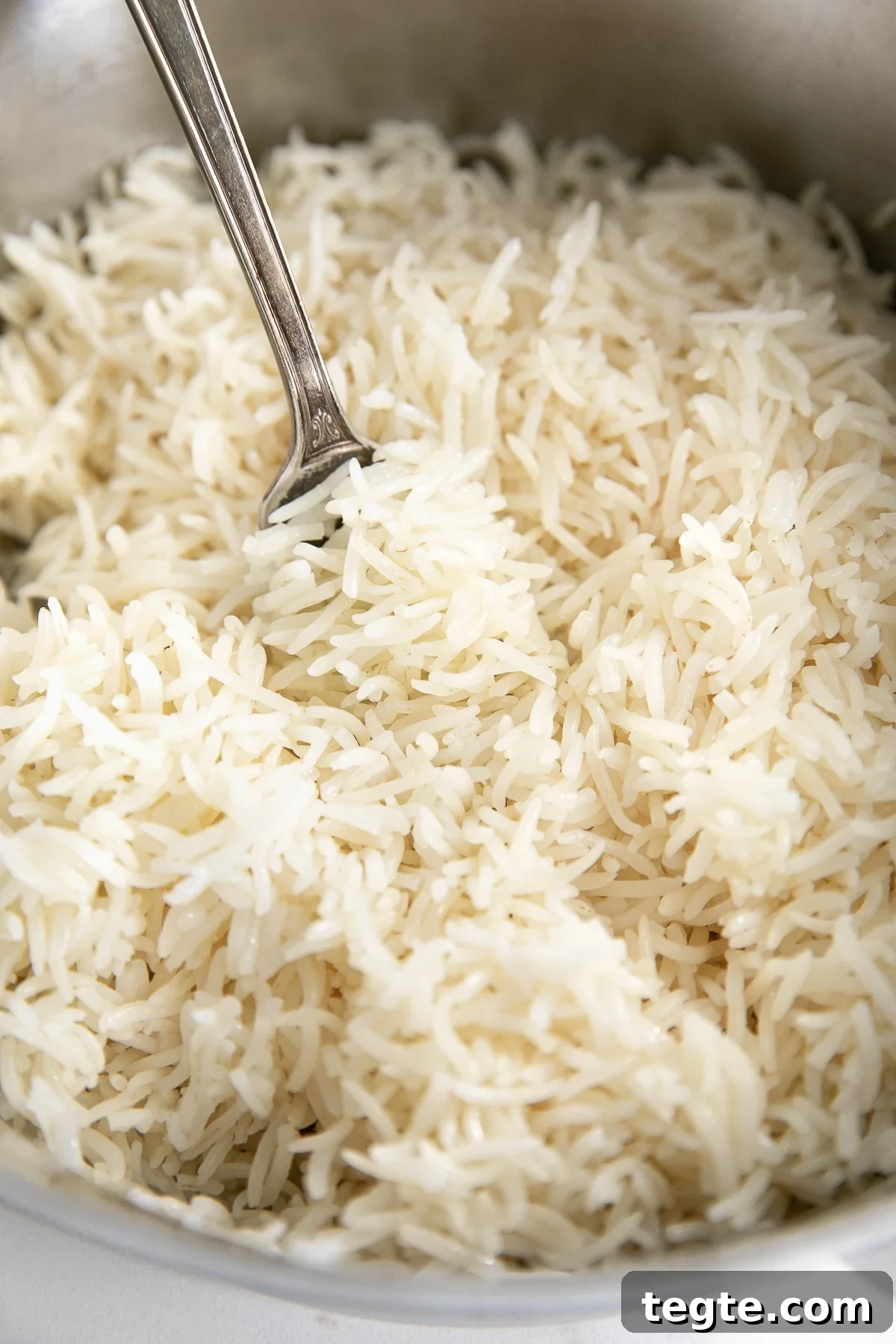
- Rest and steam. Remove the pan from heat and let the rice sit, covered, for 10–15 minutes. This steaming step lets the grains finish cooking and firm up. Fluff gently with a fork and, if desired, dot with 1–2 tablespoons butter before serving.
Serving
Basmati’s light texture and fragrance pair beautifully with bold, saucy dishes. It’s a classic accompaniment to Indian curries such as chicken tikka masala, butter chicken, and dals, and it also works well in biryani, pulao, or as the base for rice puddings like kheer.
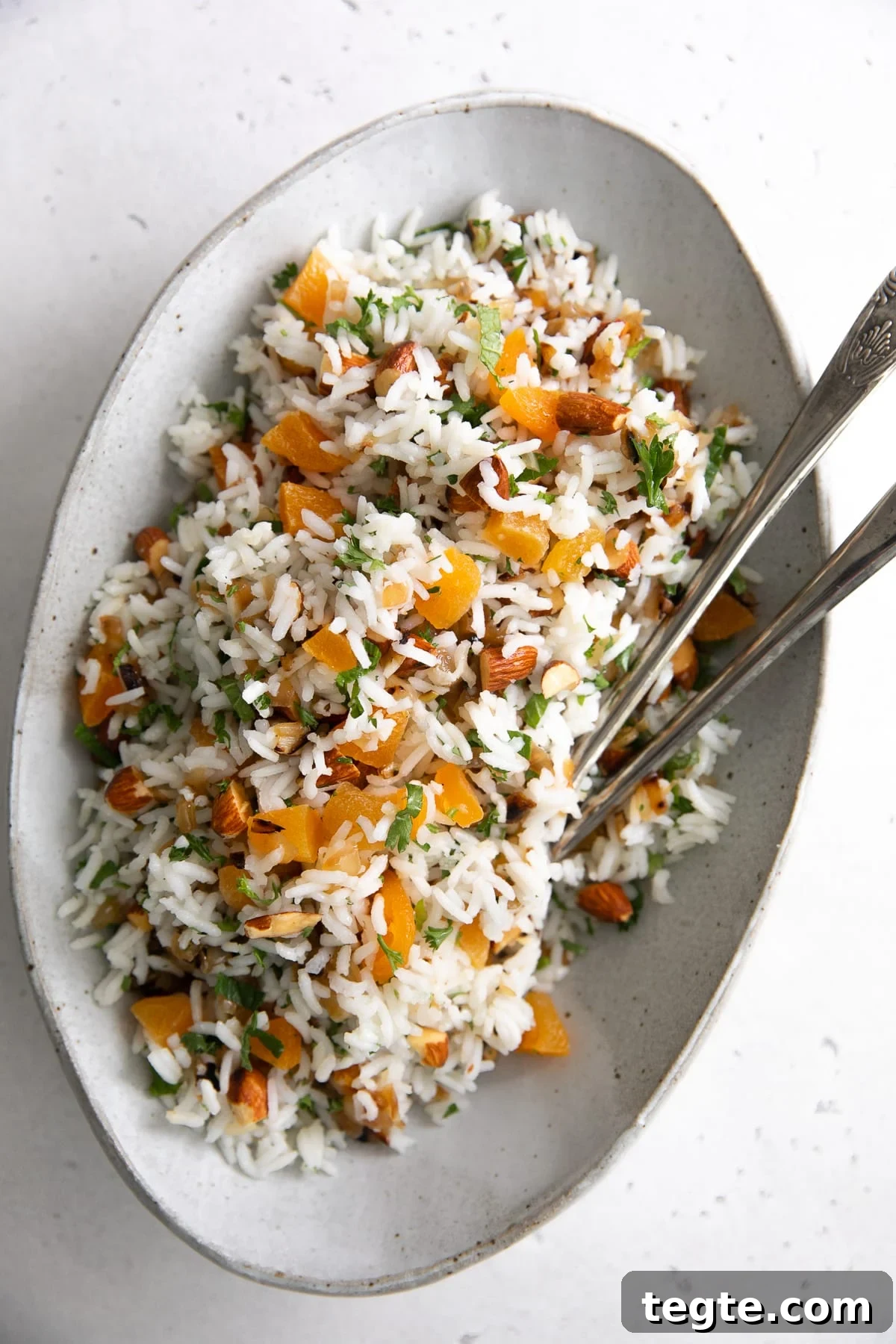
For a simple side, toss warm rice with ghee or butter and fresh herbs such as cilantro or parsley. Whole spices like cumin seeds, cloves, or cardamom can be added during toasting for subtle aromatic notes.
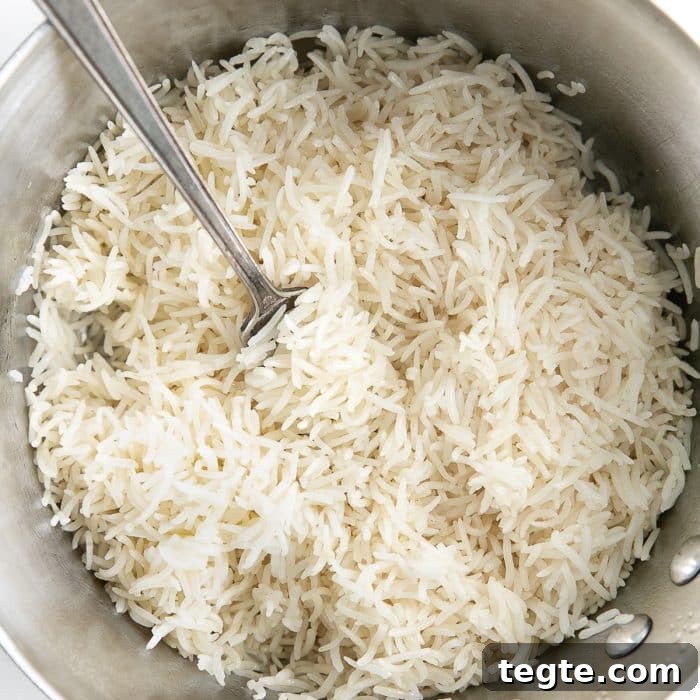
Foolproof Basmati Rice Recipe
 Jessica Randhawa
Ingredients
- 1 cup basmati rice
- 1½ cups just-boiled water or low-sodium chicken stock
- 2 tablespoons olive oil (or butter/ghee)
- ½ teaspoon salt, plus more to taste
Instructions
- Rinse the rice. Rinse under cold water in a fine-mesh strainer until the water runs almost clear.
- Soak (optional). Soak the rice 15–20 minutes in cold water for longer, fluffier grains. Drain well.
- Drain thoroughly. Shake off excess water and tap the strainer on a towel to remove lingering moisture.
- Toast the rice. Heat the oil or butter in a medium saucepan over medium heat. Add rice and salt, tossing so each grain is coated. Toast 1–2 minutes until lightly fragrant. Add whole spices now, if using.
- Boil the cooking liquid. Bring roughly 1½ cups water or stock to a boil separately; remeasure to ensure you have 1½ cups after any evaporation.
- Cook the rice. Pour the just-boiled liquid into the rice, increase heat to high to bring to a rapid boil, then immediately reduce to low. Cover with a tight lid and cook undisturbed for 10–12 minutes. Do not lift the lid.
- Rest and fluff. Turn off the heat and let the rice sit, covered, for 5–10 minutes to steam. Uncover and gently fluff with a fork. Add a pat of butter if desired.
Notes
- One cup dried basmati rice yields about 3–3½ cups cooked rice. If increasing quantity, use the same water-to-rice ratio and a wider, larger pot so the rice cooks evenly.
- Add whole spices like cumin seeds, cloves, cinnamon sticks, or cardamom when toasting the rice to infuse subtle aroma.
- Storage: Cool rice completely, then refrigerate in an airtight container up to 4 days or freeze up to 2 months. Reheat with a splash of water to loosen the grains.
Nutrition
Calories: 308 kcal | Carbohydrates: 49 g | Protein: 4 g | Fat: 10 g | Sodium: 391 mg
Nutrition information is approximate.
Frequently Asked Questions
Basmati is a long-grain, aromatic rice traditionally grown in the Himalayan foothills of India and Pakistan. Properly cooked, basmati is light, fluffy, and non-sticky, prized for its fragrance and long slender grains.
Mushy or sticky rice usually results from too much water, inadequate rinsing, overcooking, or skipping the resting period. Use the 1:1.5 rice-to-water ratio, rinse well, cook without lifting the lid, then let the rice rest covered for 5–10 minutes before fluffing.
Yes. Basmati’s nutty aroma works well in curries, pilafs, and stir-fries. For dishes that require slightly stickier rice (some casseroles or one-pot recipes), basmati may behave differently than neutral long-grain white rice.
Yes. Cool the rice on a baking sheet, then transfer to freezer-safe containers or bags. Freeze up to 2 months. Reheat in the microwave or in a covered skillet with a splash of water.
Soaking 20–30 minutes is optional but beneficial: it helps the grains expand more evenly, reduces breakage, and produces longer, fluffier rice. If short on time, thorough rinsing is the next best step.
More Delicious Rice Recipes
Try hearty soups, flavored rice, and fusion dishes for variety: Chicken and Wild Rice Soup, Coconut Rice made with jasmine and coconut milk, Stick of Butter Rice for a rich side, Mango Sticky Rice for dessert, or Arroz Caldo for a comforting Filipino rice porridge.